Loading enrollment options…
If sections and pricing don’t appear, email support@scholeacademy.com and we’ll help you enroll.
The Discovery of Deduction course is designed for junior high and high school students who want to study the art of correct reasoning residing in the principles of formal, or deductive logic. This course on formal logic will take students through a study of the syllogism, which embodies deductive reasoning taking the form of a major premise, minor premise, and conclusion. Students will also study the traditional “square of opposition,” a teaching tool that shows various logical relations contained in various kinds of deductive arguments.
Students will study with The Discovery of Deduction, a clear and incremental text that demonstrates how deductive logic is applied in various disciplines and in everyday life (from the adventures of Sherlock Holmes to scientific and ethical arguments). At the end of the second semester students will read _Mere Christianity _as a way to implement their learned skills under the guidance of C.S. Lewis, a master logician. They will analyze the text, evaluate arguments, translate into categoric form, and engage in dialectic, which will culminate in a final essay or project.
This course is ideal for students who enjoy thinking about thinking and want to learn the art and science of reasoning.
Prerequisites for enrollment: This course is geared towards grades 7-12. Students should have completed a course in informal logic (the informal fallacies) such as The Art of Argument course provided by Scholé Academy. Students should have also successfully completed Pre-Algebra. Additionally, because this Discovery of Deduction course will require written essays (including the final project), students should have some experience in alphanumeric outlining, thesis-based essay writing, basic style and formatting requirements (MLA style preferred) and understanding how to avoid plagiarism.

Required Materials: Books and supplies are not included in the purchase of the course. These resources are listed to help inform your decision-making as you make course selections and build your course schedule. Please reach out to the instructor if you have any questions about materials.
Optional Resources:

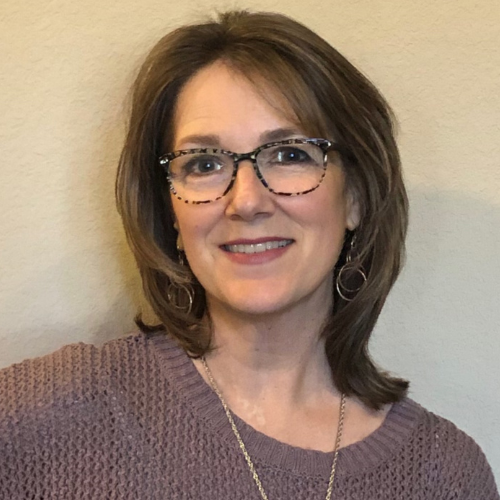
jschambach.scholeacademy@gmail.com
Jimmy Schambach holds a Master of Divinity from Regent University, and a BA in theology and philosophy from Evangel University. Currently, he works as the executive director of a faith-based nonprofit organization called M28 Ministry, which operates out of Harrisburg, Pennsylvania. In his past, Jimmy worked as a youth and young adult pastor at a large church in Indianapolis, Indiana. Since his time in college, Jimmy has grown in his love for philosophy, logic, and theology. He has taught in many settings over the years and enjoys his classes at Scholé Academy. Jimmy and his wife, Tristin, live in Camp Hill, Pennsylvania, where they have a young daughter named Aviana and a dog named Panda.

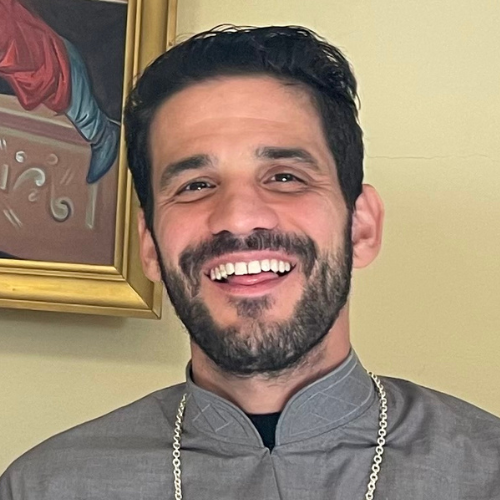
a.newman.scholeacademy@gmail.com
Andy Newman calls western Nebraska home, that borderland where Midwest and West shake hands. There he has taught literature, composition, history, journalism, and the humanities for more than twenty years at the high school and college levels. This is his fifth year at Scholé. Before teaching, he worked in daily print journalism.
His education is varied, having earned master’s degrees in history and English from the University of Wyoming and the University of Nebraska at Omaha, respectively. Most recently, he earned a MTh in Applied Orthodox Theology from the Antiochian House of Studies and a MA in Biblical Theology from John Paul the Great Catholic University. He will defend his dissertation early in 2027 for the PhD in Humanities from Faulkner University.

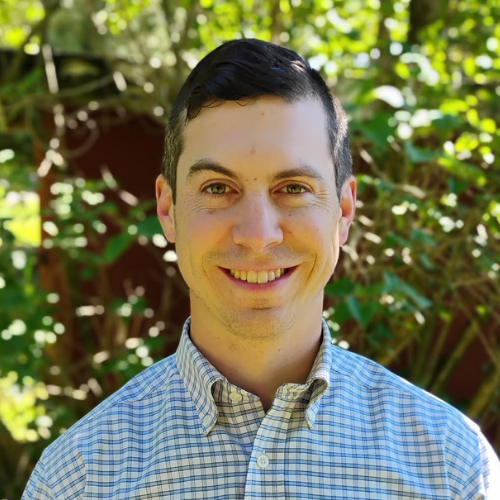
pshaltanis.scholeacademy@gmail.com
Phaedra Shaltanis, Chair of the Humanities Department, has taught in private and classical schools for over 25 years and has educated her four children in the classical tradition, which has been the monumental joy of her life. After college graduation, she began teaching high school Writing, Literature, Spanish, and Art in classical schools. Her involvement with Scholé Academy includes teaching American Literature, British Literature, Western History, Rhetoric I, Formal Logic and Well-Ordered Language Levels 1 and 2. She is enthused to serve as the Humanities department chair and appreciates guiding parents and teachers toward restful education. In her Dallas community, she currently directs a high school university-model program, trains and mentors teachers, conducts seminars on classical education, builds curriculum, supports parents, and provides fine art instruction at a classical high school. She and her husband hope to support classical education as avenues present themselves.
First, read the available course descriptions, noting prerequisites, target grades, and course objectives. If you think your student is prepared for the course, go ahead and register. After registration, a placement assessment may be provided to students, depending on the course and the student’s previous enrollment with Scholé Academy. Registration is finalized when the student’s placement assessment has been returned by the course instructor with placement confirmation.
Make sure they don’t conflict with other activities in your schedule or other courses you are purchasing. Our system will not catch double-bookings!
Our Assistant to the Principal will be in touch with you after your enrollment to help you with next steps, including any placement evaluations that may be required for your course selections.
This registration will be finalized when the student’s placement assessment has been returned by the course instructor with placement confirmation.
This course offers a historical, philosophical, and scientific overview of how Western Civilization shifted from a...
This course looks at the skills and process of constructing good arguments. By studying historical examples, both...
Middle and high school students will argue (and sometimes quarrel), but they won’t argue well without good training....