Loading enrollment options…
If sections and pricing don’t appear, email support@scholeacademy.com and we’ll help you enroll.
Placement Process One critical factor for restful learning is the proper placement of students. If you are unsure which level is the best fit for your student, reach out to the instructor you are considering. Once registered, anticipate contact regarding placement evaluations from instructors by May 15th and throughout the summer. Students must be enrolled to enter the placement process. Early placement exams may allow time for tutoring or additional review based on the outcomes. See more about placement evaluations in our Student-Parent Handbook.
Novare Science Placement If placement evaluation is needed, please anticipate contact from instructors by May 15th and throughout the summer. Students must be enrolled in a course to receive a placement assessment. Learn more about the Novare Science placement.
This course is a robust, thorough investigation into the major areas of life science. General Biology, by Heather Ayala and Katie Rogstad, Novare Science & Math, is an inspiring and engaging text that speaks to students through quality language and thorough explanations. It begins with the characteristics of all living organisms ad the chemistry behind their life functions then delves into the wonders of the cell and how it is structured and created to thrive and multiply. The second half of the text examines the unique features of the different kingdoms and their phyla and how the organisms vary in form and function. This culminates with an intensive chapter on human organ systems and the incredible being made in the image of God. An additional chapter is devoted to ecology, populations, communities, and environments where living organisms exist. Lastly, historical and current theories of macroevolution and microevolution, and mechanisms of speciation, are addressed in the concluding chapter. A repeated theme is emphasized throughout the course: science is not the business of proclaiming truth but rather of creating hypotheses and then conducting experiments that either support or oppose those hypotheses.
Class time will be devoted to the discussion of reading assignments and practice questions, explaining complicated concepts, conducting laboratory exercises, contemplating current events in biology, instilling good skills in scientific exploration and experimentation, learning quality techniques for documenting observations, and reviewing topics. The Novare curriculum targets the idea of mastering the material and bringing an end to the cram-pass-forget cycle so common in science curriculums today.
Parental Involvement: Parents are expected to support their student of biology in several ways. They are expected to:
Mastery: In order to prepare students for advanced biological study, this course uses a mastery approach. This is achieved by covering fewer concepts at a deeper level. Our goal is to have a solid, working comprehension of these concepts and the ability to communicate them. Mastering these concepts now will create a tremendous foundation upon which higher-level concepts can build in college. Regular review of important “standard concepts” throughout the year will keep topics relevant and fresh. Students will be expected to keep up with the daily workload of reading the text, taking notes, reviewing vocabulary, attending class, and completing the practice problems. This will get easier as good skills and habits are developed.
Integration: This course approaches science holistically, integrating history, the English language, and the epistemology of science. During class, we will contemplate and discuss these topics; outside of class, students will write about them. We will consider the existence of scientific findings that may contradict biblical statements and explore meaningful, productive responses to them. We will discuss bias and how it affects science.
Laboratory: A good scientist must understand well-designed experimentation, the proper interpretation of results, and precise communication of their findings. Most of the experiments in this course are qualitative and promote strong observation skills. All labs are conducted in class. If an experiment cannot be completed in class, students will be instructed on how to finish the activity. The teacher will lead the microscopy portion with pictures of prepared slides so students can find structures at home and compare theirs with the instructor. Dissections will be started in class and, if necessary, completed after class. Two quantitative experiments will be conducted, and complete reports will be written. Guidelines for lab report writing will follow The Student Lab Report Handbook by John D. Mays. This manual should be purchased this year and used as a reference through college. It instructs graphing results, grammatical requirements, hypotheses, and other components of high-quality laboratory reports.
Projects: Two projects will also be completed: a leaf collection and an ecological survey. Both projects will take several weeks and require students to collect data. The leaf collection will require students to obtain several samples starting in the Fall semester. The project will be completed in the Spring semester. The ecological survey will be conducted in two parts: a plant growth experiment and animal diversity activities. The plant growth experiment will have students observe the stages of life of plants and end with an experiment with the seedlings grown. The animal diversity activities will have students go to their local parks to study their biome and compare it to their classmates' biome.
Grading: The grade will be based on several components: participation in class, quizzes, tests, projects, and laboratory reports.
High School Credit: This course is the equivalent of one high school credit in laboratory science.
At Scholé Academy, we have carefully considered how we should engage our contemporary culture as those who believe that Christ is the Truth (John 14:6) and that all truth has its source in him. We think it is important to provide our upper school students (in grades 7–12) with tools and opportunities for critically examining various cultural trends, issues, and mores through the lens of orthodox, Christian beliefs. Being confident in the truth revealed to us in creation, the Scriptures, and the tradition of the church, we are not afraid to follow the truth and its implications nor to address error and falsehood. … Read more about our Faith & Culture.
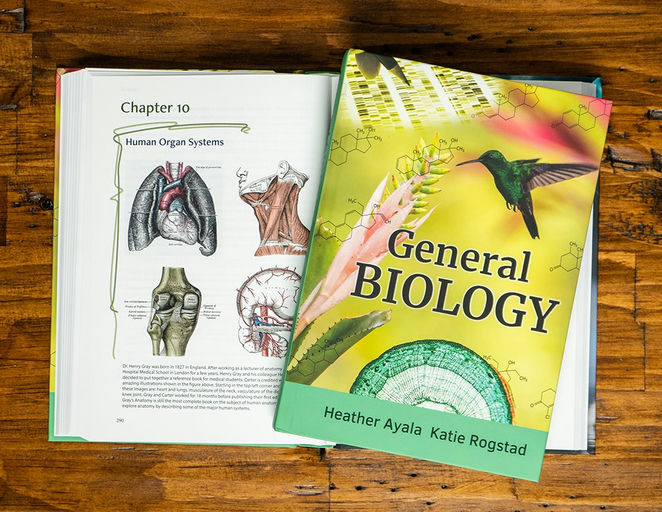
Required Materials: Books and supplies are not included in the purchase of the course. These resources are listed to help inform your decision-making as you make course selections and build your course schedule. Please reach out to the instructor if you have any questions about materials.
Lab Supplies for Sections with Tamara Davault and Casey Ellis
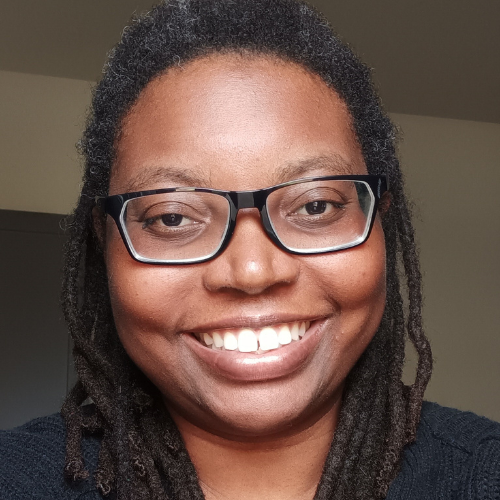
Tamara Davault is a native Texan who loves Biology. She graduated from the University of Texas Permian Basin with B.S. degrees in Biology and Chemistry. Mrs. Davault went on to earn an M.S. in Medical Sciences from the University of North Texas Health Science Center. Since graduation, she has been teaching various Biology courses at several community colleges and universities in Texas. Mrs. Davault’s hobbies include archery, crochet, and nature walks.
lbatty.scholeacademy@gmail.com
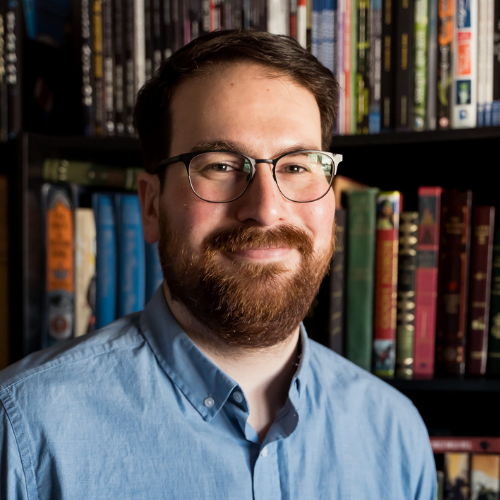
Luke Batty is an assistant professor at a Christian liberal arts university, with a B.S. and M.S. in Biochemistry from UCLA and a Ph.D. in Experimental Pathology from Yale University. Originally intending to be a medical doctor like his grandfather, he was surprised to learn in his studies that science was fascinating in its own right. Through his love of chemistry and biology, he has sought to use his academic and professional work to marvel in God's creation. He has always been a teacher at heart, and he especially enjoys opening the eyes of students to the overwhelming beauty and coherence displayed by the created world.
Hailing from Los Angeles, Luke grew up in a Christian home with his eight siblings, where he was blessed to be homeschooled through high school. Now married and living in Texas, he has sought to share that same heritage with all five of his own children, hopefully with an even more classical focus. When he has a free moment, he can be found with his nose in a book or organizing his growing library.
jsanderson.scholeacademy@gmail.com
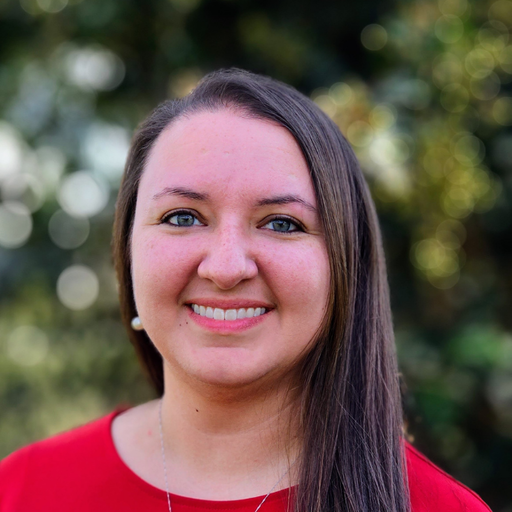
Jennifer Sanderson is a scientist turned homeschool mom and would be a professional student if she could! She graduated from East Carolina University with a B.S. in Clinical Laboratory Science and from the University of North Dakota with a M.S. in Medical Laboratory Science. After working in a hospital laboratory setting for ten years, she left to begin homeschooling her two children. She has also taught at the high school and college level, both in-person and online. Outside of teaching, Jennifer enjoys playing piano and shares this love with others by teaching piano lessons and leading worship at her church, where she also doubles as the pastor's wife. Her other hobbies include reading, baking, and playing board games with her family.
Novare General Biology
Apprentice's Companion for General Biology
Note: The Student Lab Report Handbook will be used throughout the year to help write the lab reports.
Novare General Biology
Apprentice's Companion for General Biology
Note: The Student Lab Report Handbook will be used throughout the year to help write the lab reports.
Novare General Biology
Apprentice's Companion for General Biology
Note: The Student Lab Report Handbook will be used throughout the year to help write the lab reports.
Novare General Biology
Apprentice's Companion for General Biology
Note: The Student Lab Report Handbook will be used throughout the year to help write the lab reports.
First, read the available course descriptions, noting prerequisites, target grades, and course objectives. If you think your student is prepared for the course, go ahead and register. After registration, a placement assessment may be provided to students, depending on the course and the student’s previous enrollment with Scholé Academy. Registration is finalized when the student’s placement assessment has been returned by the course instructor with placement confirmation.
Make sure they don’t conflict with other activities in your schedule or other courses you are purchasing. Our system will not catch double-bookings!
Our Assistant to the Principal will be in touch with you after your enrollment to help you with next steps, including any placement evaluations that may be required for your course selections.
This registration will be finalized when the student’s placement assessment has been returned by the course instructor with placement confirmation.
This introductory course is designed for high school students who love science, are strong in math, and aspire to a...
Advanced Biology is a course for students seeking an Honors level biology course. Our text emphasizes biochemistry, and...
The course text, Chemistry for Accelerated Students by John D. Mays, contains thirteen modules covering topics ranging...