
Loading enrollment options…
If sections and pricing don’t appear, email [email protected] and we’ll help you enroll.
Placement Process One critical factor for restful learning is the proper placement of students. If you are unsure which level is the best fit for your student, reach out to the instructor you are considering. Once registered, anticipate contact regarding placement evaluations from instructors by May 15th and throughout the summer. Students must be enrolled to enter the placement process. Early placement exams may allow time for tutoring or additional review based on the outcomes. See more about placement evaluations in our Student-Parent Handbook.
Novare Science Placement If placement evaluation is needed, please anticipate contact from instructors by May 15th and throughout the summer. Students must be enrolled in a course to receive a placement assessment. Learn more about the Novare Science placement.
“The most beautiful thing we can experience is the mysterious. It is the source of all true art and science. He to whom the emotion is a stranger, who can no longer pause to wonder, and stand wrapped in awe, is as good as dead; his eyes are closed.” – Albert Einstein
“Great are the works of the LORD, studied by all who delight in them. Majestic and glorious is his work, his righteousness endures forever.” Psalm 111:2-3
Chemistry helps students develop virtues leading to strong scholarship, but more importantly, it strives to cultivate a sense of wonder about the physical world around them. Besides the acquisition of scientific knowledge, the goal is for students to recognize that they now partake with many scientists throughout history in the pursuit of truth. Growing awareness of the beauty and order of our world, as well as the connection with humanity, will inevitably lead to the true source of all this mastery.
In order to prepare students for college-level chemistry, this course uses a mastery approach. The text, General Chemistry by John D. Mays, facilitates mastery by covering fewer concepts at a deeper level. Our goal is to have a solid, working comprehension of these concepts and to apply the mathematical calculations accompanying them. Mastering these concepts now will create a tremendous foundation upon which higher-level concepts can build in college. Repetitive review of important “standard problems” throughout the year will keep concepts relevant and fresh. This course integrates science with history, mathematics, faith, and the epistemology of science. While receiving a solid foundation in science, we will take time to contemplate and discuss topics in class.
Placement: Honors Chemistry is for juniors and seniors who have taken, or are concurrently taking, Algebra II. The course utilizes mathematical skills such as algebraic manipulations of equations, ratios and proportions, unit conversions, and significant figures. Toward the end of the course, we will do pH calculations using logarithms and power functions.
Laboratory: A good scientist must understand well-designed experimentation, the proper interpretation of results, and precise communications of his/her findings. The robust, high-quality laboratory component for Honors General Chemistry consists of experiments using laboratory-grade materials. Guidelines for lab report writing will follow The Student Lab Report Handbook by John D. Mays. Supplies can be found at Home Science Tools under the name “Economy Lab Kit for use with Novare General Chemistry.
Class time: Live class meetings on Zoom consist of lecture, discussion, problem-solving, and experimentation. Students are expected to read the text and take notes at home in addition to lectures.
NOTE: Parents will be expected to be present during laboratory exercises to ensure the safety of their students and the following of proper procedure. Together they will pre-read the exercise and set up supplies prior to class time. Procedures will be followed during scheduled class time. Questions can be asked to the instructor during the exercise.
Grading: The grade will be based on several components: participation in class, quizzes, tests, essays, and six written laboratory reports. Homework is to be self-graded, using the answer key, upon completion of practice problems for immediate feedback.
Office Hours: Office hours will be arranged as needed.
High School Credit: This course is equivalent to one high school credit in laboratory science.
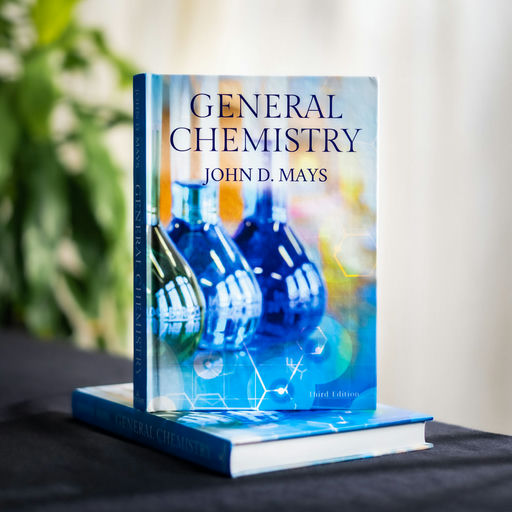
Required Materials: Books and supplies are not included in the purchase of the course. These resources are listed to help inform your decision-making as you make course selections and build your course schedule. Please reach out to the instructor if you have any questions about materials.
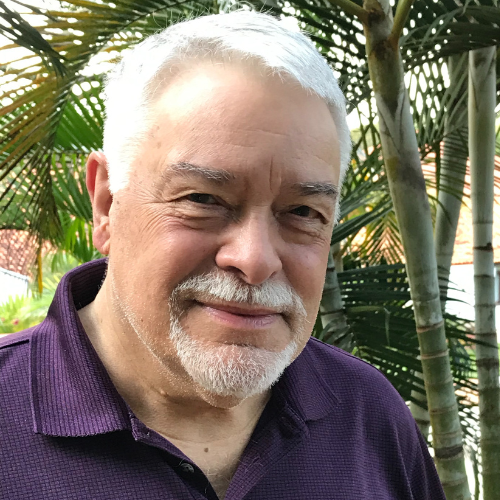
Marv Retzer, Chemistry Instructor, began teaching in 1977. He holds a Bachelor of Science degree in Elementary Education from Grace College, a Master of Arts degree in Christian School Administration from Grace Theological Seminary and completed EdD (ABD) studies at Ball State University in Educational Leadership with a Curriculum cognate. Mr. Retzer began his undergrad studies in medical research before switching to Elementary Education and, with his extensive Math and Science background, has taught MS-HS Math and Science classes for over 20+ years in addition to work in administration. Mr. Retzer’s personal scientific “love” is for Chemistry and he was privileged to receive a summer Eisenhower Fellowship in the 1980’s to study Microscale Chemistry at MIT in Boston. “All things were made through Him, and without Him was not anything made that was made.” (John 1:3 ESV) Mr. Retzer’s goal is for all students to see the majesty and power of God in creation through the study of Science.
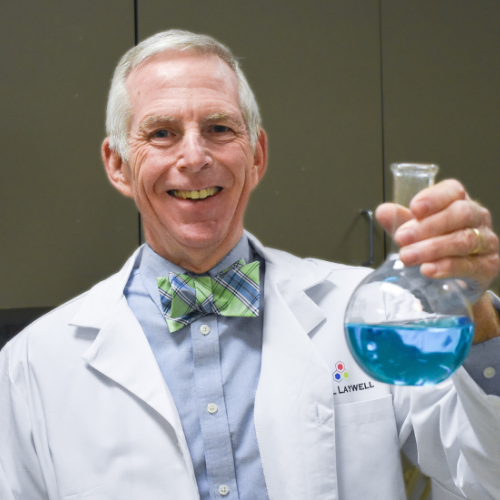
Paul Laywell has four decades of teaching experience and has taught everything from seventh-grade Earth Science to Advanced Placement Biology and Chemistry.
After teaching in the public schools for sixteen-years, he transitioned to classical Christian schools. For the past eighteen years, he has served as the science department head at Covenant Christian Academy in Colleyville, TX where he most recently taught physics and Advanced Placement Chemistry.
As a science teacher in classical educational he is continually searching for ways to integrate robust science content with history, philosophy and theology in meaningful ways. Lessons often include eye-catching demonstrations and are routinely sprinkled with humor.
In addition to these secondary teaching positions, he has also taught in an adjunct capacity at both Tarrant County College and Dallas Baptist University.
First, read the available course descriptions, noting prerequisites, target grades, and course objectives. If you think your student is prepared for the course, go ahead and register. After registration, a placement assessment may be provided to students, depending on the course and the student’s previous enrollment with Scholé Academy. Registration is finalized when the student’s placement assessment has been returned by the course instructor with placement confirmation.
Make sure they don’t conflict with other activities in your schedule or other courses you are purchasing. Our system will not catch double-bookings!
Our Assistant to the Principal will be in touch with you after your enrollment to help you with next steps, including any placement evaluations that may be required for your course selections.
This registration will be finalized when the student’s placement assessment has been returned by the course instructor with placement confirmation.
This introductory course is designed for high school students who love science, are strong in math, and aspire to a...
Advanced Biology is a course for students seeking an Honors level biology course. Our text emphasizes biochemistry, and...
The course text, Chemistry for Accelerated Students by John D. Mays, contains thirteen modules covering topics ranging...