
Loading enrollment options…
If sections and pricing don’t appear, email support@scholeacademy.com and we’ll help you enroll.
Placement Process One critical factor for restful learning is the proper placement of students. If you are unsure which level is the best fit for your student, reach out to the instructor you are considering. Once registered, anticipate contact regarding placement evaluations from instructors by May 15th and throughout the summer. Students must be enrolled to enter the placement process. Early placement exams may allow time for tutoring or additional review based on the outcomes. See more about placement evaluations in our Student-Parent Handbook.
Novare Science Placement If placement evaluation is needed, please anticipate contact from instructors by May 15th and throughout the summer. Students must be enrolled in a course to receive a placement assessment. Learn more about the Novare Science placement.
Introductory Physics is excellent preparation for future studies in Chemistry and Biology. This is more than a physical science course because of its math component. Students use algebra concepts to solve problems; this allows for real-world application of the algebra skills they have been learning and a rewarding understanding of the importance of mathematics. Students will master unit conversions and metric system prefixes as well as foundational topics in physics. (Note: this is not a vector-based physics class. This higher-level skill is saved for upper-level physics). The text also brings in historical figures and important events that have shaped the field of physics. Topics covered in Introductory Physics include: the nature of scientific knowledge, velocity, acceleration, Newton’s Laws of motion, energy, momentum, atoms, matter and substances, heat and temperature, pressure and buoyancy, waves, sound and light, introduction to electricity, DC circuits, fields and magnetism, and geometric optics.
Introductory Physics will be taught in a mastery fashion, following John Mays Learn-Master-Retain model. The goal of this approach is to end the course with student mastery of a list of standard problems essential for success in higher-level courses. This method of instruction and study brings an end to the Cram-Pass-Forget cycle, typical in most courses taught today. More information about this approach can be found in the course syllabus.
There will be at 5 experiments to accompany this course and full lab reports will be written. Students are expected to read the text before coming to class. Class time will consist of discussion of readings, answering questions, solving problems together, and conducting experiments. Assessments will consist of weekly quizzes made of essay questions and computations. These will always be cumulative in content.
Prerequisites: Concurrent Enrollment in Algebra 1 or completion of Algebra 1.
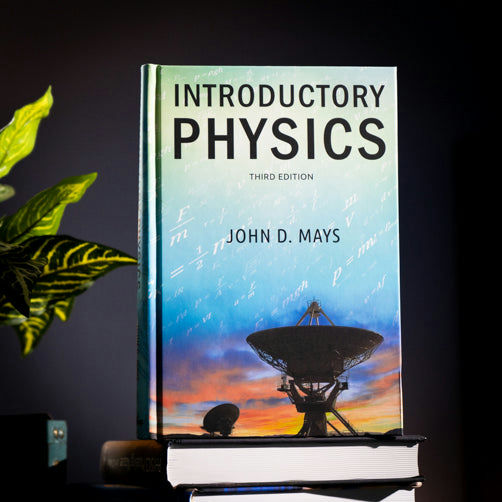
Required Materials: Books and supplies are not included in the purchase of the course. These resources are listed to help inform your decision-making as you make course selections and build your course schedule. Please reach out to the instructor if you have any questions about materials.

sjoslin.scholeacademy@gmail.com
Sherry Joslin earned her BS in Electrical Engineering from the University of Arkansas and holds a MA in Science and Religion from Biola University. She and her husband Brian live just south of Forth Worth in Burleson, Tx.
With over 12 years of experience in the classroom and as a homeschool mom, she has taught every grade K through 12th. Her classroom experience includes Logic, AP Physics, Honors Geometry, Algebra, Singapore Math and more. Prior to teaching, Sherry worked in Mission Control as a NASA engineer. When asked why she left, she explains that children are far more complicated than space shuttles, and that her greatest accomplishment has been in the role of mentoring and educating her three children who are living for Christ as young adults.
Sherry is passionate about showing students how the relationship between faith and science is not one of conflict but of qualified agreement; and before attending university, students should be confident that the Christian worldview provides a coherent understanding of both reality and their place in it as children of God.

lpavlik.scholeacademy@gmail.com
Laura Pavlik holds a B.A. in Physics and Mathematics as well as an M.Ed. in Science Education. She taught science in the public school system for four years before leaving to raise her own children. She has always loved discovering the beauty with which God has filled the natural world and enjoys seeking the answers to interesting questions: both her own and any that might be posed in her presence.
She also finds joy in writing, gardening, making bread, watching her children play in the woods, swing dancing, and playing board games.

mwretzer.scholeacademy@gmail.com
Marv Retzer, Chemistry Instructor, began teaching in 1977. He holds a Bachelor of Science degree in Elementary Education from Grace College, a Master of Arts degree in Christian School Administration from Grace Theological Seminary and completed EdD (ABD) studies at Ball State University in Educational Leadership with a Curriculum cognate. Mr. Retzer began his undergrad studies in medical research before switching to Elementary Education and, with his extensive Math and Science background, has taught MS-HS Math and Science classes for over 20+ years in addition to work in administration. Mr. Retzer’s personal scientific “love” is for Chemistry and he was privileged to receive a summer Eisenhower Fellowship in the 1980’s to study Microscale Chemistry at MIT in Boston. “All things were made through Him, and without Him was not anything made that was made.” (John 1:3 ESV) Mr. Retzer’s goal is for all students to see the majesty and power of God in creation through the study of Science.

Melissa Bravenec holds a Bachelor of Science degree from Texas A&M University. During her time as a military spouse, she homeschooled her two boys using a classical Christian curriculum that was strong in science and math. Because of her boys’ interest in robotics and engineering, she coached a successful homeschool robotics team and mentored many successful science fair projects.
After her sons left for college, where they both graduated with master’s degrees, she began her 10-year teaching career at a private Christian classical school where she taught physical science, biology, chemistry, and physics to multiple grades using the classical model she loves. Because of this experience teaching science courses that build on each other, she is skilled at coaching students to master the material so that it is not forgotten at the end of the course. She spends time training students' study skills and focuses on teaching them effective learning strategies.
Melissa is passionate about science because studying the details of creation fills her with wonder and awe and she loves sharing her joy with students!
First, read the available course descriptions, noting prerequisites, target grades, and course objectives. If you think your student is prepared for the course, go ahead and register. After registration, a placement assessment may be provided to students, depending on the course and the student’s previous enrollment with Scholé Academy. Registration is finalized when the student’s placement assessment has been returned by the course instructor with placement confirmation.
Make sure they don’t conflict with other activities in your schedule or other courses you are purchasing. Our system will not catch double-bookings!
Our Assistant to the Principal will be in touch with you after your enrollment to help you with next steps, including any placement evaluations that may be required for your course selections.
This registration will be finalized when the student’s placement assessment has been returned by the course instructor with placement confirmation.
This introductory course is designed for high school students who love science, are strong in math, and aspire to a...
Advanced Biology is a course for students seeking an Honors level biology course. Our text emphasizes biochemistry, and...
The course text, Chemistry for Accelerated Students by John D. Mays, contains thirteen modules covering topics ranging...

