Loading enrollment options…
If sections and pricing don’t appear, email [email protected] and we’ll help you enroll.
Placement Process One critical factor for restful learning is the proper placement of students. If you are unsure which level is the best fit for your student, reach out to the instructor you are considering. Once registered, anticipate contact regarding placement evaluations from instructors by May 15th and throughout the summer. Students must be enrolled to enter the placement process. Early placement exams may allow time for tutoring or additional review based on the outcomes. See more about placement evaluations in our Student-Parent Handbook.
Novare Science Placement If placement evaluation is needed, please anticipate contact from instructors by May 15th and throughout the summer. Students must be enrolled in a course to receive a placement assessment. Learn more about the Novare Science placement.
Physical Science is THE foundational study for chemistry, biology, and many topics in Earth Science because it gives us eyes to see. At the heart of chemical reactions lies the interplay of forces, vectors, and charges, all described by their physical properties and characteristics. The biomechanical nature of living organisms is a study in leverage, forces in motion or in equilibrium, and the interplay of matter and energy. The weather, ocean currents, the movement of magma, the formation of minerals, rocks, and soil all extend from simple physics writ large (and small!) upon the world.
Through a robust exploration of a spectrum of physics concepts, Physical Science leads a student along an arc of discovery. Many students intuit physics from experiences, and those same experiences make up the heart of the course. From riding bikes to baking cakes to casting fishing lines to building forts to playing sports, we’ll reference things students know through experience to move them towards a new, more scientific understanding of the physics at work in those experiences. We will do so through readings, engaging problems and exercises, running labs to focus our observations, but ever and always we’ll return to the heart of the course: the experience of physics in our everyday world.
Eligible Students: A solid foundation in arithmetic operations involving whole numbers, integers, fractions, decimals, and exponents, plus some experience with pre-algebra/basic algebra is necessary for this course.
Please note: The course includes multiple laboratory exercises in addition to in-class coursework. Lab reports will require time outside of class to complete.

Required Materials: Books and supplies are not included in the purchase of the course. These resources are listed to help inform your decision-making as you make course selections and build your course schedule. Please reach out to the instructor if you have any questions about materials.
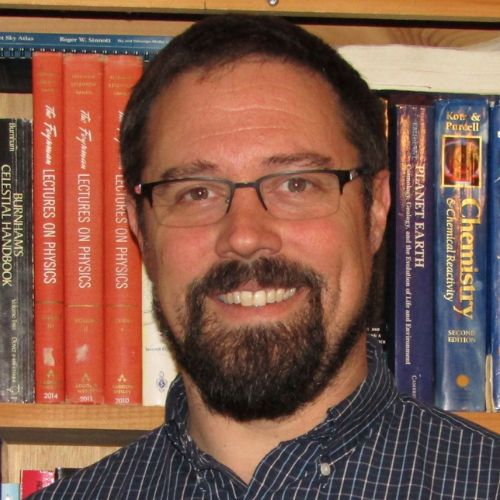
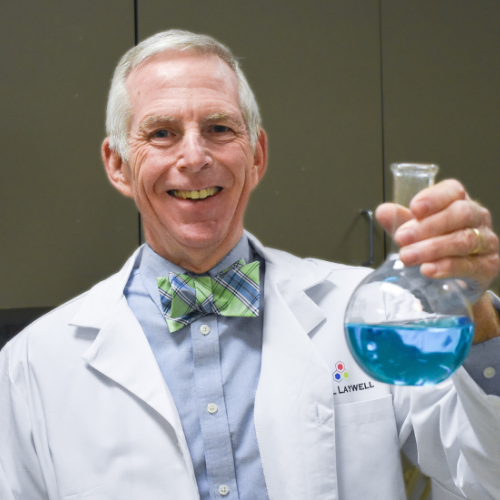
Chris Hall has a BA in Philosophy from Gettysburg College and an MAT in Elementary Education from Towson University. He has been a classroom educator and administrator for 30 years, having served in public, independent, and classical schools. He is a lifelong practitioner of several common arts, a musician, an amateur radio operator (WR5WD), and the Founder of Always Learning Education, an organization dedicated to teaching, learning, and propagating the common arts.
Chris lives on a small, homesteaded farm in central Virginia with his wife and three homeschooled sons.
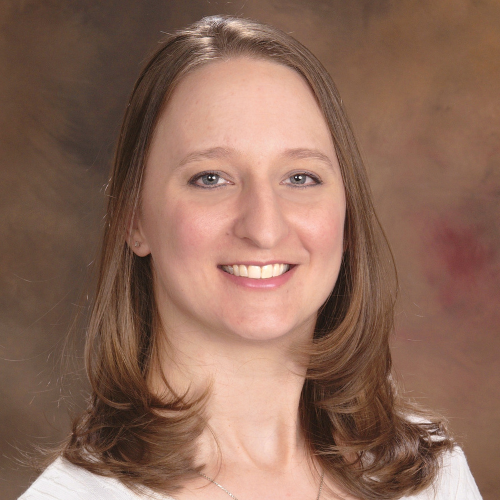
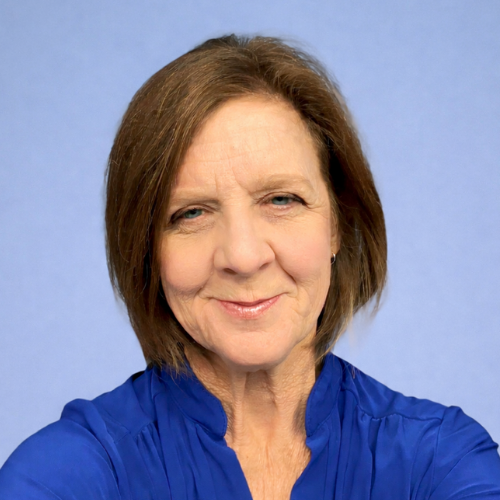
Danielle Bartko is an experienced Math and Science teacher, and Orthodox Church Cantor and Choir Director. She taught in public schools and a Montessori based Orthodox private school. She has served the American Carpatho-Russian Orthodox Diocese as a Cantor and Choir Director, and the Orthodox Church in America as a Choir Director. She spent countless summers at Camp Nazareth, first as a camper, and later as a counselor and chant teacher.
She holds degrees in Biology and Music from Lafayette College, and Secondary Teacher Certification from DeSales University. She has taught grades 5-12, and currently homeschools her children. She has experience in a variety of teaching methods, and has taught students with diverse academic needs. She is a lifelong learner, and has enjoyed growing and changing as an educator over the years. Her goal is to inspire her students to become lifelong learners as well.
Her Liturgical music education comes from a variety of coursework in Orthodox Music and Choral Directing. She has taken classes through Christ the Saviour Seminary and the OCA Liturgical Music Department, and independent study with Very Rev. Protopresbyter Michael Rosco and Professors Paul Hilko, George Hanas, Andrew Talarovich, and Jerry Jumba. Whenever she travels and visits a church, she will sneak into the choir loft, wait for an invitation to sing with the choir, and then ask for copies of good music to keep as a souvenir.
She grew up in New Jersey, but now lives in Pittsburgh PA with her husband and two young daughters. When she is not homeschooling her children or teaching classes, she enjoys gardening, jigsaw puzzles, SRS Iconography classes, visiting with friends and family, and going to the beach.
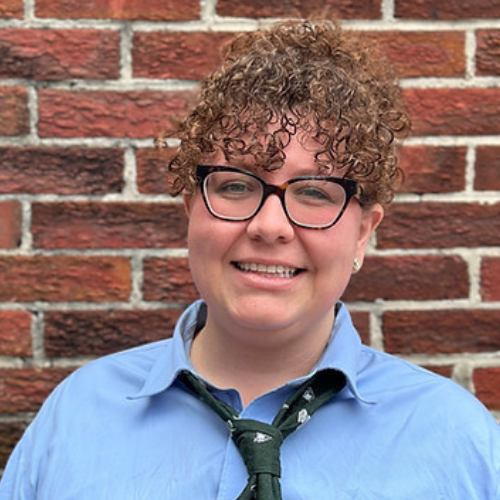
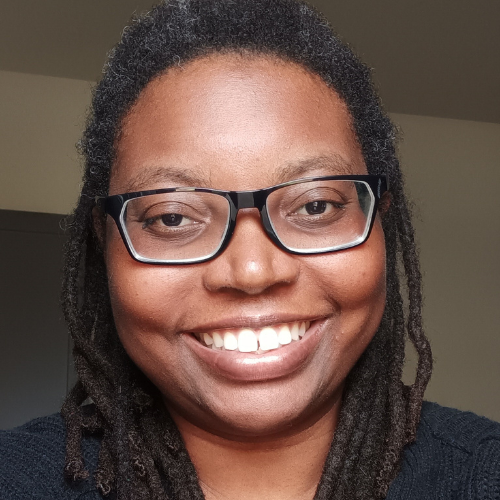
Danielle (Dani) Adams, a graduate of Hillsdale College, holds a BS in Biochemistry and a minor in Jazz Music. Mrs. Adams has worked in various educational vocations for 13 years. She has also served as the vice-president of multiple Navy adjacent non-profit organizations during her time as an active-duty military spouse.
For the last 2 years she has worked in brick-and-mortar schools in Hampton Roads both as a teacher and curriculum director and helped to found a local classical school in Portsmouth, Virginia. She currently resides in Norfolk, Virginia with her husband, 4 children, 7 chickens, and dog named Arleigh Bark. A member of the Anglican Church in North America (ACNA) since 2016, Dani serves on the vestry of her local Anglican parish, St. Alban's, and has been an active member of the parish since its founding 2 years ago.
As an educator, Dani seeks to orient students toward the divine testimony God gives us through both nature and number, and prepare students to think critically about the nature of Truth. In the words of Kate Comstock- ""perhaps, half the falsehood in the world is due to a lack of power to detect truth and express it."" She desires to give her students both empirical knowledge and an understanding of the epistemology behind it. Her guiding principal as a scientist and educator comes from the words of St. Augustine: “Fides quaerens intellectum,” faith seeking understanding.
First, read the available course descriptions, noting prerequisites, target grades, and course objectives. If you think your student is prepared for the course, go ahead and register. After registration, a placement assessment may be provided to students, depending on the course and the student’s previous enrollment with Scholé Academy. Registration is finalized when the student’s placement assessment has been returned by the course instructor with placement confirmation.
Make sure they don’t conflict with other activities in your schedule or other courses you are purchasing. Our system will not catch double-bookings!
Our Assistant to the Principal will be in touch with you after your enrollment to help you with next steps, including any placement evaluations that may be required for your course selections.
This registration will be finalized when the student’s placement assessment has been returned by the course instructor with placement confirmation.
This introductory course is designed for high school students who love science, are strong in math, and aspire to a...
Advanced Biology is a course for students seeking an Honors level biology course. Our text emphasizes biochemistry, and...
The course text, Chemistry for Accelerated Students by John D. Mays, contains thirteen modules covering topics ranging...