Loading enrollment options…
If sections and pricing don’t appear, email [email protected] and we’ll help you enroll.
Placement Process One critical factor for restful learning is the proper placement of students. If you are unsure which level is the best fit for your student, reach out to the instructor you are considering. Once registered, anticipate contact regarding placement evaluations from instructors by May 15th and throughout the summer. Students must be enrolled to enter the placement process. Early placement exams may allow time for tutoring or additional review based on the outcomes. See more about placement evaluations in our Student-Parent Handbook.
Writing and Rhetoric Placement Process For registered students, please anticipate contact regarding placement evaluations from instructors by May 15th and throughout the summer. Students must be enrolled in a Writing and Rhetoric course to receive a placement assessment. Learn more about the Writing and Rhetoric placement.
Inside the Writing & Rhetoric Program: A Scholé Academy Info Session
This course continues the series with Book 5: Refutation & Confirmation and Book 6: Commonplace. In this stage, students start to develop and hone their skills in persuasive writing and speaking. In the first semester, students learn to refute or defend certain parts of narratives according to whether the identified parts are unbelievable, improbable, unclear, or improper—or believable, probable, clear, or proper.
After learning to identify the parts of a story that can be attacked or defended, students practice writing refutations or confirmations using sound arguments to explain their opinions. In the second semester, students continue to develop the art of persuasive writing and oration. They learn to create six-paragraph essays that are arguments against the common vices of people and arguments in favor of common virtues. Students also learn to support a thesis statement, use comparison and contrast, introduce and conclude an essay, use a rhetorical device known as “the contrary,” invent soliloquies to support an argument, deliver writing orally, and revise writing.
In this course, students dive deeper into their understanding of narratives to make connections between their lives and stories. Students are exposed to peer editing and are expected to assess their own writing by identifying the main argument, selecting appropriate textual support, strengthening phrasing, and finding grammar errors. Students will be expected to write on average one essay a week and begin to develop the skill of annotation (learning to take notes and comment on the readings). For a closer look at the texts used in this course, please follow these links and click “Look Inside”: Book 5: Refutation & Confirmation and Book 6: Commonplace.
Placement: Please read about our placement process in the Student Parent Handbook.
For further information on the Writing & Rhetoric series, please see the Classical Academic Press FAQ page.

Required Materials: Books and supplies are not included in the purchase of the course. These resources are listed to help inform your decision-making as you make course selections and build your course schedule. Please reach out to the instructor if you have any questions about materials.
Other Materials:
Optional Resources:
These audio files allow students to engage their sense of hearing and their listening intelligence as Dr. Christopher Perrin, Christine Perrin, and Greg Lowe deliver the readings aloud in a thoughtful manner.
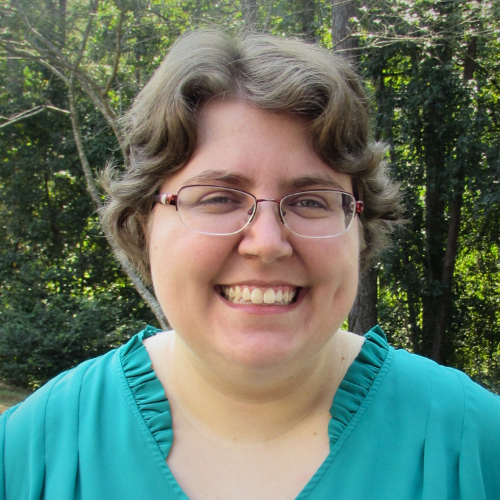
Kara Lobley enjoys finding answers and imparting those discoveries to everyone. This passion for truth inspired her to earn her bachelor’s degree in history at Patrick Henry College (PHC), in Purcellville, VA. The classical experience at PHC and her own experience being homeschooled outside the classical tradition (K-12) showed Kara the beauties of each approach. She delights in witnessing how classical homeschooling equips students to identify and discover “the true, the good, and the beautiful” in the world around them and to share those breakthroughs with others.
Kara began working with children as a high schooler at children’s theater camps and at her church’s Vacation Bible Schools. During college and post-graduation, she spent five years as a high school writing tutor and one year as a preschool teaching assistant. Kara starting teaching lower and middle school Well-Ordered Language and Writing and Rhetoric classes with Scholé Academy in the fall of 2020 and is excited to return again this year. Outside of the classroom, Kara can be found reading, hiking, or singing.
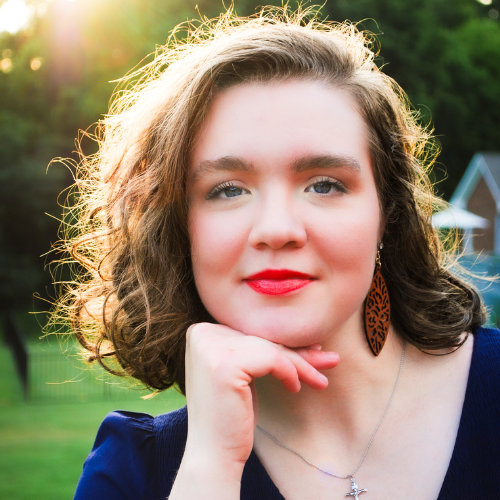
Morgan Moore has been teaching ever since she learned how to explain to her younger siblings the difference between an adjective and an adverb. As a homeschool graduate, Morgan loves the classical, online learning environment and began professionally teaching English, Integrated Humanities, and Writing to middle schoolers and high schoolers upon graduating with her Bachelor’s in English: Creative Writing from Liberty University online in 2022. Wanting to take her academic studies even further, she graduated with a M.F.A. in Creative Writing the summer of 2024, also from Liberty University online.
Being the oldest daughter of nine siblings has not only accustomed Morgan to sharing dressers, beds, and clothes all while hearing the battle cries of blanket-caped warriors running through halls, but it has also familiarized her with both the challenges and joys a classical, homeschool education can provide. It is her experiences with these situations that she brings to her teaching to encourage both her students and their parents and show how exciting learning truly can be.
Morgan loves children and one day hopes to have her own large flock of littles to teach, if it is the Lord's will. Until that time, however, she believes that the Lord has called her to teach others’ children. Now more than ever, children need to know the joy and hope that literature and writing may bring them; for, to quote C.S. Lewis, “it is so likely that children will meet cruel enemies, [so] let them at least have heard of brave knights and heroic courage.” When she’s not teaching, you’ll find Morgan writing her novel, knitting lots of sweaters, playing the cello and guitar, walking in the North Carolinian outdoors, or singing along with The Sound of Music—all while drinking lots of coffee.

Ash White holds a BA in English and Theatre from Mary Baldwin University, and has taught literature, writing, and logic at the middle and secondary levels for twenty years. Ms. White is passionate about classical education and homeschooling. She and her husband Jon live in the Shenandoah Valley and are voracious lovers of books and music. If you visit their home, you'll find it difficult to determine which collection is largest: books or vinyl records!
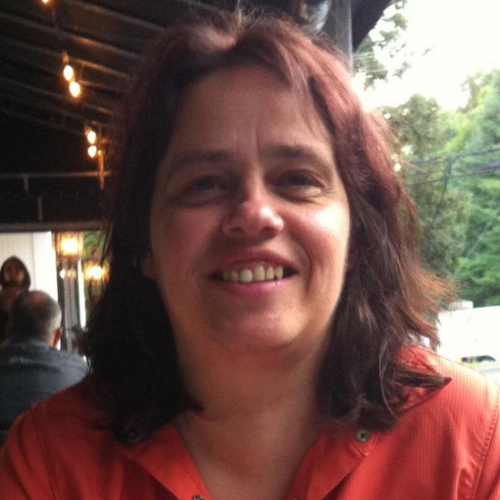
Helga Maier has taught high school and middle school reading, writing and literature for many years. Since joining the classical movement a number of years ago, she remains regularly astonished at the difference and she rejoices to watch students develop into eloquent writers and speakers when using a classical approach.
Mrs. Maier speaks German as her native tongue, and she especially enjoys writing, in English or German! She has inherited her love for learning languages from her mother, who would always study the language of whatever new European country their family was visiting.
Mrs. Maier began teaching German to English speakers on the mission field. Since then, she has taught English, German, History, and Bible at private Christian Schools and most recently at Classical Christian Schools.
Writing and Rhetoric Book 5
Writing and Rhetoric Book 5
Writing and Rhetoric Book 6
Writing and Rhetoric Book 6
First, read the available course descriptions, noting prerequisites, target grades, and course objectives. If you think your student is prepared for the course, go ahead and register. After registration, a placement assessment may be provided to students, depending on the course and the student’s previous enrollment with Scholé Academy. Registration is finalized when the student’s placement assessment has been returned by the course instructor with placement confirmation.
Make sure they don’t conflict with other activities in your schedule or other courses you are purchasing. Our system will not catch double-bookings!
Our Assistant to the Principal will be in touch with you after your enrollment to help you with next steps, including any placement evaluations that may be required for your course selections.
This registration will be finalized when the student’s placement assessment has been returned by the course instructor with placement confirmation.
 St. Raphael School
The Advanced Novel Writing course invites students to take their creative writing to the next level through the...
This yearlong course is designed for aspiring writers in grades 7-9 who want to read, interpret, enjoy, and interact...
“The world does not need more Christian literature. What it needs is more Christians writing good...