
C.S. Lewis on education is a richer subject than most readers expect. The man best known for Narnia spent nearly forty years teaching at Oxford and Cambridge, and he wrote some of the twentieth century’s sharpest pages on what schooling is for. For Lewis, education trains a child to love what is truly lovely, keeps the old books in conversation with the new, and leaves room for wonder. Each of those convictions grew out of his own unusual schooling and his slow, surprising path to faith.
Lewis also remains one of the best companions a young reader can have. Our instructors have spent whole school years reading him with middle and upper school students, and the same lessons keep surfacing: his books steady the mind in a restless age, they reward patience, and they teach students to see the world as more than it first appears. This post gathers what Lewis believed about learning, how he was taught, how he grew in wonder, and how families can read him together at home.
In this post
- What Did C.S. Lewis Believe About Education?
- How Was C.S. Lewis Educated?
- Wonder Had to Be Cultivated
- Three Habits That Grew Lewis’s Sense of Wonder
- Why Lewis Told Us to Read Old Books
- What a Year of Reading Lewis Teaches Students
- Mere Christianity and the Great Hall
- Reading C.S. Lewis With Your Children
- Frequently Asked Questions About C.S. Lewis and Education
What Did C.S. Lewis Believe About Education?
C.S. Lewis believed education should form a student’s loves, not only inform the mind. In The Abolition of Man (1943) he argued that a good teacher trains children to feel rightly about what is truly good, beautiful, and true, so that reason and desire work together. Education that teaches only skepticism, he warned, produces people without the inner strength to act well.
Lewis wrote the book after reading a school English textbook that taught children, almost in passing, that statements of value are only statements about the speaker’s feelings. He saw where that lesson leads. A child told that a waterfall cannot really be sublime will soon suspect that nothing can be honorable, sacred, or worth sacrificing for. Lewis called the result “men without chests,” people whose heads and appetites have nothing in the middle to hold them together: “We make men without chests and expect of them virtue and enterprise.”
His answer is one of the most quoted lines in modern writing on education: “The task of the modern educator is not to cut down jungles but to irrigate deserts.” Most children are not in danger of feeling too much. They are in danger of feeling too little, or of having their affections left untrained. Lewis stood with Plato and Aristotle here. The aim of education, as Aristotle put it, is to make the pupil like and dislike what he ought. That is a formation of the whole person, and it is the heart of classical Christian education.
How Was C.S. Lewis Educated?
Clive Staples Lewis, called “Jack” by his family, was born in Belfast in 1898. His first lessons came at home, where his mother taught him French and Latin. As small boys, he and his brother Warren filled the attic with stories and maps of an imaginary country called Boxen.
After his mother died in 1908, Lewis was sent to a series of English boarding schools. He was miserable in most of them, and in his memoir Surprised by Joy he described the worst with real bitterness. The turn came in 1914, when his father sent him to study privately with William T. Kirkpatrick, a retired headmaster in Great Bookham, Surrey. Lewis called him “the Great Knock.”
Kirkpatrick taught almost entirely by conversation. He challenged every careless remark, demanded that the boy define his terms, and set him to reading Homer in Greek from the first week. Lewis later wrote, “If ever a man came near to being a purely logical entity, that man was Kirk.” Those two years of one-to-one tutoring, with primary texts and constant dialogue, prepared him to win a scholarship to University College, Oxford.
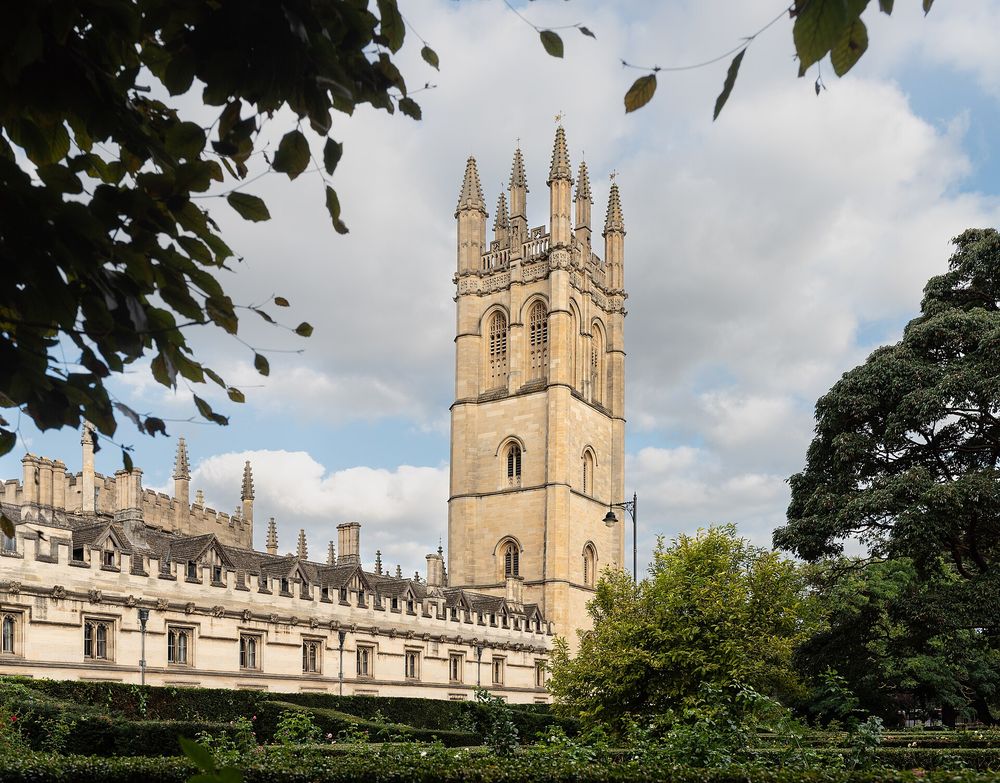
After serving in the First World War, Lewis finished his studies with top honors in classics, philosophy, and English. From 1925 to 1954 he was a fellow and tutor in English at Magdalen College, Oxford, and from 1954 until shortly before his death in 1963 he held the chair of Medieval and Renaissance Literature at Cambridge. He taught the way Kirkpatrick had taught him: a student, a tutor, a text, and an honest argument about what it means.
Wonder Had to Be Cultivated
Readers who know Narnia are often surprised to learn that Lewis’s sense of wonder came late. Boxen had talking animals, but it was mostly a world of politics and committee meetings. Looking back, Lewis admitted that it “excluded the least hint of wonder.” He was always able to lose himself in other writers’ imagined worlds; the gift of making such worlds himself had to grow.
As a teenager, Lewis went further and embraced a confident, wonder-less rationalism. In letters to his lifelong friend Arthur Greeves, he insisted that thinking people should be free of religion and doubted that anything existed beyond the material world. The young man who would one day write The Lion, the Witch and the Wardrobe was, for a season, a convinced materialist.
His conversion changed how he saw everything. As a Christian, Lewis came to believe that human beings are made for heaven, and he read our unfulfilled longings and small glimpses of joy as signposts to a home we have not yet reached. In “The Weight of Glory” he described those longings as “the scent of a flower we have not found, the echo of a tune we have not heard, news from a country we have never yet visited.” Late in life he gave Psyche, in Till We Have Faces, a longing “to find the place where all the beauty came from.”
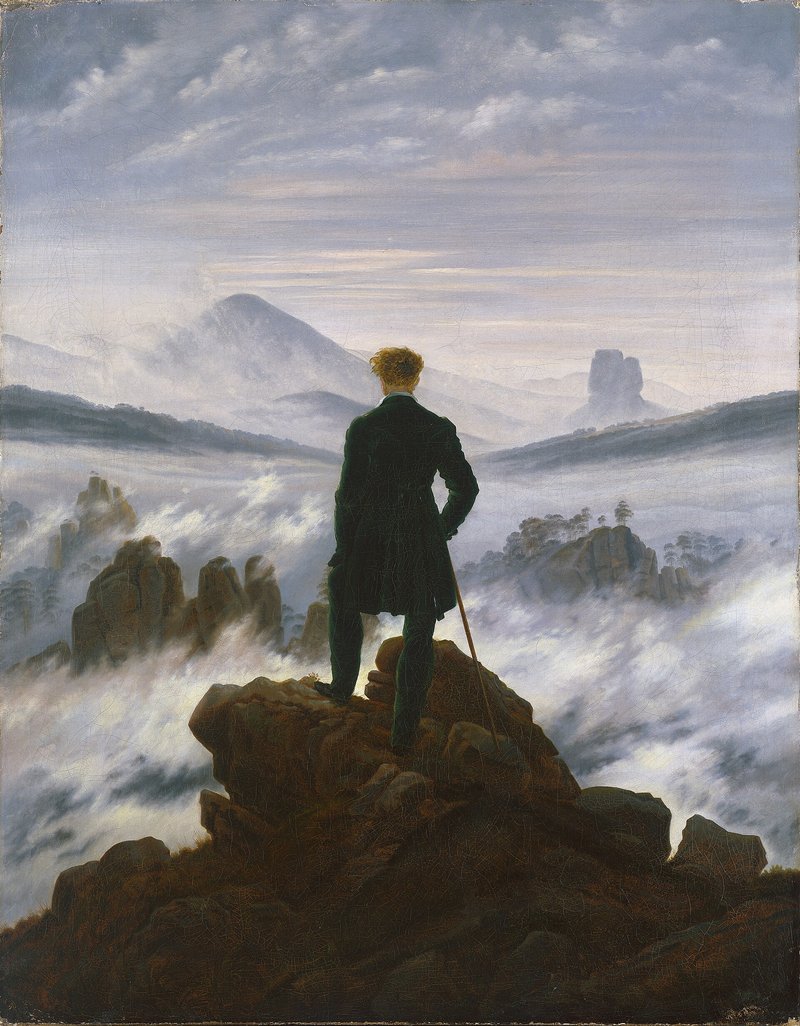
The world, for Lewis, was enchanted. It was not a different world from ours, but he saw it differently, and that way of seeing is deeply biblical. “The heavens declare the glory of God,” the psalmist sings (Psalm 19:1). Saint Paul urges us to “look not to the things that are seen but to the things that are unseen” (2 Corinthians 4:18). One of the enemy’s oldest tactics is to shrink the universe down to what the eye can see.
Modern life makes that shrinking easy. We look up and see marvels of human ingenuity rather than the glory of God. Our eyes rest on the glow of a screen instead of the sunlit sky. We are not even bound by weather and seasons for our food: if we want an apple, the grocery store has one any day of the year. It is hard to be in awe when we feel like gods. We are called to be an enchanted people living in a disenchanted age, and Lewis is a hopeful example because he lived through rapid technological change himself and still learned to see.
Narnia: A Magical Land That Points Home
The magical land of Narnia is Lewis’s most famous picture of this way of seeing. Lucy steps through a wardrobe full of fur coats and finds herself under a lamp-post in a snowy wood. The ordinary furniture of an English country house becomes a doorway. That is exactly what Lewis believed about the real world: ordinary things are thresholds, and the right kind of story trains a child to notice them.
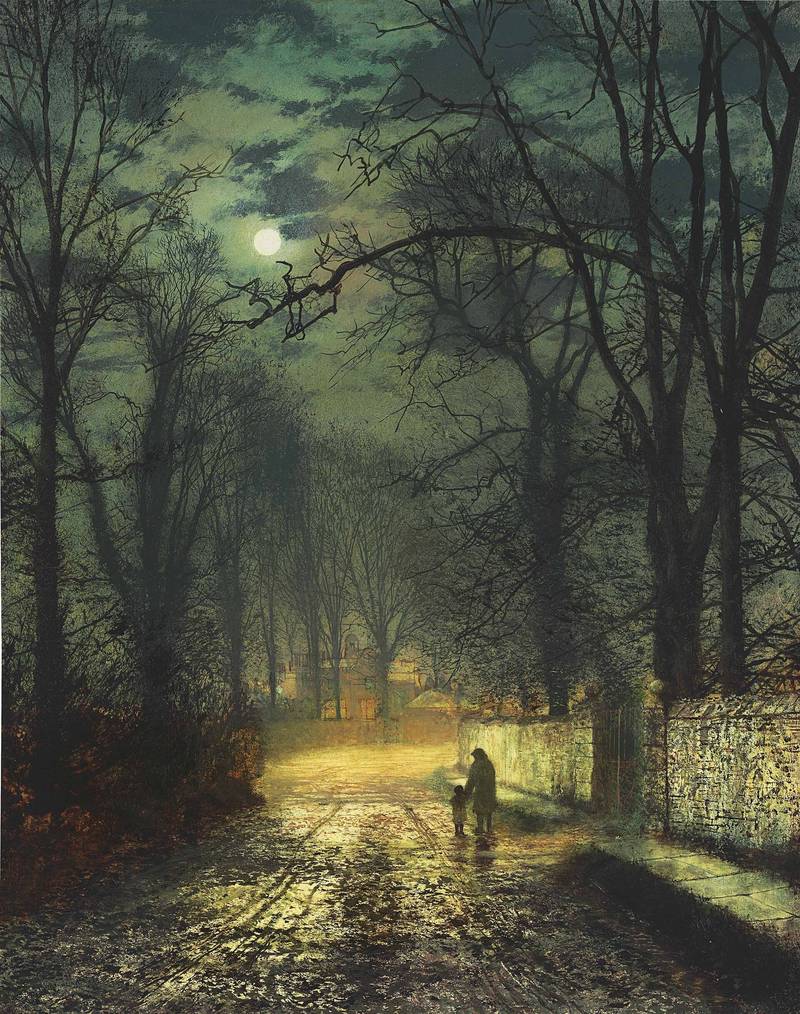
Narnia is not an escape from reality but a rehearsal for it. Children who have wept over Aslan at the Stone Table are better prepared, years later, to hear the Gospel as a true story rather than a set of ideas. This is the same conviction behind how children’s literature forms virtue: good stories shape the loves that later guide our choices.
Three Habits That Grew Lewis’s Sense of Wonder
How did Lewis grow in wonder, and what can families borrow from him? The list below is not complete, but three habits stand out across his letters and the accounts of his friends.
- He made time for deep friendship. Lewis’s friends, including the circle known as the Inklings, kept him wide-eyed through their laughter, arguments, and long evenings of reading aloud. The disenchantment of our age is hard to separate from the scarcity of real friendship. Lewis chose embodied conversation with other people, week after week.
- He embraced limits. Lewis kept habits of daily prayer. He never learned to drive a car. He tried to answer every letter he received, and he gave away a large share of his book income. Taken together, these choices reveal a man who refused to live as a god. His daily habits reminded him of his own finitude and turned him toward dependence on God.
- He walked. All his life Lewis took long walks, often with friends, and sometimes walking tours that lasted several days. He slowed down to the speed of his own stride and let the countryside speak.
By all accounts, the adult Lewis was full of the wonder we usually associate with childhood. His eyes seem to have been wider at the end of his life than when he was a boy writing about Boxen. That is a hopeful thing for parents to hold onto. We are not victims of a secular age. By God’s grace, children and adults alike can cultivate habits that lift the imagination beyond the visible world to the God who made us for Himself. Our post on wonder and piety as the basis of the liberal arts takes up the same theme for the classroom.
Why Lewis Told Us to Read Old Books
In 1944 Lewis wrote an introduction to a new translation of Saint Athanasius’s On the Incarnation. It has become a small classic of its own, usually printed as “On the Reading of Old Books.” Every age, Lewis observed, sees certain truths clearly and is especially prone to certain mistakes. “We all, therefore, need the books that will correct the characteristic mistakes of our own period.” His remedy was simple: “keep the clean sea breeze of the centuries blowing through our minds,” and read an old book between new ones.
There is a quiet irony here. Lewis’s own books are now old books, and they do the work he described as well as any. The writer Alan Jacobs, in Breaking Bread with the Dead, argues that reading across the centuries gives a person “personal density,” a kind of weight that keeps one standing when the winds of the moment blow hard. To read an old author is to sit at table with someone wise and different, and to learn from the differences.
Sometimes old authors unsettle us, and Lewis is not above doing that to his readers. That is part of the gift. Like fish unaware of the water, we breathe in the assumptions of our own culture without noticing them. Voices from the past help us see the water. Reading them well also takes charity and patience, a discipline we explore in reading charitably.
What a Year of Reading Lewis Teaches Students
Lewis is unusually suited to a whole year of study. Few writers move so easily between fiction and argument, scholarship and popular writing, and few draw so naturally on theology, philosophy, literature, history, and ethics at once. He is the kind of author a student can read again and again, finding new depths each time. Our instructors who have spent a full school year reading Lewis with students keep coming back to three lessons.
His wisdom steadies students in unsettled times. Again and again, a Lewis passage seems to speak straight into the news. Upper school students reading The Abolition of Man find themselves in long conversations about what a society loses when it denies that some things are truly good. One class was reading Lewis’s wartime writings when Russia invaded Ukraine, and the books suddenly felt urgent. Students wrestled with Screwtape’s admission that “courage is not simply one of the virtues, but the form of every virtue at the testing point, which means, at the point of highest reality.”
His books are a delight. When one instructor asked a class of middle school students what had surprised them most about the course, several said simply that the readings were interesting. That should not surprise us. Lewis channeled a vast knowledge of medieval literature through his Christian faith and produced a fantasy series loved equally by children and adults. He wrote a book about a bus ride from hell to the outskirts of heaven (The Great Divorce) and a set of “affectionate” letters from a senior demon to his nephew on the fine art of temptation (The Screwtape Letters). There is something in Lewis for every reader.
He rewards diligence. Lewis was a scholar by vocation, and a brilliant one. If Narnia is a student’s only contact with his thought, that student has met him on the lowest step, and it only climbs from there. Profiting from Lewis takes the same habits as any serious reading: slow down, reread, take notes, ask questions, look up words, and do not give up. Treasure comes to those who dig.
If your student is ready for that kind of digging with a teacher and a small class of fellow readers, Scholé Academy’s Canterbury House of Studies offers Cultivating Virtue with C.S. Lewis for middle school students and Cultivating Wisdom with C.S. Lewis for upper school students.
Mere Christianity and the Great Hall
Lewis also gave Scholé Academy one of its central images. In the preface to Mere Christianity, he explained that by writing about “mere” Christianity he did not mean to erase the real differences between Christian traditions. He pictured instead “a hall out of which doors open into several rooms.” The hall is a place to wait, to pray, and to choose a door, but it is not a place to live. Those who have found their room, Lewis urged, should “be kind to those who have chosen different doors and to those who are still in the hall.”
Scholé Academy’s structure follows that vision. Students may study in the Great Hall, from the shared perspective of the faith summarized in the Nicene Creed, or within one of three Houses of Studies, each rooted in a Christian tradition: St. Raphael (Orthodox), Aquinas (Catholic), and Canterbury (Anglican), the tradition Lewis himself belonged to. You can read more about this design in the Great Hall and the Houses of Studies.
Reading C.S. Lewis With Your Children
Lewis wrote for every age, which makes him a writer a family can grow up with. Here is one way to pace him across the school years.
| Stage | Where to start | What it builds |
|---|---|---|
| Lower school | The Lion, the Witch and the Wardrobe and the rest of the Chronicles of Narnia, read aloud | Wonder, a love of story, a first picture of sacrifice and grace |
| Middle school | Narnia read independently, then The Screwtape Letters and The Great Divorce | Moral imagination and an eye for temptation and virtue |
| Upper school | Mere Christianity, The Abolition of Man, Till We Have Faces, and essays such as “The Weight of Glory” | Clear reasoning, apologetics, and trained affections |
A few questions can open good conversations at the table, whatever the book:
- Where in this story did something ordinary turn out to be a doorway to something more?
- Which character changed the most, and what changed them?
- What does this book say is worth loving? Do you agree?
For parents who want to go deeper themselves, Louis Markos’s C.S. Lewis: An Apologist for Education, published by Classical Academic Press, traces how Lewis’s ideas can shape a classical Christian education.
Frequently Asked Questions About C.S. Lewis and Education
Was C.S. Lewis homeschooled?
Partly. His mother taught him French and Latin at home when he was small, and after several unhappy years at boarding schools he spent two years being tutored privately by William T. Kirkpatrick. Lewis credited that one-to-one, conversation-based tutoring with forming his mind more than any school did.
Where did C.S. Lewis teach?
Lewis taught English literature at Magdalen College, Oxford, from 1925 to 1954. He then became Professor of Medieval and Renaissance Literature at Magdalene College, Cambridge, where he taught until 1963, the year of his death.
What did C.S. Lewis say about education?
His fullest statement is The Abolition of Man, where he argued that education should train children to love what is truly good rather than teach them that all values are mere feelings. His best-known line is “The task of the modern educator is not to cut down jungles but to irrigate deserts.”
Which C.S. Lewis book should a child read first?
Most families begin with The Lion, the Witch and the Wardrobe, read aloud in the early grades. Older students who already know Narnia are often ready for The Screwtape Letters or The Great Divorce in middle school, and for Mere Christianity and The Abolition of Man in high school.
Read Lewis With Us
Lewis believed that a good education leaves a student loving the right things, at home among old books, and awake to the glory hidden in ordinary days. That is what we hope for every student at Scholé Academy. If you would like your child to spend a year in Lewis’s company with a thoughtful instructor and a small class of fellow readers, explore Cultivating Virtue with C.S. Lewis (grades 7 and up) and Cultivating Wisdom with C.S. Lewis (grades 9 and up), or browse the full Scholé Academy course catalog.
Adapted in part from essays by Scholé instructor Casey McCall.