Loading enrollment options…
If sections and pricing don’t appear, email support@scholeacademy.com and we’ll help you enroll.
Words are powerful—they elicit emotions and connect the reader with the author’s worldview. As Madeleine L’Engle so eloquently stated, “The author and the reader know each other: they meet on the bridge of words.” Words have founded nations: The Declaration of Independence. They have ignited revolutions: Patrick Henry’s “Give Me Liberty or Give Me Death” speech. They have started wars: Uncle Tom’s Cabin. And they have negotiated peace: the U.S. Constitution.
In this literature class, students will explore historical fiction, probe human emotions in poetry, and enjoy folk songs and fables. They will interact with these words through writing, special projects, and discussion. Beginning with viewpoints exercises (from Socratic Circles by Matt Copeland), progressing to the annotation of small sections of text, and moving on to asking one another questions from their annotations, students will learn the basics of Socratic discussions. These skills and conversations will guide class interactions as they begin to see the shades of gray and the nuances of people and events.
While the focus of this class is literature, there will be some integration of American history in order to provide a richer experience of the past. This middle-school course will invite students to take a closer look at American historical eras through literature while providing students with general historical context that will enable a better understanding of the literature and the American era. This class will blend “surveying the landscape” (considering the whole) and deep dives into Great Books from American history.
This class is paired with our American History for Middle Grades, often taught by the same teacher, and scheduled back to back with that course in a block. Students who take both courses receive a discount. This course may also be taken as standalone literature study.
Get to Know American Hist & Lit with Vixie Friedman
This course is suitable for rising 6th–8th graders. Students are expected to have proficient reading and emerging writing skills as well as the interest and willingness to grow in discussion skills about literature and history. Students suited for this course will also be cultivating the following scholarship skills:
How much time will students spend on homework? This varies by student, according to his or her pace. However, students are generally assigned about 1.5–2.5 hours of reading each week. Additional time may be required to supplement the student’s own studying and paper or project development.
How does this course compare to the upper-school American literature course? The chief differences between the middle-school and upper-school levels for this course are noted below. While there will be some overlap of content taught, the upper-school course will be much more challenging and assume a more mature student with more background knowledge and greater reading, writing, and scholarship facility.
How is faith integrated with these courses? These seminar-style discussions unfold organically. One could approach the texts with a focus on defensive critiques of classical authors. By contrast, we seek to read charitably. We treat classic authors as if they were friends, gleaning every available truth while also examining them from a robustly Christian perspective.
At Scholé Academy, we have carefully considered how we should engage our contemporary culture as those who believe that Christ is the Truth (John 14:6), and that all truth has its source in him. We think it is important to provide our middle-school students (in grades 6–8) with tools and opportunities for critically examining various cultural trends, issues, and mores through the lens of orthodox, Christian beliefs. Being confident in the truth revealed to us in creation, the Scriptures, and the tradition of the church, we are not afraid to follow the truth and its implications, nor to address error and falsehood. Read more about our Faith & Culture.
Required Materials: Books and supplies are not included in the purchase of the course. These resources are listed to help inform your decision-making as you make course selections and build your course schedule. Please reach out to the instructor if you have any questions about materials.
For Sections with Vixie Friedman: Unless noted by ISBN, any version will work. Assignments are posted by chapter.
For Sections with Daniel Moore:
For Sections with Sarabeth Sangrey

dtlmoore.scholeacademy@gmail.com
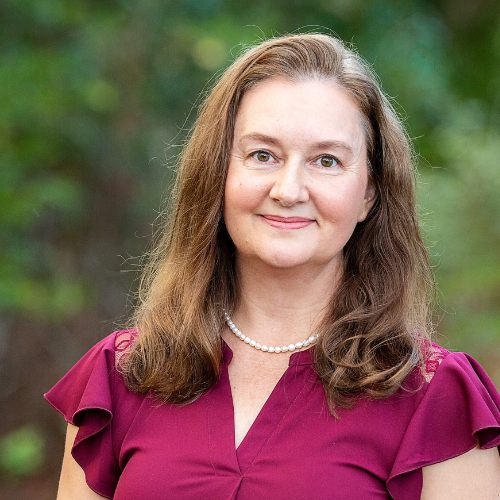
Dr. Daniel T. L. Moore has loved the study of history for as long as he can remember. The running joke in his family of eleven is that he knew exactly what he wanted to be the moment he was born. After graduating in 2016, Dr. Moore took this great fondness of history and earned his B.S. (2021), M.A. (2022), and Ph.D. in History (2025) from Liberty University.
Dr. Moore serves as an adjunct professor of history at Holy Apostles College & Seminary. Dr. Moore runs an academic history YouTube channel, Instagram page, and Substack account called “The St. Bede Center” (https://www.youtube.com/@TheSt.BedeCenter). Dr. Moore is also a freelance writer for Lepanto Institute.
In his spare time, Dr. Moore enjoys music, reading works of history, theology, and literature, lifting weights, and spending time with his family. One can find Dr. Moore on a cool Sunday afternoon on his back porch smoking a pipe and enjoying a book.
Having been home-schooled from K-12 in a Christian household full of joy and laughter and traveling across the United States and Canada playing music with his family band, Dr. Moore understands the home-school environment and wishes to integrate this experience, along with his passion for history, with any student he takes under his instruction.
sarabethsangrey.scholeacademy@gmail.com
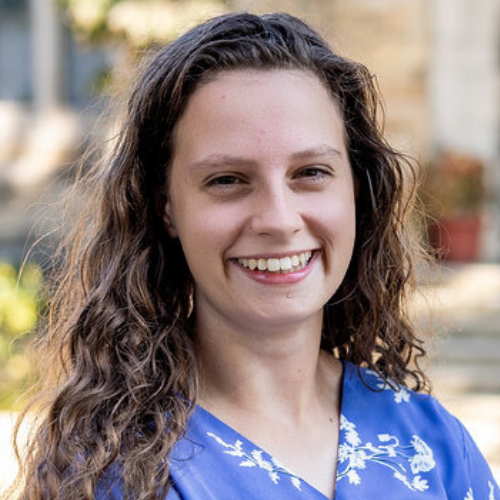
A homeschool graduate with a BA in English Literature from Geneva College, Sarabeth Sangrey loves engaging in discussions of history, theology and philosophy, writing stories, singing psalms, reading great books, hiking, and learning homesteading skills. She has also enjoyed many biology classes and has an interest in human physiology. Growing up in a family culture built around curiosity and stories, Sarabeth could often be found reliving the stories she heard with her four younger siblings. As she grew older, this love of reading blossomed into a wholehearted passion for learning, which she loves to impart to those around her. Recently married, Sarabeth has enjoyed establishing a covenant household with her new husband, and she looks forward to homeschooling children someday.
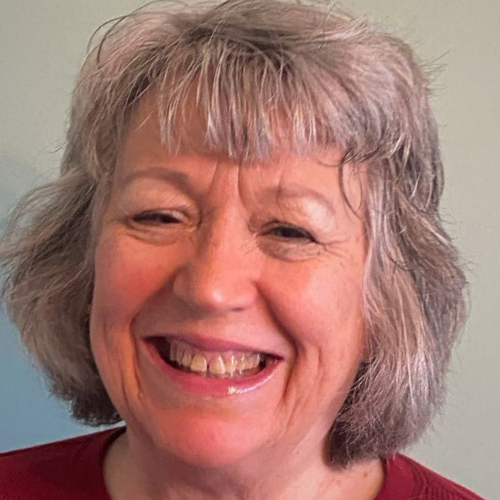
vixiefriedman.scholeacademy@gmail.com
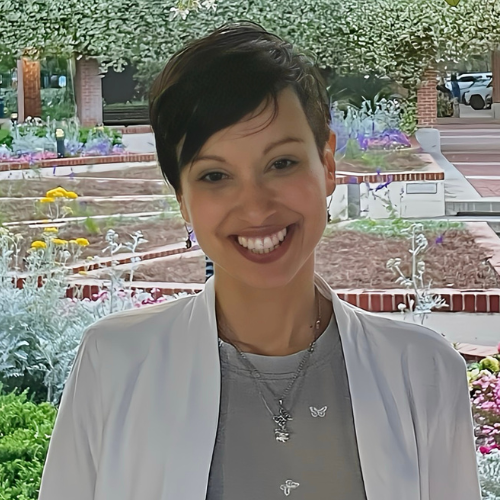
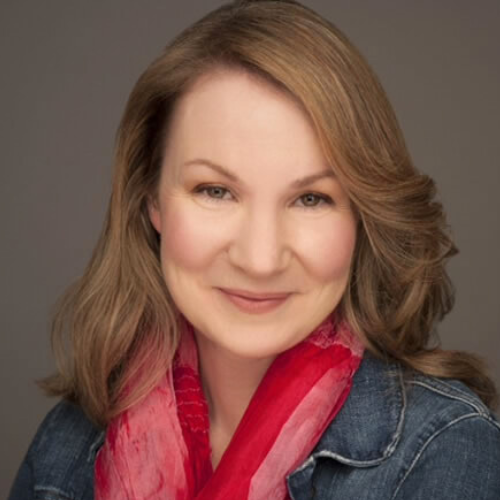
Since she was a little girl, Vixie Friedman always wanted to be a teacher and lined up her dolls and stuffed animals to compose her classroom. That dream became a reality when she began homeschooling her oldest son in 1988, a journey that continued with her six children until her youngest graduated from their family’s homeschool in 2015.
Vixie has taught in a formal classical education setting since 2008 and assisted with curriculum development and staff training with a classical Christian curriculum company. Classical education continues to be her passion as she observes her students blossom and develop their discussion skills while discussing history and/or literature through Socratic discussions and Socratic Circles.
After graduating with a BS degree in nursing from Western Carolina University, Vixie entered the US Army Nurse Corps, where she was stationed in Frankfurt, Germany. This fueled her love of travel and history as she married and left her Army commission to raise a family. She and her husband lived in Germany for nine years and enjoyed traveling throughout Europe, studying the region’s history as they traveled.
These days she continues to travel as she and her husband travel to Israel, Europe, and Africa through their ministry to the Jewish people, Children of Jacob.
She is continuing her education as she takes classes in classical education, history,literature, Russian, and German and enjoys enriching her education through Bible studies, personal reading, traveling, and book clubs. She enjoys spending time with her friends and family, including a growing number of grandchildren, cooking, gardening, and a multitude of crafts.
First, read the available course descriptions, noting prerequisites, target grades, and course objectives. If you think your student is prepared for the course, go ahead and register. After registration, a placement assessment may be provided to students, depending on the course and the student’s previous enrollment with Scholé Academy. Registration is finalized when the student’s placement assessment has been returned by the course instructor with placement confirmation.
Make sure they don’t conflict with other activities in your schedule or other courses you are purchasing. Our system will not catch double-bookings!
Our Assistant to the Principal will be in touch with you after your enrollment to help you with next steps, including any placement evaluations that may be required for your course selections.
This registration will be finalized when the student’s placement assessment has been returned by the course instructor with placement confirmation.
This course introduces high school students to some of the most important authors and poets of the 20th century. While...
Students in Scholé Academy’s upper-school American literature course will read a selection of classic American...
This course introduces high school students to some of the classic literary texts, or Great Books, of the ancient Roman...