Loading enrollment options…
If sections and pricing don’t appear, email [email protected] and we’ll help you enroll.
This course introduces students to the ideas, events, and cast of characters that molded the social, political, religious, scientific, economic, and technological history and literature from the Ancient and Classical World.
We believe that the Biblical mandate to “love thy neighbor” extends even to human beings that came before us. We desire to know and understand how people in the past lived, what they valued, and how they made sense of the world. Augustine wrote that humans are defined by their loves. We can get a sense of the “loves” of past people and cultures by studying their world and by reading the works that they read. This is an act of Christian charity or love that should stir us to humility and gratitude. Students will be seeking truth, beauty, and understanding through history and literature. My hope is that students come out of this course with a historical mindedness that produces a deeper love of God and love for our neighbor.
This course aims to introduce students to several of the “great books” of classical literature. Classes will consist of seminar-style discussion of the reading, with the instructor serving as the facilitator. The goal is to encourage a deeper understanding and appreciation for the readings and their timeless truths through thoughtful dialogue on a book’s characters, plot, themes, and cultural context. Students are expected to participate actively in these discussions by formulating thoughtful questions and interacting with their peers.
Students are asked to consider and engage carefully crafted questions as their window into “the Great Conversation.” Occasionally, the teacher will present biographical, literary, and historical context through brief lectures, but all other classes are seminar-style discussions on the classical texts. Students are assessed for their curiosity, participation, and diligence during discussions, as well as by means of short response papers, essays, and occasional quizzes.
This class is paired with our middle-school course on ancient history, taught by the same teacher, and scheduled back-to-back with that course in a “block.” Students who take both courses receive a discount. This course may also be taken as a standalone literature study. Because of this arrangement, and the nature of history and literature, there will necessarily be overlap between the two classes. This integrative experience of history and literature is one of the benefits of the classical model.
This course is suitable for rising 7th–9th graders. Students are expected to have proficient reading and writing skills as well as the interest and capacity for engaging in discussion about literature and history. Students suited for this course will also be cultivating the following scholarship skills:
How much time will students spend on homework?
I aim to give around 2 hours of homework every week for each class (a total of 4 hours of homework for both history/literature). Most of this will be reading, annotating, short assignments, etc.
How does this course compare to the upper-school ancient literature course?
The chief differences between the middle-school and upper-school levels for this course are noted below. While there will be some overlap of content taught, the upper-school course will be much more challenging and assume a more mature student with more background knowledge and greater reading, writing, and scholarship facility.
How is faith integrated with these courses?
These seminar-style discussions unfold organically. One could approach the texts with a focus on defensive critiques of classical authors. By contrast, we seek to read charitably. We treat classic authors as if they were friends, gleaning every available truth while also examining them from a robustly Christian perspective.
At Scholé Academy, we have carefully considered how we should engage our contemporary culture as those who believe that Christ is the Truth (John 14:6), and that all truth has its source in him. We think it is important to provide our upper school students (in grades 7-12) with tools and opportunities for critically examining various cultural trends, issues and mores through the lens of orthodox, Christian beliefs. Being confident in the truth revealed to us in creation, the Scriptures, and the tradition of the church, we are not afraid to follow the truth and its implications nor to address error and falsehood. … Read more about our Faith & Culture.
Required Materials: Books and supplies are not included in the purchase of the course. These resources are listed to help inform your decision-making as you make course selections and build your course schedule. Please reach out to the instructor if you have any questions about materials.
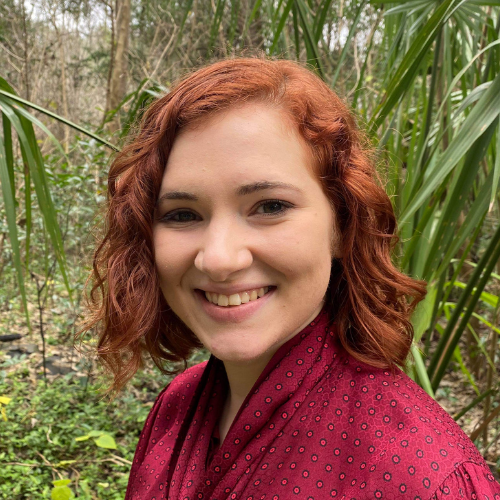
Lauren Della Piazza Hartke is a third generation teacher, raised by parents who instilled in her a passion for history and literature. She graduated from a Christian high school before attending Geneva College in Beaver Falls, Pennsylvania. Lauren had the opportunity to study abroad in Scotland for a semester before obtaining a B.A. in History. As a teaching assistant at Geneva College she fell in love with teaching the humanities and accordingly went on to obtain an M.A. in Public History from Georgia Southern University where she also worked as a teaching assistant and a coordinator for the Ogeechee International History Film Festival.
Lauren’s abiding interest is in educating people of all ages in all matters of history, but her favorite eras are classical and medieval Europe. Her experience in both Christian and secular higher education made her consider her own pedagogy and preference for the classical model. She firmly believes that an education in the humanities enables us to better love God and love our neighbors.
Besides reading and watching old films, Lauren loves baking, traveling, playing the piano, and hiking. She and her husband Logan live in Jacksonville, Florida where they share a house with their cat, Katya. They love cooking for friends and family members, and can frequently be found at exotic grocery stores shopping for unique ingredients.
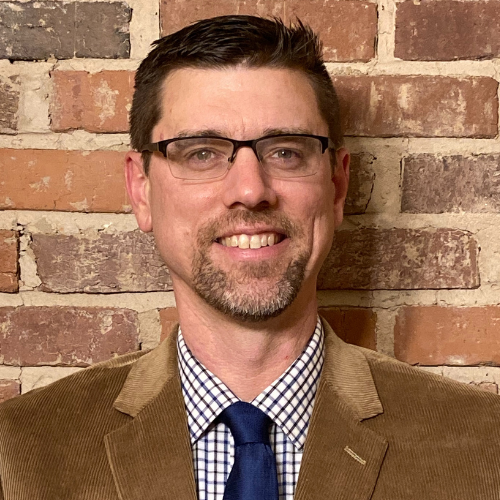
Christian Herring holds a B.S in History from Western Carolina University, an M.Div from Hood Theological Seminary, and a Th.M in Church History from Liberty University. He has been teaching in a variety of settings from churches to prisons to a hybrid-model Classical Christian school, since 2005. He loves sharing his passion for history, the Bible, and great literature. His teaching philosophy revolves around reading great books, having great discussions, and writing great papers. It is his conviction that education is an essential part of discipleship, no matter what the specific subject matter is, therefore the Christian worldview brings itself to bear on all areas of study. Furthermore, all areas of study contribute to forming us into wise, virtuous, and godly human beings. Christian and his wife and four children call central North Carolina home. Mr. Herring typically enjoys a cup of hot tea during class.
First, read the available course descriptions, noting prerequisites, target grades, and course objectives. If you think your student is prepared for the course, go ahead and register. After registration, a placement assessment may be provided to students, depending on the course and the student’s previous enrollment with Scholé Academy. Registration is finalized when the student’s placement assessment has been returned by the course instructor with placement confirmation.
Make sure they don’t conflict with other activities in your schedule or other courses you are purchasing. Our system will not catch double-bookings!
Our Assistant to the Principal will be in touch with you after your enrollment to help you with next steps, including any placement evaluations that may be required for your course selections.
This registration will be finalized when the student’s placement assessment has been returned by the course instructor with placement confirmation.
This course introduces high school students to some of the most important authors and poets of the 20th century. While...
Students in Scholé Academy’s upper-school American literature course will read a selection of classic American...
Words are powerful—they elicit emotions and connect the reader with the author’s worldview. As Madeleine L’Engle...