Loading enrollment options…
If sections and pricing don’t appear, email support@scholeacademy.com and we’ll help you enroll.
This course will focus on British Literature written from 1678 to 1954 and will provide a broad sweep of historical perspectives through mainly fiction readings. The books selected for the course will be studied in depth for their tremendous contribution to the literary world and the shaping of society. During this time frame, and particularly in the 19th century, British writing was prolific and greatly influential. This course will provide solid scaffolding for the further enjoyment and study of renowned British literature.
The goals of this course are:
The readings being with John Bunyan’s Pilgrim’s Progress and progress through the Enlightenment Era, the Romantic Period, and Victorian Age to Realism and Existentialism. As students investigate the historical impact of political, philosophical, social, and religious perspectives they will come to recognize effects on the writers of the time. They will develop the craft of asking questions following the form of Aristotle’s Five Common Topics of Invention; in doing so, they will engage with the text and their peers on a contemplative level. Students will be required to read all assigned texts (approximately 1 hour of reading per day) and write one major essay per book (comparison, narrative, expository, etc.). Additionally, students shall expect to maintain a dialectic notebook (to be explained in class), periodically submit short (1-page) response papers, and complete a portfolio. Participation in Socratic dialogue is imperative as it serves to promote vigorous contemplation and reflection.
The writing portion of this course will focus on various types of academic essays including compare and contrast, critical analysis, expository, and persuasive. Students will follow a rubric for each piece of writing in order to develop strong mental templates for presenting thoughts in differing forms. As the communication of ideas is paramount in literature, selecting the most appropriate structure to convey such ideas is a valuable skill. Likewise, a writer’s personal style can powerfully impact the reception of the work, and as such, students and teacher will together explore and practice schemes and tropes such as anaphora, antithesis, epistrophe, polysyndeton, and more. Experimenting with word play will enrich our study of British literature and lead students toward growth in eloquence. Students will be expected to employ proper grammar and mechanics of writing (including spelling, grammar, and structure) as they endeavor to stretch their writing abilities.
While this course primarily features literary study, it also incorporates some study from British history, helping students to see and enjoy the integration of both history and literature. This class is paired with our upper-school Western History: Enlightenment to Industrial Revolution course, taught by the same instructor, and scheduled back-to-back with that course in a “block.” Students who take both courses receive a discount. This course may also be taken as a standalone literature study.
The target grades for this course are 9th–10th grade. Students must have successfully completed an 8th-grade-level writing course; they will be expected to have competency in vocabulary, annotation, and essay-writing (various forms of written discourse) and know how to write a summary and reflect on a text (though the instructor will work to develop these skills throughout the course). Students are expected to have strong reading and writing skills as well as the interest and capacity for engaging in discussion about literature and history. Students well suited for this course will continue refining the following scholarship skills as they approach mastery:
High School Credit: This course is the equivalent of one high school credit in English or literature.
How much time will students spend on homework?
This varies by student according to his or her pace. However, the average reader can expect to spend approximately 1.5–2 hours per week reading course materials, and approximately half an hour to an hour working on the questions. Students will submit regular weekly assignments. Midterm and final exams will be given.
How is faith integrated with these courses?
These seminar-style discussions unfold organically. One could approach the texts with a focus on defensive critiques of classical authors. By contrast, we seek to read charitably. We treat classic authors as if they were friends, gleaning every available truth while also examining them from a robustly Christian perspective.
At Scholé Academy, we have carefully considered how we should engage our contemporary culture as those who believe that Christ is the Truth (John 14:6), and that all truth has its source in him. We think it is important to provide our upper school students (in grades 7-12) with tools and opportunities for critically examining various cultural trends, issues and mores through the lens of orthodox, Christian beliefs. Being confident in the truth revealed to us in creation, the Scriptures, and the tradition of the church, we are not afraid to follow the truth and its implications nor to address error and falsehood. … Read more about our Faith & Culture.
Required Materials: Books and supplies are not included in the purchase of the course. These resources are listed to help inform your decision-making as you make course selections and build your course schedule. Please reach out to the instructor if you have any questions about materials.
Other Materials:
Note: Most of the readings can be accessed online as they are public domain, but hard copies are recommended. Parents are welcome to purchase any edition that fits their budget.
Optional Course Texts

pshaltanis.scholeacademy@gmail.com
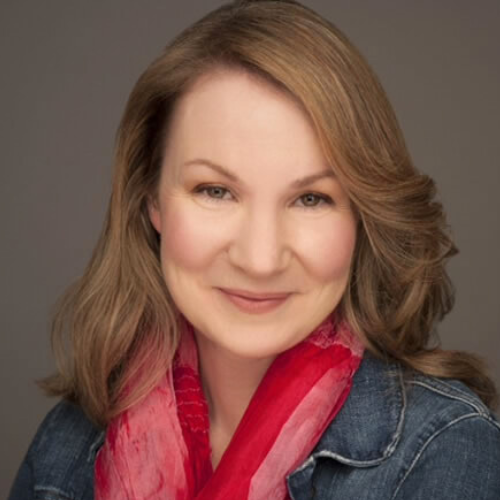
Phaedra Shaltanis, Chair of the Humanities Department, has taught in private and classical schools for over 25 years and has educated her four children in the classical tradition, which has been the monumental joy of her life. After college graduation, she began teaching high school Writing, Literature, Spanish, and Art in classical schools. Her involvement with Scholé Academy includes teaching American Literature, British Literature, Western History, Rhetoric I, Formal Logic and Well-Ordered Language Levels 1 and 2. She is enthused to serve as the Humanities department chair and appreciates guiding parents and teachers toward restful education. In her Dallas community, she currently directs a high school university-model program, trains and mentors teachers, conducts seminars on classical education, builds curriculum, supports parents, and provides fine art instruction at a classical high school. She and her husband hope to support classical education as avenues present themselves.
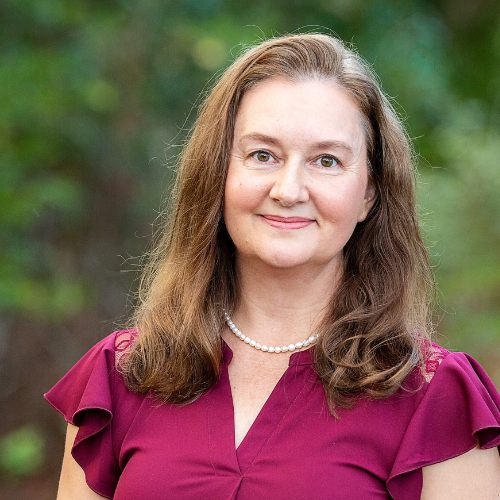
cseaward.scholeacademy@gmail.com
Dr. Seaward received her B.A. in Liberal Arts and earned her elementary teaching credential at California State University, Stanislaus, before becoming an Air Force wife in 1992. She completed her M.A. in Humanities from California State University, Dominguez Hills, and her Ph.D. in Humanities with a concentration in Literature from Faulkner University, where the Great Books program changed how she viewed education. She is blessed to be the wife of her engineer husband and mother of two grown daughters. This is her fifth year teaching at Scholé Academy, and she is enjoying the model of restful learning. She is a long-time admirer of C.S. Lewis, and she enjoys taking long walks with her husband, watching sumo wrestling, and the pleasure of reading.
Dr. Seaward’s blog article on Jane Eyre, “Running Toward Temperance.” https://scholeacademy.com/running-toward-temperance/
Interview with Dr. Seaward in the Fall 2023 edition of the Scholé Chronicle. https://scholeacademy.com/student-enrichment-clubs/the-schole-chronicle/
LinkedIn: www.linkedin.com/in/christi-seaward-ph-d-0042b919a
Student and Parent Testimonies: https://www.youtube.com/watch?v=E4EiNIxQEDQ
First, read the available course descriptions, noting prerequisites, target grades, and course objectives. If you think your student is prepared for the course, go ahead and register. After registration, a placement assessment may be provided to students, depending on the course and the student’s previous enrollment with Scholé Academy. Registration is finalized when the student’s placement assessment has been returned by the course instructor with placement confirmation.
Make sure they don’t conflict with other activities in your schedule or other courses you are purchasing. Our system will not catch double-bookings!
Our Assistant to the Principal will be in touch with you after your enrollment to help you with next steps, including any placement evaluations that may be required for your course selections.
This registration will be finalized when the student’s placement assessment has been returned by the course instructor with placement confirmation.
This course introduces high school students to some of the most important authors and poets of the 20th century. While...
Students in Scholé Academy’s upper-school American literature course will read a selection of classic American...
Words are powerful—they elicit emotions and connect the reader with the author’s worldview. As Madeleine L’Engle...