Loading enrollment options…
If sections and pricing don’t appear, email [email protected] and we’ll help you enroll.
Why do we need stories? C.S. Lewis said, “The nearest I have yet got to an answer is that we seek an enlargement of our being. We want to be more than ourselves…We want to see with other eyes, to imagine with other imaginations, to feel with other hearts, as well as with our own.”
Such is the yearning of children and adults alike, for it is through stories that we enter into a world that is not our own and yet become more who we are meant to be. It is through stories that we can learn virtu. When children read stories, they enter into the world of the characters and reflect on the virtues and vices of the protagonists and antagonists. It is a gentle, appropriate, and vivid way for children to learn what Dietrich von Hildebrand called a “response to value” and the virtue that blossoms from that response.
In this class, children will read, enjoy, and interact with classic works of children’s literature in order to learn through knowledge, experience, and reflection the four classical virtues: justice, prudence, temperance, and fortitude. Students will respond to these texts through discussion, written analysis and reflection, and artistic mediums in order to reach the whole child in our study. The skills will include reading fluency, reading comprehension, writing, vocabulary, memorization, recitation, analysis, synthesis, and discussion.
Important Skills & Behaviors Needed for Success in this Course
Student Expectations: Executive Function Skills Students enrolling in Scholé Academy’s Classic Children’s Literature will be expected to show the development of Executive Function throughout the year. Executive Function is the brain’s work of planning, prioritizing, controlling impulses, recollection, etc. These six areas of execution are important in this class and, ultimately, in the student’s life.
Student Expectations: Class Participation “The intelligence can only be led by desire. For there to be desire, there must be pleasure and joy in work. The intelligence only grows and bears fruit in joy. The joy of learning is as indispensable in study as breathing is in running…It is the part played by joy in our studies that makes them a preparation for spiritual life, for desire directed toward God as the only power capable of raising the soul.” -Simone Weil
Required Materials: Books and supplies are not included in the purchase of the course. These resources are listed to help inform your decision-making as you make course selections and build your course schedule. Please reach out to the instructor if you have any questions about materials.
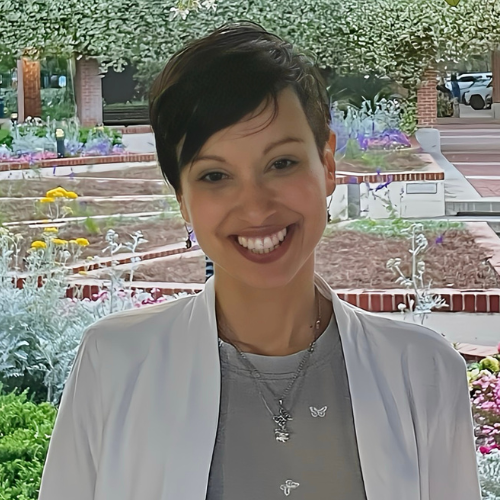
Sections with Emily Kashin
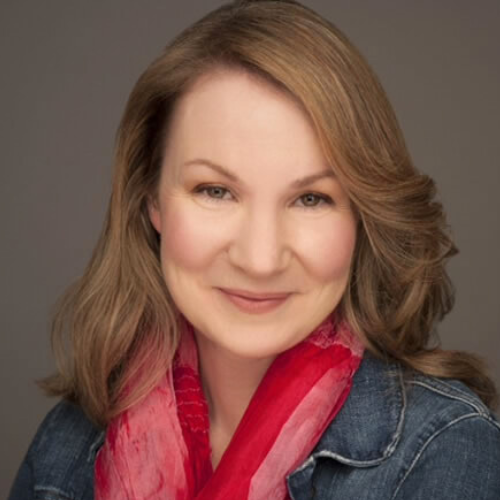
Sections with Lindsey Knott

Emily Kashin holds a BA in Primary Education from the University of North Florida. She was homeschooled K-12 in the classical tradition and previously taught the elementary grades in a Waldorf-inspired public charter school. Her classical upbringing instilled in her what Plato called an “affinity for the good” in academics, art, and virtue, while her Waldorf training inspired an appreciation of the unique nature of the child. Since 2020, she has brought the two together, cultivating those whole-child pedagogical approaches in the classical, liturgical tradition, to awaken in her own students that “affinity for the good” through her Scholé classes.
Emily lives in North Florida with her husband Mikhail and their son Isaac, and their days are filled with Isaac's laughter, Mikhail's lattes, and Emily's crochet and cooking projects. St. Augustine’s saying “Canta et ambula” (sing and soldier on) encourages her daily in the ordinariness of teaching, homemaking, and grading papers.

Mrs. Lindsey Knott lives, with her husband Alex and their three small sons, on a quiet green corner of a big North Florida town. Not too long ago, she thoroughly enjoyed an academic season in which she graduated with a B.A. in English and education from Wheaton College; earned a certificate in theological studies from Knox Seminary; taught high school rhetoric, logic, composition, and literature in a classical Christian homeschool extension program; and wrote for the CiRCE Institute blog—but these days you’re more likely to find her with a baby than a book in hand, and her keen interest is to prove out each day how the classical Christian inheritance can nurture, enrich, and transfigure a quite ordinary life and home. She and her family attend Holy Trinity Anglican Church.
First, read the available course descriptions, noting prerequisites, target grades, and course objectives. If you think your student is prepared for the course, go ahead and register. After registration, a placement assessment may be provided to students, depending on the course and the student’s previous enrollment with Scholé Academy. Registration is finalized when the student’s placement assessment has been returned by the course instructor with placement confirmation.
Make sure they don’t conflict with other activities in your schedule or other courses you are purchasing. Our system will not catch double-bookings!
Our Assistant to the Principal will be in touch with you after your enrollment to help you with next steps, including any placement evaluations that may be required for your course selections.
This registration will be finalized when the student’s placement assessment has been returned by the course instructor with placement confirmation.
This course introduces high school students to some of the most important authors and poets of the 20th century. While...
Students in Scholé Academy’s upper-school American literature course will read a selection of classic American...
Words are powerful—they elicit emotions and connect the reader with the author’s worldview. As Madeleine L’Engle...