Loading enrollment options…
If sections and pricing don’t appear, email [email protected] and we’ll help you enroll.
Placement Process One critical factor for restful learning is the proper placement of students. If you are unsure which level is the best fit for your student, reach out to the instructor you are considering. Once registered, anticipate contact regarding placement evaluations from instructors by May 15th and throughout the summer. Students must be enrolled to enter the placement process. Early placement exams may allow time for tutoring or additional review based on the outcomes. See more about placement evaluations in our Student-Parent Handbook.
Math Placement Process For registered students, please anticipate contact regarding placement evaluations from instructors by May 15th and throughout the summer. Students must be enrolled in a math course to receive a placement assessment. Math classes have a detailed and specific placement process. Learn more about the math placement process
Watch the math placement process video with our department chair, Dr. Fransell Riley.
See the Math Scope and Sequence.
Pre-Algebra Accelerated is a one-year course that covers all of the pre-algebra concepts taught in Foundations VII and VIII; two-courses in one year. This course is designed for two groups of students:
Those who would thrive from the challenge of an accelerated course due to their joy of math, keen desire to learn math, ability to grasp concepts more quickly than average, or motivation to pursue a STEM field in the future. These are typically 7th grade students who aim to complete Algebra I in 8th grade and advanced math (such as Calculus) before high school graduation.
This course is also suited for those who have already learned most of the concepts but would greatly benefit from another year of study in order to cover gaps and deepen their understanding before starting Algebra I. These are typically 8th/9th grade students.
If neither of these describes your student, then they are likely better suited for the traditional two-year sequence of taking Foundations VII (Pre-Algebra Part 1) followed by Foundations VIII (Pre-Algebra Part 2).
This course is a bridge between Arithmetic and Algebra. Students begin their transition from concrete thinking to abstract thinking by learning how to handle variables in algebraic expressions (combining like terms) and in solving multi-step equations and 2-step inequalities. They will develop fluency in the laws of exponents, and in rational and irrational number operations. Students will expand their understanding of percentages and ratios to include the probability of simple and compound events, learn to identify proportional relationships, and understand the slope of a line. They take their first steps towards understanding relations and functions, domain and range, and solving systems of equations.
Expanding on their geometry foundation, students will learn the Pythagorean Theorem and its uses as well as transformations, congruence, and similarity of shapes. They will study angle relationships, angles in triangles, area, surface area, and volume. They will develop 21st-century skills in analyzing data and practice problem-solving skills by working on challenging problems, including competition-level problems. Students will delve into the history of Algebra and participate in philosophical discussions of the course content.
They will complete portfolio projects that deepen their understanding of the concepts, appreciate the role of mathematics in God’s creation, and lead them to explore real-world applications of mathematics. Throughout the course, students will be led to see mathematics as a tool to solve real-world problems and understand God’s creation. They will practice different problem-solving strategies: Solve an Easier Problem and Solve a Subproblem.
Experience The teaching of a new concept opens with a brief review of previously covered content. This review connects the previous lesson to the current lesson. The premise of the current lesson is presented via a question or idea. The students now have a puzzle or idea that they want to explore. As we delve deeper into answering the question at hand, we begin to discover the new mathematical concept. We use our prior knowledge and intuition to uncover a new truth about mathematics. Once this truth has been uncovered, we begin to work examples; first as a class and then as individuals or in groups. As our understanding of the concept deepens, we extend our knowledge base to include specific cases or situations that lead to minor adjustments in the truth that we have uncovered – thus expanding the truth. We use a variety of methods to uncover new truths. The most frequent method is a Socratic-style discussion that the entire class participates in. A discussion takes place that reveals the relevance of this truth in our mathematical studies or our daily lives (real-life application).
Watch a sample of Scholé Academy Math instruction with Dr. Fransell Riley
Delivery Each teacher has a unique presentation style in delivering the aforementioned experience. Sometimes the teacher leads the discussion using questions; following the example set by Socrates.. Sometimes a problem is presented and the students take the lead in finding a solution based on extending previous knowledge. Sometimes students participate in a hands-on activity to discover new truths. Sometimes a short lecture or presentation is required, however, we aim to minimize lecturing, especially before high school.
Methodology Students continue to study the new truth and deepen their understanding of it via homework, classwork, projects, and assessments. Since our classes do not meet 5 days per week, students must spend time studying the concepts outside of class. This also helps students grow in their ability to think and work math concepts independently which is required for future math classes. For this reason, we ask that parents minimize the assistance that students are given on assignments. If a student receives an A on an assignment, it should be a true indication of their independent ability as the teacher interprets this A as independent mastery. Review assignments or classroom review activities are utilized to assist students with opportunities to retain or improve their mastery. Assessments are directly or indirectly cumulative and serve as an opportunity to deepen their learning. Assessments are not meant to be a regurgitation of previous homework assignments.
Preparedness Students who are adequately prepared to take this course will have mastered (can work independently without prompting):
Required Materials: Books and supplies are not included in the purchase of the course. These resources are listed to help inform your decision-making as you make course selections and build your course schedule. Please reach out to the instructor if you have any questions about materials.
Textbook
Other Resources
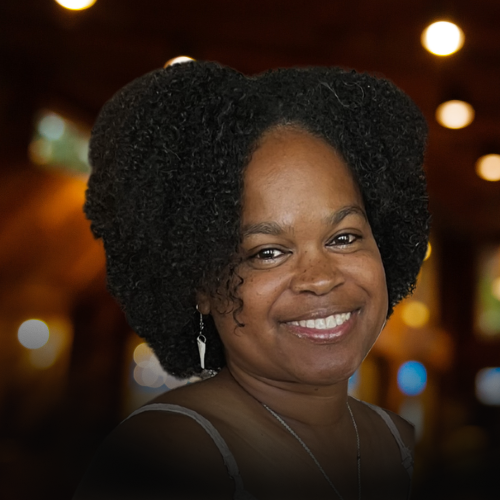
Dr. Fransell Riley, Chair of Math Department spent most of her career working as a quantitative analyst. She earned her PhD in mathematics from the University of Texas at Arlington with every intention of remaining in corporate America. Though she enjoyed her work, she ultimately responded to an internal call to pursue a passion for educating students, including her own children. Fransell has taught math and science to students of all ages from elementary school to college. While teaching, she noticed that her natural teaching style aligned almost perfectly with the concepts of classical education. She takes a holistic approach to teaching and involves her students in discussions aimed at developing a deeper understanding of the concept being taught with the desire that student learning extend beyond memorizing algorithms. Fransell has a passion for mathematics and seeks to share that passion with the next generation. Beyond math, Fransell enjoys spending time with her husband and 2 sons. They are all athletes and nature lovers; they enjoy participating in sports, hiking, exploring nature, and traveling. When they aren’t enjoying God’s creation, you can find them indoors reading or watching reruns from the Star Trek series.
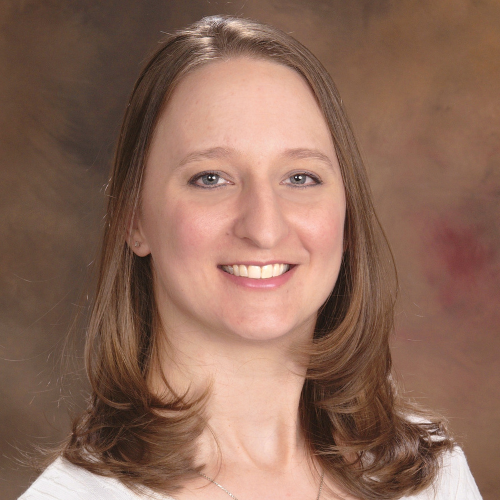
Danielle Bartko is an experienced Math and Science teacher, and Orthodox Church Cantor and Choir Director. She taught in public schools and a Montessori based Orthodox private school. She has served the American Carpatho-Russian Orthodox Diocese as a Cantor and Choir Director, and the Orthodox Church in America as a Choir Director. She spent countless summers at Camp Nazareth, first as a camper, and later as a counselor and chant teacher.
She holds degrees in Biology and Music from Lafayette College, and Secondary Teacher Certification from DeSales University. She has taught grades 5-12, and currently homeschools her children. She has experience in a variety of teaching methods, and has taught students with diverse academic needs. She is a lifelong learner, and has enjoyed growing and changing as an educator over the years. Her goal is to inspire her students to become lifelong learners as well.
Her Liturgical music education comes from a variety of coursework in Orthodox Music and Choral Directing. She has taken classes through Christ the Saviour Seminary and the OCA Liturgical Music Department, and independent study with Very Rev. Protopresbyter Michael Rosco and Professors Paul Hilko, George Hanas, Andrew Talarovich, and Jerry Jumba. Whenever she travels and visits a church, she will sneak into the choir loft, wait for an invitation to sing with the choir, and then ask for copies of good music to keep as a souvenir.
She grew up in New Jersey, but now lives in Pittsburgh PA with her husband and two young daughters. When she is not homeschooling her children or teaching classes, she enjoys gardening, jigsaw puzzles, SRS Iconography classes, visiting with friends and family, and going to the beach.
First, read the available course descriptions, noting prerequisites, target grades, and course objectives. If you think your student is prepared for the course, go ahead and register. After registration, a placement assessment may be provided to students, depending on the course and the student’s previous enrollment with Scholé Academy. Registration is finalized when the student’s placement assessment has been returned by the course instructor with placement confirmation.
Make sure they don’t conflict with other activities in your schedule or other courses you are purchasing. Our system will not catch double-bookings!
Our Assistant to the Principal will be in touch with you after your enrollment to help you with next steps, including any placement evaluations that may be required for your course selections.
This registration will be finalized when the student’s placement assessment has been returned by the course instructor with placement confirmation.
Algebra I serves as the foundation for all future mathematics and science courses. Students continue to study...
Algebra II builds on the foundation of Algebra 1 and Geometry. Topics include real and complex numbers, linear,...
Calculus, at its core, considers and answers two questions: