St. Raphael School
Loading enrollment options…
If sections and pricing don’t appear, email support@scholeacademy.com and we’ll help you enroll.
Liberal Arts 6: Ancient Classics HISTORY Liberal Arts 6: Ancient Classics HISTORY offers students a glimpse into the ancient Greco-Roman world through a selection of some of the greatest works of this formative period. The “Greek Year” rotation spans from 8th century BC to the reign of Alexander the Great (4th century BC), whereas the “Roman Year” rotation spans from the founding of Rome (8th century BC) to the fall of the Roman Empire in the West (late 5th century AD). The second half of the Roman Year will in turn focus on the first few centuries of the Church. Texts include a wide range of genres, such as epic poetry, lyric poetry, history, drama, philosophy, and theology. As a course within the “Great Books” tradition of the classical liberal arts curriculum, most of class time will be spent discussing the primary texts, with the instructor providing supplementary contextual data where relevant.
Students will engage with the most important and foundational ideas of these ancient cultures, including both how they saw themselves and how the earliest Christians ultimately transformed these through the light of the Gospel. Students will analyze these materials critically, asking such questions as: What were the foundational ideas of Greco-Roman civilization? What did they value and why? How and why did these values and ideas change over time? Which of these did the Church see fit to keep, or to reject? What relevance do these ancient ideas and values have for us in the Church today?
As a course within St. Raphael School, non-Orthodox students are welcome to enroll, but with the understanding that the instructor will approach the material from an explicitly Eastern Orthodox perspective. This means that while the class will evaluate these ancient classics through a Christian lens, the Orthodox standards for evaluation may differ significantly from those of non-Orthodox. At the same time, students should also be prepared to read each text firstly on its own terms before attempting to evaluate it on its merits. To this end, true understanding must begin with a degree of empathy, even if the author in question is a non-Christian. Both History and Literature are designed to be complementary with one another, but can be taken on their own.
This class is paired with our Liberal Arts Level 6: Ancient Classics LITERATURE course and scheduled back to back with that course in a block. Students who take both courses receive a discount. This course may also be taken as a standalone history study.
High School Credit: The modern subjects of “history” and “literature” do not do justice to the rich variety of works represented in the Great Books of civilization. Successful students will nonetheless gain both an understanding of ancient history and a facility in the art of reading ancient literature. Thus, graduates of St. Raphael School's Liberal Arts courses may list the combination as two credits—both “history” and “literature”—on their high school transcript.
Required Materials: Books and supplies are not included in the purchase of the course. These resources are listed to help inform your decision-making as you make course selections and build your course schedule. Please reach out to the instructor if you have any questions about materials.
Rotation B 2026-2027 (Greek- Current Year)
Rotation A 2027-2028 (Roman Year)
alexander.titus.scholeacademy@gmail.com
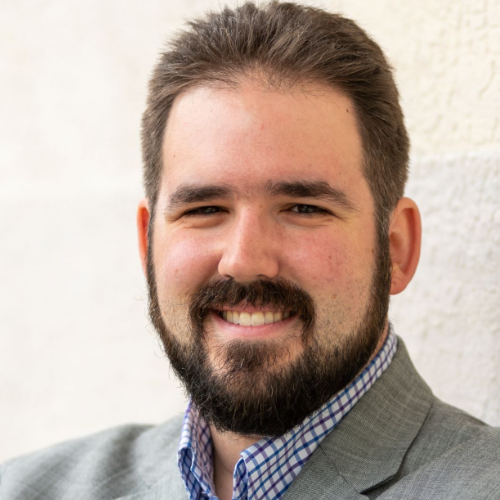
Dr. Alexander Titus is a learner, educator, translator, and Church historian, specializing in the Byzantine and medieval Western periods. He holds a BA (2011) in Classics from the University of Oregon, an MA (2015) and ThM (2016) from St. Vladimir’s Theological Seminary, and a PhD (2022) in Church History from Princeton Theological Seminary. He is the translator of St. Gregory Palamas' Triads (available from St. Vladimir’s Seminary Press). Dr. Titus has come to believe strongly in the salvific value of classical education, not only for the soul of the individual Christian, but for the building up of the whole Church. Dr. Titus currently lives in Western Oregon with his wife and two sons. His other interests include cooking, literature, visual arts (e.g., film, animation, games), and volunteering in his local Orthodox community.
First, read the available course descriptions, noting prerequisites, target grades, and course objectives. If you think your student is prepared for the course, go ahead and register. After registration, a placement assessment may be provided to students, depending on the course and the student’s previous enrollment with Scholé Academy. Registration is finalized when the student’s placement assessment has been returned by the course instructor with placement confirmation.
Make sure they don’t conflict with other activities in your schedule or other courses you are purchasing. Our system will not catch double-bookings!
Our Assistant to the Principal will be in touch with you after your enrollment to help you with next steps, including any placement evaluations that may be required for your course selections.
This registration will be finalized when the student’s placement assessment has been returned by the course instructor with placement confirmation.
St. Raphael School
Liberal Arts Level 1: Illustrated Classics is an early‑elementary course designed for young learners and their...
St. Raphael School
The Liberal Arts Level 2: Early Chapter Books course is designed to build on skills and love of learning built in our...
St. Raphael School
The Liberal Arts Level 3: Advanced Chapter Books course is designed to provide students with an overview of literary...