The music of the spheres is the ancient idea that the heavens move in mathematical harmony, like a great piece of music too vast for human ears to hear. It belongs to music as a liberal art, the third art of the quadrivium and the sixth of the seven liberal arts. To the ancients and medievals, music was first the study of number in relation: the ratios that make harmony in a vibrating string, in a well-ordered soul and in the cosmos itself. Singing and playing were part of it, but the art reached much further.
That can surprise modern parents, who think of music as a fine art or an extracurricular activity. This guide explains why music sat beside arithmetic, geometry and astronomy in the old curriculum, what Pythagoras and Boethius taught about harmony, why Plato thought music shapes the soul, and how families can bring this richer idea of music into their homes.
What is the music of the spheres?
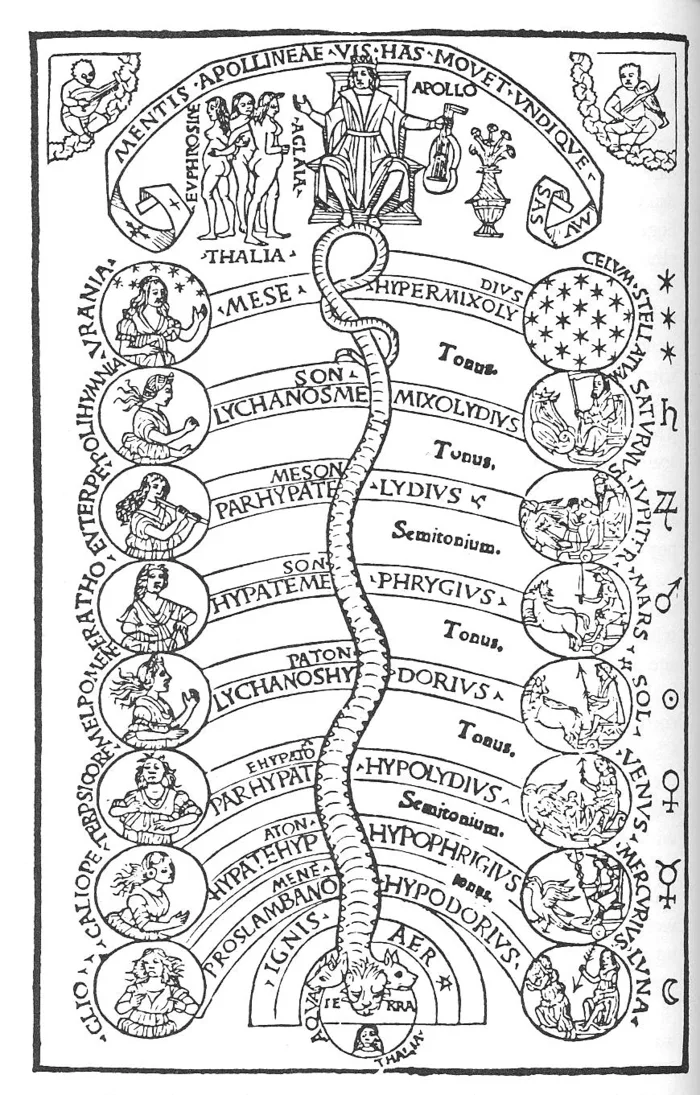
The music of the spheres, also called the harmony of the spheres, is the ancient belief that the sun, moon and planets move in proportions like those of musical intervals, so that the whole universe sounds a harmony. The idea goes back to the Pythagoreans. Plato pictured it in the Republic, Boethius taught it, and Kepler pursued it in his 1619 Harmonices Mundi.
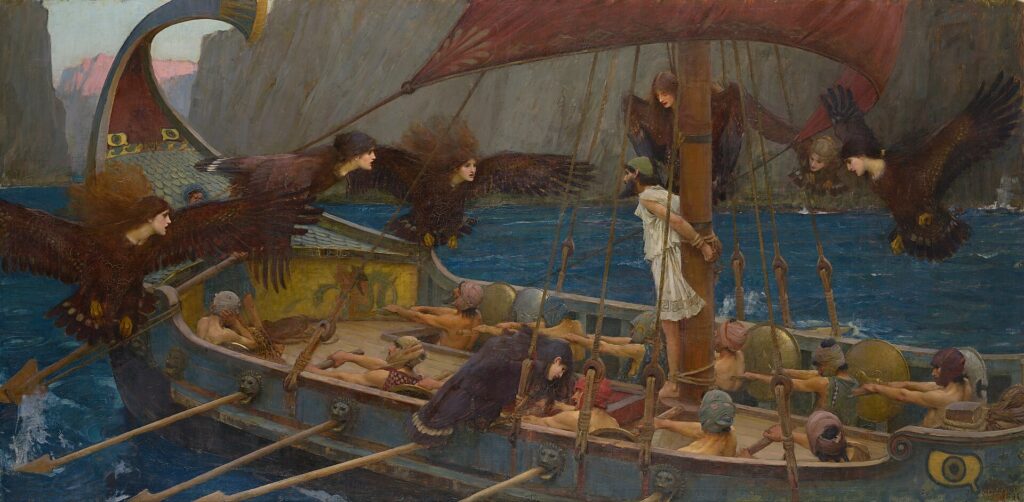
In the myth of Er that closes Plato’s Republic, each heavenly circle carries a Siren singing a single note, and together the notes make one harmony. Shakespeare gave the idea its best-known English lines in The Merchant of Venice: “There’s not the smallest orb which thou behold’st / But in his motion like an angel sings.” Christian readers heard an echo in the book of Job, where God speaks of creation’s first morning, “when the morning stars sang together, and all the sons of God shouted for joy” (Job 38:7).
No one now thinks the planets literally hum. But the idea behind the music of the spheres, that the universe is ordered by beautiful proportions and that music is a small, audible image of that order, was taken seriously by some of the greatest scientists in history.
Pythagoras and the discovery of harmony
The ancient story says that Pythagoras was walking past a blacksmith’s shop when he noticed that some hammers rang together pleasantly and others clashed. He found that the pleasant ones had weights in simple ratios. The story as told cannot be literally true, since hammers do not work that way, but the discovery behind it is real and anyone can hear it on a single string. Stop a string at its midpoint and it sounds an octave higher, a ratio of 2:1. Stop it at two thirds of its length and it sounds a fifth (3:2). At three quarters it sounds a fourth (4:3).
That discovery astonished the ancient world. Beauty that the ear can hear turned out to be number that the mind can understand. The simplest ratios produced the sweetest consonances. To the Pythagoreans this suggested that number is woven into the fabric of reality, and that harmony is the sound of order. Students can repeat the experiment with a monochord, or even a rubber band stretched over a box, and hear the ratios for themselves.
Boethius and the three kinds of music
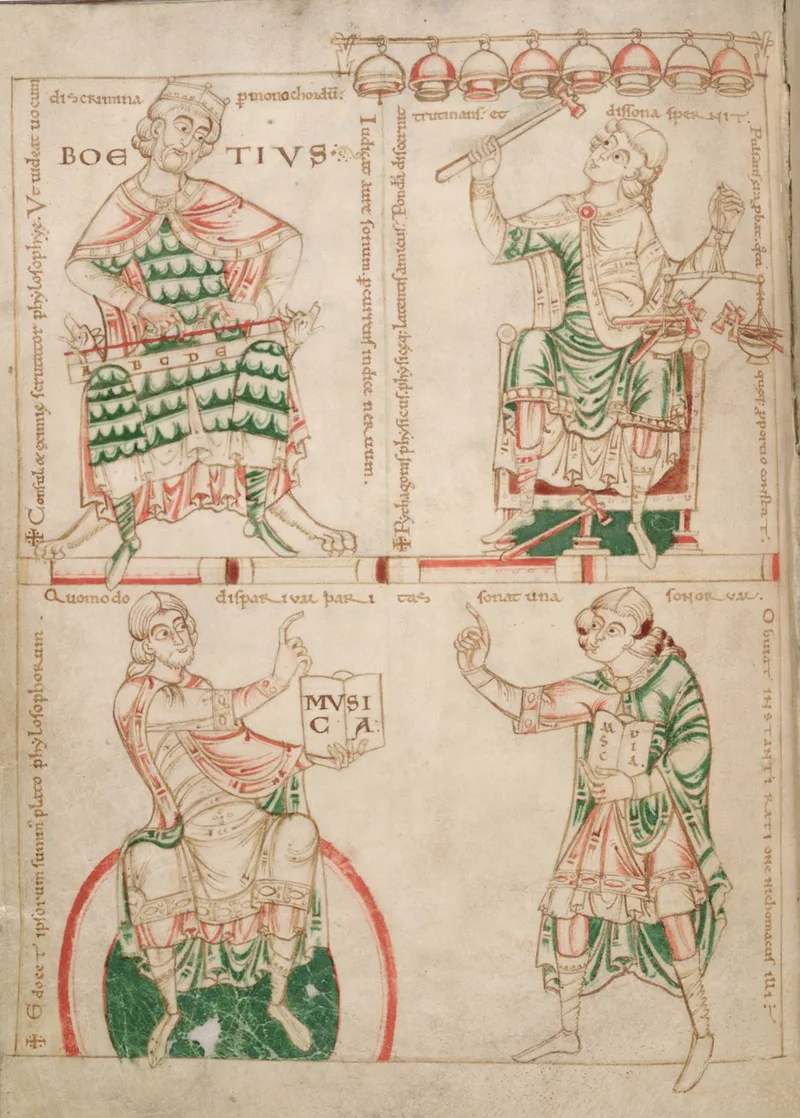
The Roman Christian philosopher Boethius wrote De institutione musica in the early sixth century, and it remained the standard music textbook of the medieval schools for centuries. Boethius divided music into three kinds:
- Musica mundana, the music of the cosmos: the ordered motion of the heavens, the cycle of the seasons and the balance of the elements.
- Musica humana, the music of the human person: the harmony of body and soul, and of the soul’s own parts.
- Musica instrumentalis, the music of voices and instruments, the only kind we hear with our ears.
For Boethius, the third kind was a doorway to the other two. Studying the ratios of a melody helped the student understand the order of the heavens and the right order of his own soul. That is why the true musician, in Boethius’s view, was the one who understood music by reason, not only the one who performed it.
Music and the formation of the soul
Plato believed that music education was among the most powerful influences on a child. In the Republic, he wrote that “rhythm and harmony find their way into the inward places of the soul,” shaping a young person’s loves before reason is fully awake. Good music, he argued, makes a child love what is beautiful and ordered, so that when reason comes, the child welcomes it as a friend. Aristotle agreed that music forms character and gave it a place in education for that reason.
The ancients connected harmony with temperance, the virtue that orders the soul’s desires in their fitting proportion. A soul in harmony, like a well-tuned instrument, has each part sounding in its place. That connection is the subject of Temperance and Harmony, and it explains why classical educators have always cared about what children sing and hear.
Music in Christian worship
The Church has always sung. The psalms were Israel’s hymnbook, the early Christians sang “psalms and hymns and spiritual songs” (Colossians 3:16), and St. Augustine wrote in his Confessions that he wept at the hymns sung in the church at Milan. Through chant, polyphony, hymnody and the great choral works of every Christian tradition, music has been one of the main ways the faithful pray together. Students who understand music as order and proportion often find that liturgical music means more to them, not less.
This blog has explored that tradition in Let There Be Music and the role of beauty and order in daily prayer in The Habit of Liturgy.
Music as a liberal art at home
Families do not need a conservatory to bring the liberal art of music home. Some simple practices:
- Sing every day, especially psalms, hymns and folk songs, so that good music becomes part of the household.
- Hear the ratios. Pluck a string at full length, half length and two-thirds length, and let children hear the octave and the fifth.
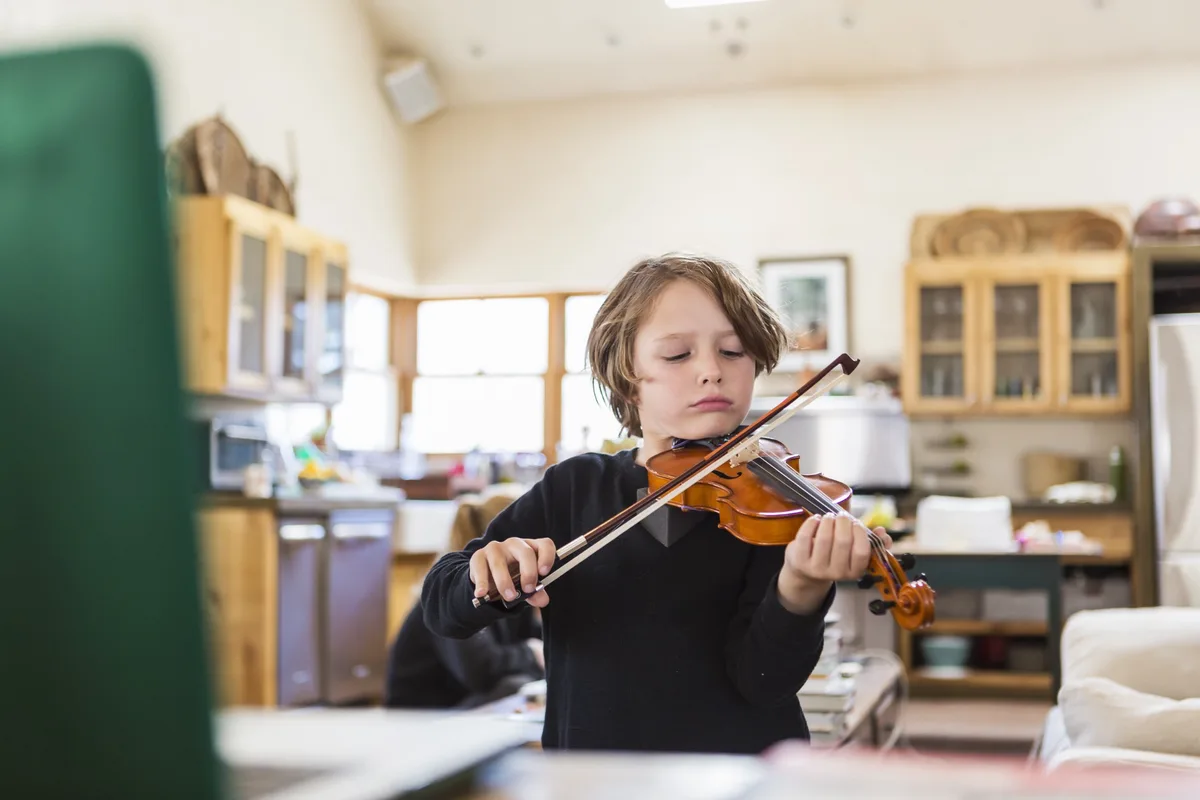
- Learn an instrument, with patience, as a discipline of attention and beauty.
- Listen closely to one great piece for a week, noticing its themes and structure, before moving on.
- Look up together on a clear night, and read Job 38 or Psalm 19 aloud under the stars.
Music at Scholé Academy
Scholé Academy’s St. Raphael School, a school within the academy that teaches in the Orthodox tradition, offers live online classes in Byzantine chant, from Byzantine Chant Fundamentals for Children through Byzantine Chant 1, 2 and 3. The fundamentals course describes this ancient tradition as “designed to call its listeners into prayer.” Families can learn more about St. Raphael School, browse the course catalog, or return to the guide to the seven liberal arts.
Frequently asked questions
What is the music of the spheres?
The music of the spheres is the ancient idea that the heavenly bodies move in proportions like musical harmonies, so that the universe itself forms a kind of music. It comes from the Pythagoreans and appears in Plato, Boethius and Kepler.
Who came up with the music of the spheres?
The idea is credited to Pythagoras and his followers in the sixth and fifth centuries B.C. Plato developed it in the Republic, Boethius passed it on to the Middle Ages, and Johannes Kepler explored it in his 1619 work Harmonices Mundi.
Why is music part of the quadrivium?
Music was studied as number in relation. The intervals of harmony correspond to simple ratios, such as 2:1 for the octave and 3:2 for the fifth, so music belonged with arithmetic, geometry and astronomy as one of the mathematical arts.
What are Boethius’s three kinds of music?
Boethius named musica mundana, the harmony of the cosmos; musica humana, the harmony of body and soul; and musica instrumentalis, the music of voices and instruments.
Music studies number in relation. The final art, astronomy, joins number and shape in motion across the heavens, and it is the subject of the last guide in this series.