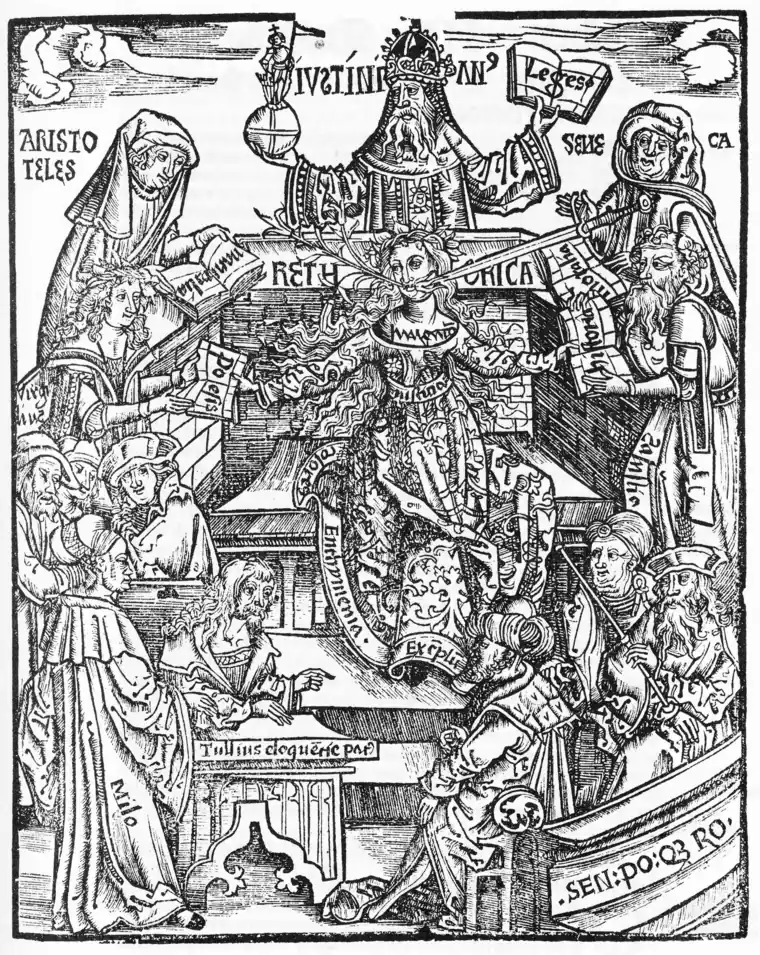
Rhetoric is the third of the seven liberal arts and the crowning art of the trivium. Classical rhetoric is the art of speaking and writing so that the truth is understood, believed and loved. Where grammar receives and logic tests, rhetoric gives: it takes what a student knows to be true and offers it to others with clarity, order and grace. For more than two thousand years it was the final goal of a classical education in language.
Today the word rhetoric often means empty or manipulative talk. The classical tradition meant something better. This guide explains what rhetoric meant to Aristotle, Cicero and Augustine, how students have learned it through the five canons and the progymnasmata, what the “rhetoric stage” looks like in the high school years, and why speaking the truth well takes courage as well as skill.
What is rhetoric?
Rhetoric is the art of finding and using the best means of persuasion in a given situation. Aristotle defined it as the faculty of observing, in any given case, the available means of persuasion. In the Christian liberal arts tradition, rhetoric is the art of speaking truth well, so that listeners are taught, delighted and moved toward the good.
That definition has two halves, and both matter. Rhetoric is practical: it is about real audiences, real occasions and real words. It is also moral. A speaker can use every technique of rhetoric to deceive, which is exactly why the classical teachers insisted that rhetoric be joined to truth and to virtue.
Classical rhetoric from Aristotle to Augustine
Rhetoric began as a practical art in the law courts and assemblies of ancient Greece, where citizens had to speak for themselves. Plato distrusted the teachers of rhetoric in his day, the sophists, because they promised to make the weaker argument appear the stronger. Aristotle answered by writing a careful study of the art, the Rhetoric, which grounded persuasion in reasoning and character. He named three modes of persuasion: the character of the speaker (ethos), the emotions of the audience (pathos) and the argument itself (logos).
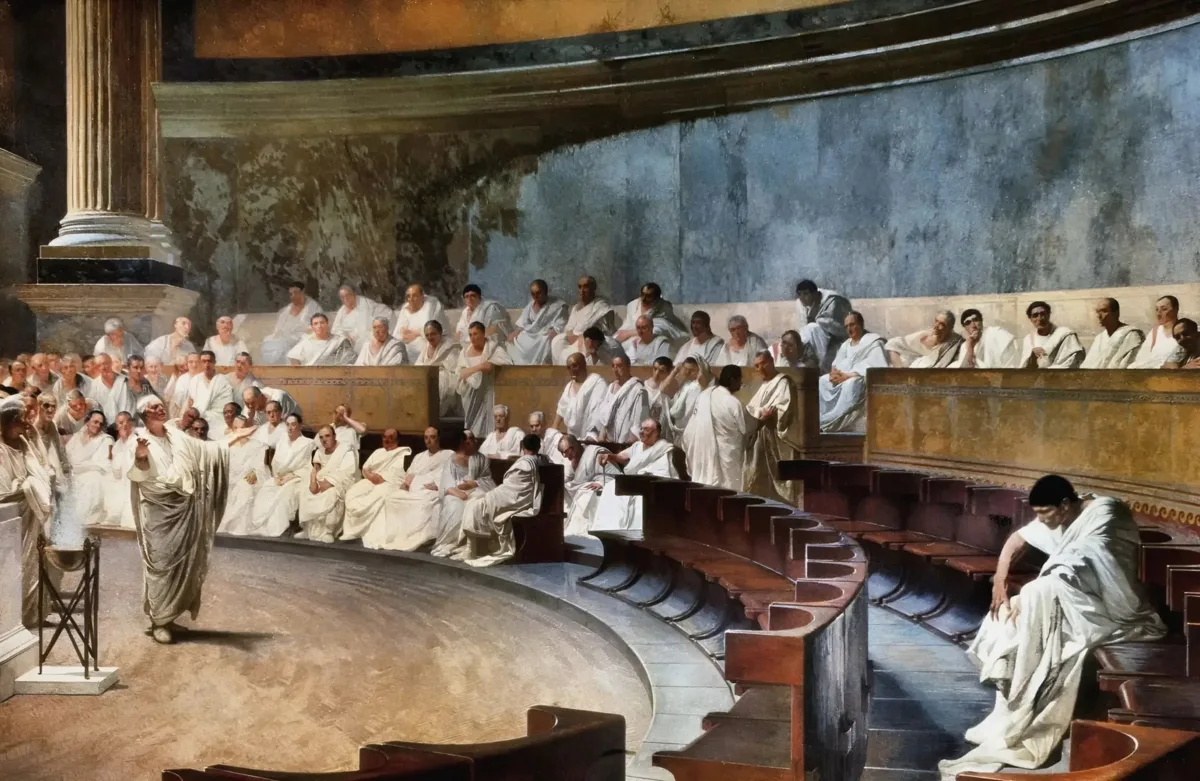
The Romans made rhetoric the summit of education. Cicero, the greatest orator of the Republic, taught that the speaker’s duty is to teach, to delight and to move. Quintilian, in the first century, built a complete program of education around the orator, whom he described, borrowing Cato’s phrase, as “a good man skilled in speaking.” For Quintilian, no one could be a true orator without being a good man first.
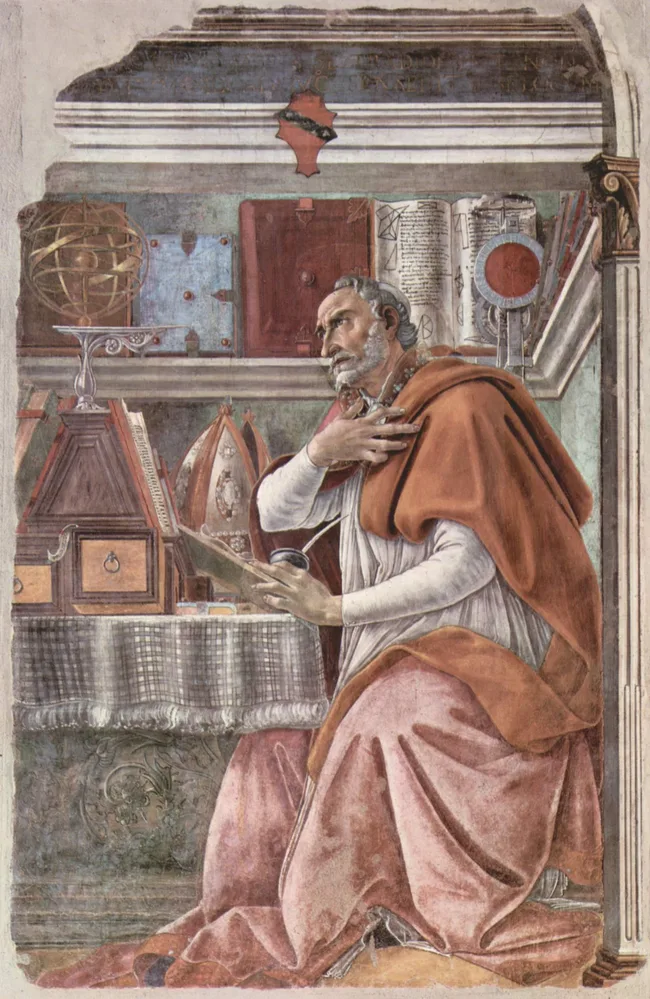
Early Christians had to decide what to do with this pagan art. St. Augustine, himself a former professor of rhetoric, gave the answer in Book IV of On Christian Doctrine. Falsehood, he argued, uses eloquence freely, so truth should not be left defenseless. Christian preachers should learn to teach, delight and move, as Cicero had said, for the sake of the gospel. From Augustine through the medieval preachers, the Reformation and the great sermons of every Christian tradition, rhetoric served the Church.
The five canons of rhetoric
Roman teachers divided the work of rhetoric into five parts, often called the five canons. Students still learn them in this order:
- Invention: discovering what to say, by finding the arguments, examples and evidence a subject offers.
- Arrangement: putting that material in the most effective order, from introduction to conclusion.
- Style: choosing the right words and sentences for the subject, the audience and the occasion.
- Memory: holding the speech in mind so that it can be delivered freely.
- Delivery: speaking with fitting voice, posture and gesture.
The canons make rhetoric teachable. A student who struggles with an essay can usually locate the trouble in one of them: there is nothing to say (invention), it is in the wrong order (arrangement), or it sounds wrong (style).
The progymnasmata: how students learn rhetoric
Ancient students did not begin with full speeches. They began with the progymnasmata, a sequence of graded writing exercises that grew from simple to complex: retelling a fable, telling a narrative, expanding a wise saying, refuting and confirming a story, praising and blaming a person, comparing two things, describing a scene, writing in the voice of a character, and finally arguing a thesis. Each exercise practiced a skill the orator would later need.
The sequence still works remarkably well, and many classical writing programs are built on it. This blog has offered writing prompts drawn from the progymnasmata and explored how exercises in praise and blame train judgment in Prudence in Writing.
The rhetoric stage and the senior thesis
Dorothy Sayers, in “The Lost Tools of Learning,” matched rhetoric to the later teenage years, which she called the “Poetic” age. Older students want to express themselves, to be taken seriously and to speak about things that matter. Sayers argued that this is the moment to give them the full art of rhetoric, so that their desire to be heard becomes the ability to speak well.
Many classical schools crown the rhetoric years with a senior thesis: a substantial argument, researched and written over months, then presented and defended before teachers and guests. The thesis gathers the whole trivium into one act. The student must understand the sources (grammar), reason soundly about them (logic), and present the conclusion persuasively and graciously (rhetoric).

Courage and the truthful word
Speaking the truth well takes more than technique. Phaedra Shaltanis, writing on this blog, argued that truth needs courage. “Without truth, courage is folly,” she wrote, “and without courage, truth may lay dormant when it should be enacting its work.” Truth needs the courage to say what is true when it is unwelcome, and to keep saying it when it costs something. That courage, she observed, does not finally come from the speaker. It is a gift of God, sustained by the hope that truth will win in the end.
The philosopher Josef Pieper wrote that “to be brave means not only to suffer injury and death in the struggle for the realization of the good, but also to hope for victory.” Rhetoric is one of the places where that struggle happens in ordinary life. A student who has learned to persuade also has to decide what to persuade others toward. The goal of Christian rhetoric is to move listeners toward the good in love, “speaking the truth in love” (Ephesians 4:15), and the old ideal of the good man speaking well holds both halves together.
Truth spoken with courage is like a lighthouse built of stone, which keeps shining when the waves break against it. Students who learn rhetoric this way will not always win the argument. They will be able to say what is true, and say it well, when it matters. The virtues of speech are explored further in The Gift of Fortitude, From Slander to Sanctity and A Tamed Tongue.
Rhetoric at Scholé Academy
Scholé Academy builds rhetoric gradually. Younger students write and rewrite through the Writing and Rhetoric courses, which follow the progymnasmata from fable and narrative onward. Students practice argument in Everyday Debate and Argument Builder: Persuasive Writing, and older students take up the full art in Rhetoric in the upper school. Each is taught live online, with students reading, writing and speaking to a real audience of classmates.
Families can browse the course catalog to see the rhetoric and writing sequence, or return to the guide to all seven liberal arts.
Frequently asked questions
What is classical rhetoric?
Classical rhetoric is the art of persuasion as taught by Aristotle, Cicero, Quintilian and their successors. It covers the three appeals, the five canons and the progymnasmata, and it aims at speaking the truth clearly, beautifully and persuasively.
What are the three rhetorical appeals?
Aristotle named three modes of persuasion: ethos, the character of the speaker; pathos, the emotions of the audience; and logos, the reasoning of the argument. Good rhetoric uses all three in proportion.
What is the rhetoric stage in classical education?
The rhetoric stage refers to the high school years, when students want to express themselves and speak about things that matter. Dorothy Sayers called it the “Poetic” age. Classical schools teach the full art of rhetoric in these years, often ending with a senior thesis.
Isn’t rhetoric just manipulation?
Rhetoric can be misused, which is why the classical tradition tied it to truth and virtue. Quintilian’s ideal was “a good man skilled in speaking,” and Augustine taught Christians to use eloquence in the service of truth.
Rhetoric completes the trivium. The next guide in this series turns to the quadrivium and its first art, arithmetic.