Logic is the second of the seven liberal arts and the middle art of the trivium. It is the art of reasoning well: defining terms, testing claims, and following an argument from what is known to what follows from it. Why study logic? Because a child who can think clearly can tell truth from error, resist manipulation, read with judgment and speak with integrity. Logic turns a student’s natural question, “Why?”, into a disciplined search for what is true.
Many parents meet logic as a middle school subject, or as the “logic stage” of classical education. Both are good starting points. This guide goes further, into what logic meant to Aristotle and the medieval schools, how it joins grammar to rhetoric, what students actually learn in informal and formal logic, and why Christian teachers have always treated reasoning as a gift from the God who is himself the Logos.
What is logic as a liberal art?
Logic, as a liberal art, is the art of right reasoning. It teaches a student to define terms clearly, to recognize sound and unsound arguments, and to draw valid conclusions from true premises. The medieval schools often called it dialectic, the art of reasoning together in pursuit of truth. Grammar asks what a text says; logic asks whether it is true.
Logic does not supply the facts of any subject. It supplies the tools for handling facts in every subject. A student uses logic to weigh a historical claim, to follow a proof in geometry, to read a newspaper editorial, and to understand a theological argument in Augustine or Aquinas. That is why the tradition placed it among the arts: it is a power that serves all learning.
Logic as a bridge between grammar and rhetoric
Joelle Hodge, president of Classical Academic Press, once described logic on this blog as a “bridge-discipline.” Between grammar and rhetoric, she wrote, logic is “the necessary process all humans must initiate if we are going to move from simple apprehension to eloquent persuasion.” The image is easy to picture: logic spans grammar and rhetoric the way a bridge spans a river. On one bank, grammar gathers words, facts and stories. On the other, rhetoric speaks truth persuasively to others. Logic is the crossing between them: the work of sorting what has been received, testing it, and ordering it before it is spoken.
The image explains why the three arts belong together. Grammar without logic can fill a mind without forming judgment. Rhetoric without logic can move an audience toward a falsehood as easily as toward the truth. Logic keeps the trivium honest. It asks the grammar student, “Do you understand this?” and the rhetoric student, “Is what you are saying true?”
Aristotle, the syllogism and the medieval disputation
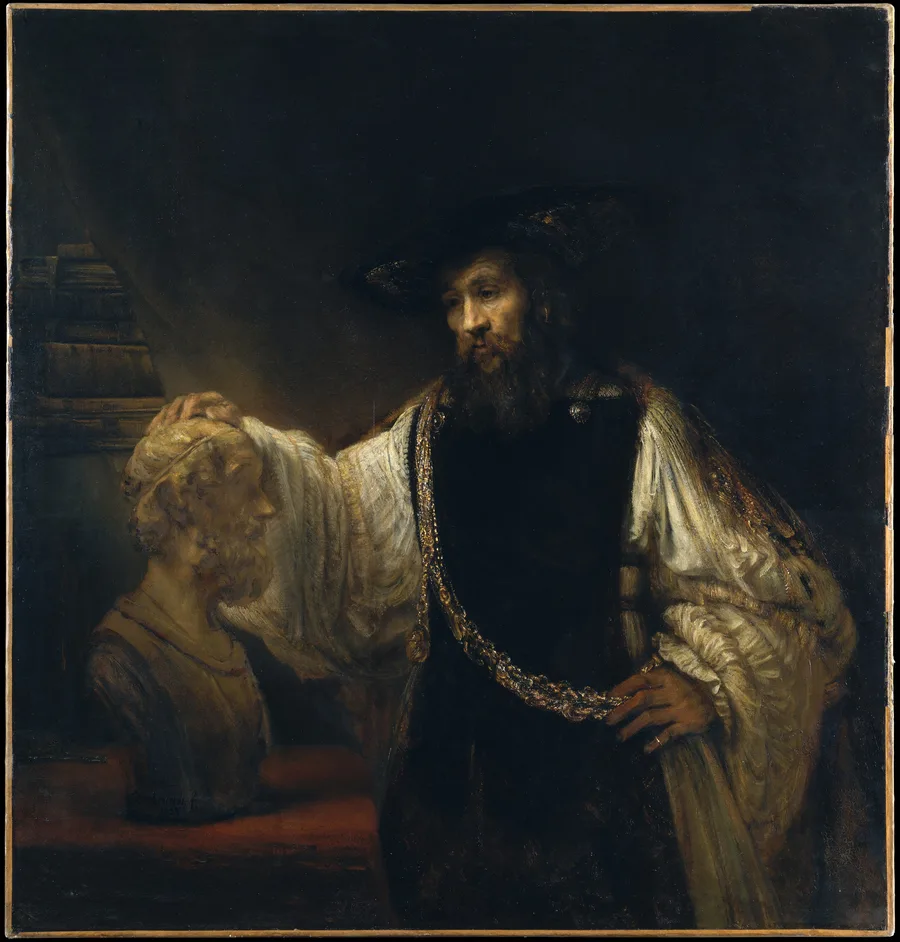
Aristotle gave the West its first systematic logic in a group of works later called the Organon, Greek for “instrument.” The name fits. Logic was a tool, the instrument of all the other sciences. At the center of Aristotle’s logic stands the syllogism, a form of argument in which two premises lead necessarily to a conclusion:
All men are mortal.
Socrates is a man.
Therefore, Socrates is mortal.
Students sometimes laugh at the example, but its point is serious. If the premises are true and the form is valid, the conclusion cannot be false. Aristotle worked out which forms are valid and which are not, and his analysis held the field for more than two thousand years.
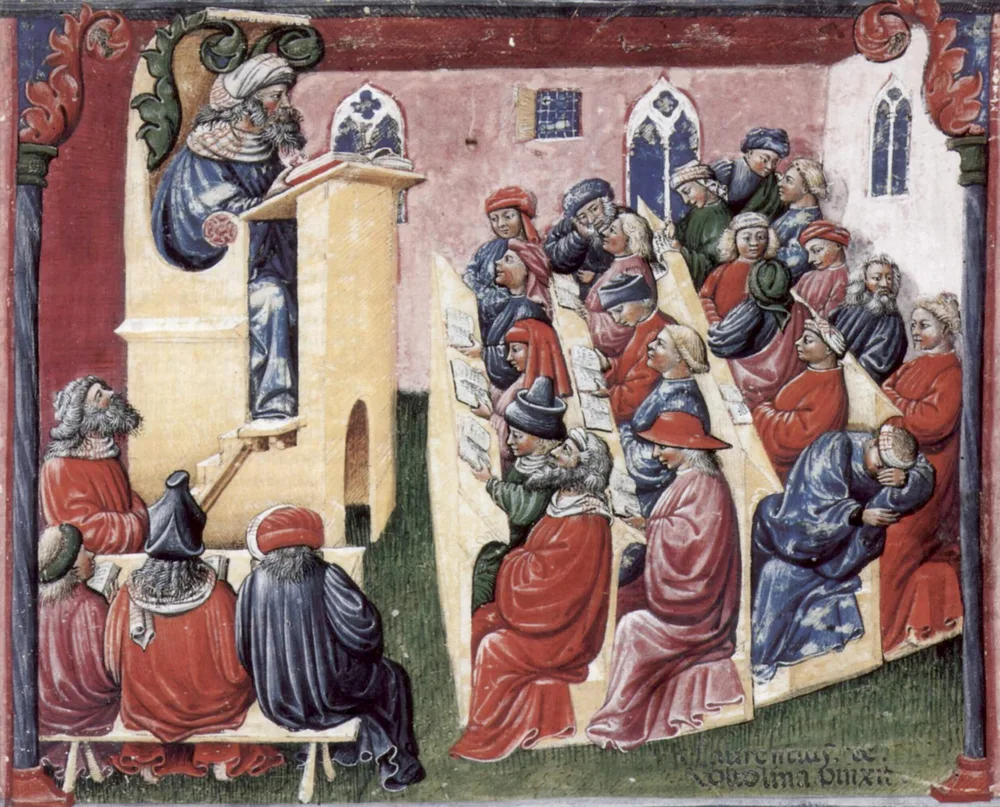
Boethius translated parts of the Organon into Latin in the sixth century, and logic became the most exciting subject in the medieval schools. Teachers trained students through the disputation, a formal debate in which a question was posed, objections were stated fairly, an answer was given, and each objection was answered in turn. Thomas Aquinas wrote his Summa Theologiae in exactly that form. A student who learned to dispute learned to state an opponent’s position at its strongest before answering it, which remains one of the best habits a mind can have.
Informal and formal logic: what students learn
Modern classical schools usually teach logic in two parts. Informal logic studies arguments as they appear in everyday speech and writing, especially the fallacies that make bad reasoning sound convincing. Formal logic studies the structure of arguments themselves, beginning with Aristotle’s syllogism. A typical course of study covers:
- Clear definitions, because most arguments fail at the level of terms.
- Informal fallacies, such as ad hominem, straw man, red herring, false dilemma and appeal to popularity.
- Propositions, the different kinds of statements and how they relate to each other.
- The categorical syllogism, its forms and the rules that make it valid.
- Validity and soundness, the difference between an argument that is well formed and one that is also true.
- Propositional logic, working with “if, then,” “and,” “or” and “not” in symbols.
- Applied reasoning, testing real arguments from advertisements, speeches, essays and Scripture commentaries.
Students who study formal logic often notice its kinship with mathematics, and with computer science, which grew directly out of nineteenth- and twentieth-century logic. That connection is explored in Logic and the Art of Computer Programming.
The logic stage: the age of argument
In “The Lost Tools of Learning,” Dorothy Sayers matched logic to the years when children begin to argue. She called it the “Pert” age: the season, usually in early adolescence, when students start to contradict, catch adults in inconsistencies and insist on reasons. Sayers’ advice was to train that energy rather than suppress it. Give the arguing child the tools of argument, and the habit of contradiction can become the habit of careful thought.
Parents of middle schoolers will recognize the picture. The logic stage is a useful name for that season, as long as it describes emphasis and not a fence. Young children can reason, and adults keep needing logic for life. Even kindergarteners can begin through conversation, as described in Socratic questioning with young children.
Logic and the Logos
For Christian teachers, logic has a theological root. The word itself comes from the Greek logos: word, reason, account. The Gospel of John opens, “In the beginning was the Word [Logos], and the Word was with God, and the Word was God” (John 1:1). Reason is not a human invention set against faith. It is a gift from a God who is himself the Logos, who invites his people, “Come now, and let us reason together” (Isaiah 1:18).
Joelle Hodge’s essay on education as soulcraft drew out what follows for teaching. Logic is not only a technique for winning arguments. It is part of the work of forming a person who loves the truth. As she put it, “Information alone is not formative.” C.S. Lewis wrote that “reason is the natural organ of truth; but imagination is the organ of meaning,” and in The Abolition of Man he warned against educating “men without chests,” minds trained to analyze but hearts never taught to love what is good. A classical education aims at both. Logic leads students out of the cave of shadows and opinion, in Plato’s image, while the whole of their education trains their loves to follow what reason shows them.
Logic and the virtue of prudence
The virtue closest to logic is prudence, the practical wisdom that judges rightly what to do. Logic trains the mind to see clearly; prudence applies that clarity to real choices. Our essay on prudence as right judgment explores the virtue the tradition called the charioteer of all the others.
Logic also needs humility. A student who learns to spot fallacies can easily become a fallacy hunter, quick to score points and slow to listen. The best logic teachers insist that the first purpose of argument is to find the truth together, a theme taken up in Debate and Discussion: An Invitation to Walk in Humility.
Logic at Scholé Academy
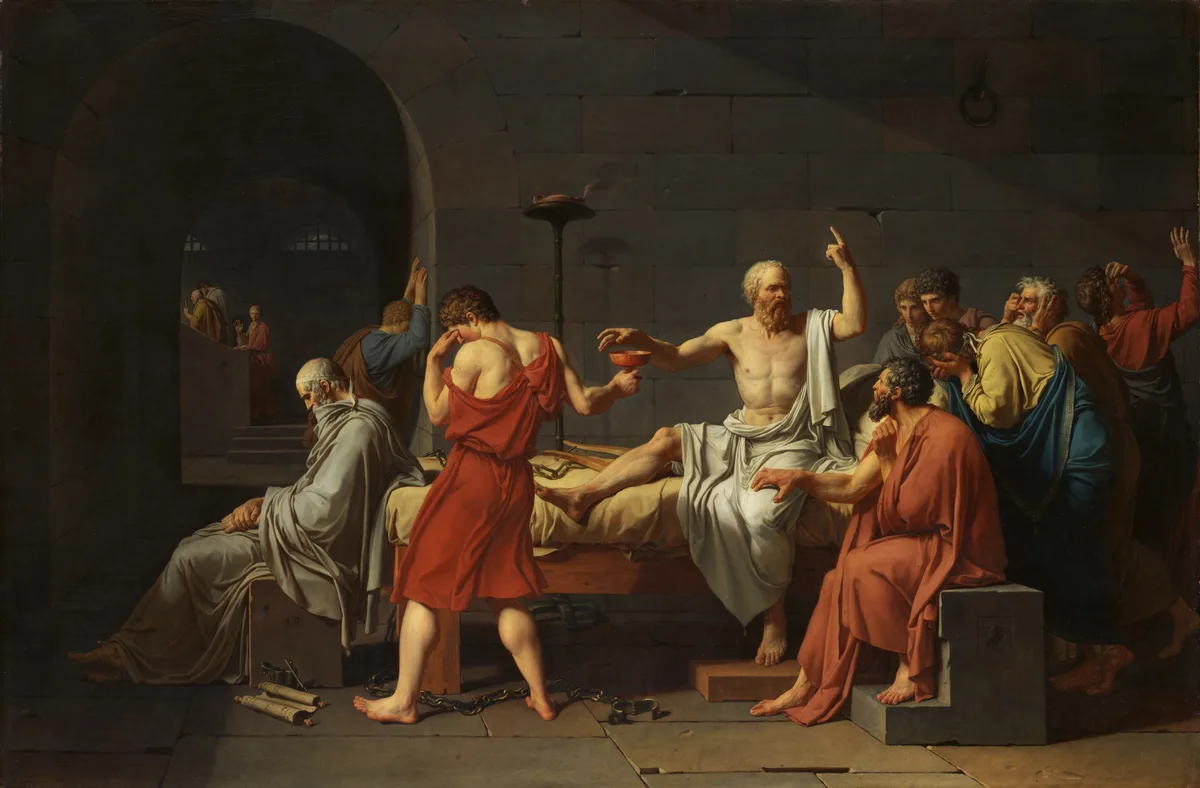
Scholé Academy teaches logic in live online classes for students in the middle school and upper school years. Art of Argument: Informal Logic introduces fallacies and the habits of careful reasoning. Discovery of Deduction: Formal Logic takes students through the syllogism and the structure of valid argument. Older students can carry the art into Introduction to Philosophy, reading Plato’s account of the last days of Socrates.
Families can browse the course catalog to find the right class, or return to the guide to all seven liberal arts to see how logic fits with the rest.
Frequently asked questions
Why should children study logic?
Logic teaches children to define terms, recognize bad arguments and reason from evidence to conclusions. Those skills help in every subject, protect students from manipulation, and prepare them to speak and write truthfully.
What is the difference between formal and informal logic?
Informal logic studies arguments in everyday language, especially fallacies that make weak reasoning sound strong. Formal logic studies the structure of arguments, such as Aristotle’s syllogism, to determine which forms are valid. Most classical schools teach informal logic first.
What is the logic stage?
The logic stage is a name for the middle school years, when students naturally begin to question and argue. Dorothy Sayers called it the “Pert” age and urged teachers to give students the tools of argument at that point.
Is logic the same as critical thinking?
Logic is the oldest and most rigorous form of what is now called critical thinking. It goes further by teaching the formal rules of valid inference, not only general habits of questioning.
The final art of the trivium, rhetoric, takes up what logic prepares: speaking the truth well to others. It is the subject of the next guide in this series.