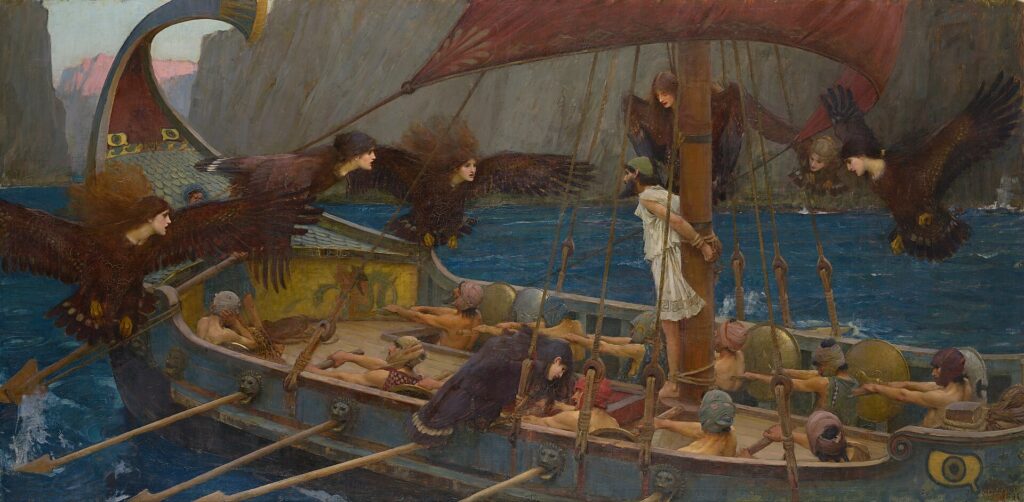
You’re at the park and have struck up a conversation with the mom of the children who are happily playing with your own kids. You’ve covered names, neighborhoods, and the unsurprising fact that you both homeschool . . . unsurprising, given that your kids mutually decided to play-act the Greeks approaching the battlements of the climbing gym (er, Troy) inside a wooden horse improvised from discarded pizza boxes. But now the conversation’s current intensifies, and you find yourself steering directly towards its Scylla-or-Charybdis, as your new friend asks in tones as smooth and perilous as the Aegean Sea: “So what kind of homeschooling do y’all do . . . classical, or Charlotte Mason?”
Classical Christian education and Charlotte Mason education: many parents and educators have heard the terminology, but have only a vague sense of how to define either of these two popular educational methods. Are they similar? Overlapping? Opposite? How to know, and how to choose between them?
I’d like to suggest that Classical Christian education and Charlotte Mason education are not, in fact, combative monsters striving to draw you inexorably into their respective currents. But they are, both of them, profoundly worth your attention. For education itself is an epic quest, Homeric in breadth, gathering up all the arts and discoveries and pieties that have come down to us, and casting them into images and narratives by which students might be both enchanted and equipped for the mighty struggles and rival yearnings that will beset them in their labors to reach their native Home. We, their teachers, have need of skilled guides, whose varied experience and insight can help us to chart our course well, and both the Classical Christian tradition and Charlotte Mason’s methods have much guidance to offer.
Historical Origins of Classical and Charlotte Mason Education
Both Classical Christian education (CCE) and Charlotte Mason education (CM) are approaches to learning that flourished in an earlier era, fell out of common practice, and have recently resurged through several decades of retrieval amongst homeschoolers and Christian schools.
Classical Christian Education: A Tradition Forged Over Centuries
Classical Christian education has the longer history. It was ignited in the schools of ancient Greece and Rome, where elite citizens were shaped into wise leaders through studying the philosophy, history, sciences, and arts of the classical world. Over centuries, a tradition was forged: one which saw human beings as belonging to, yet distinct from, the natural world; driven by the desire to know and the responsibility of rule, first over themselves, then over the jurisdictions given them; seeking piety towards the divine, wisdom in discerning the true nature and meaning of the world, virtue to shape one’s decisions and ultimately one’s life. And these convictions that found expression in a panoply of richly-wrought texts, artworks, buildings, and political systems.
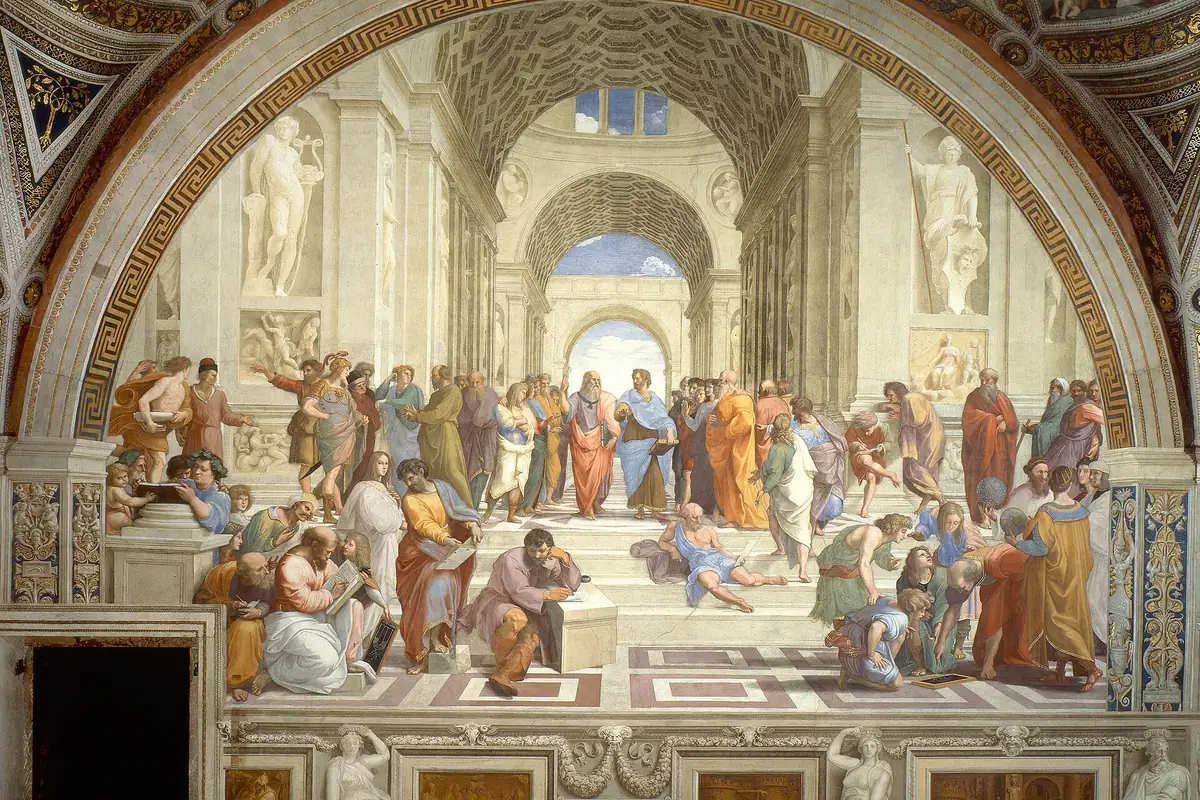
Amidst this classical world, God took on flesh. Jesus Christ was born under the aegis of the greatest Roman emperor; He walked beside buildings that enshrined the classical world’s beauty and power; He spoke of truth with one of its rulers. His life and passion were, necessarily and providentially, a commentary upon and confrontation with the classical tradition, and His followers took up the task that His embodiment in this world began. To share the gospel with their neighbors, they quoted, borrowed, affirmed, rejected, clarified, and re-interpreted the terms and images of the classical tradition. Ultimately, they argued that every true insight of the great souls who had not known Christ foreshadowed and was fulfilled in Him.
And so was born the tradition that is not merely “classical,” but also “Christian.” It is the outworking of the conviction that “all truth is God’s truth”: that both the created world, and the histories and cultures that play out upon it, display to us the infinite facets of the Creator’s splendor, and that those made in His image have a special calling to gather up, preserve, and pass on all the gems of truth, beauty, and goodness that have been mined through the ages. To express this conviction in increasing fullness, as the ages run on; to be nourished by it towards growth in wisdom, virtue, and worship; and to invite each succeeding generation into its care and cultivation, is the work of Classical Christian education.
This work reached a high point in the medieval universities of Western Christendom, and continued to inform the curriculum and methods of the private tutoring, the prep schools, the liberal arts universities, and other traditional forms of education, for centuries. It is, in fact, a relatively recent phenomenon that, in the wake of secular progressivism’s forward march, “classical studies” have been relegated to an overlooked college major amidst a new plethora of educational tracks shaped, not towards a study of truth, but towards the careers and consumer index of an industrialized, globalized, digitized world.
Charlotte Mason: One Educator’s Visionary Work
By contrast, Charlotte Mason education originated, not from a tradition formed over centuries, but from the careful, visionary work of one nineteenth-century British educator. From an early age, Charlotte Mason (1842-1923) perceived that teaching would be her vocation, the expression of both her natural talents and her deep Christian convictions. She was troubled both by the methods of education then in common use (familiar to us through their caricatures in Charles Dickens’ novels), and also by the fact that education was inaccessible to so many children of her day. So she entered a teacher training college at age sixteen, and spent the next two decades working first as a classroom teacher, then as a vice principal.
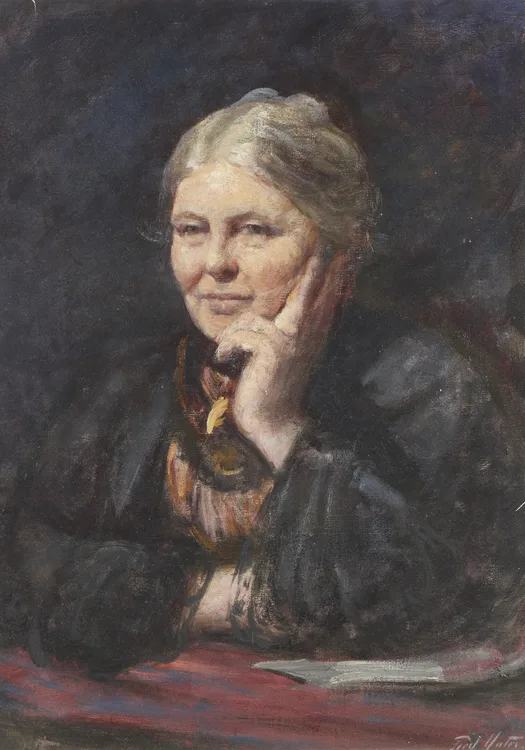
By this time, Mason’s years of study and observation had borne fruit in distinct ideas about the nature of children and their proper modes of learning; these she began to share, giving a series of lectures to parents. The enthusiastic response she received sparked the formation of an organization of parents across Britain (the Parents’ National Education Union, or PNEU) who wanted to study and practice her ideas in their own home schoolrooms and, eventually, in the cottage schools that they began to form under her leadership. Charlotte Mason spent the rest of her life writing books, authoring articles, composing curriculum guides for PNEU schools, and, finally, opening her own teacher training college in the Lake District town of Ambleside to equip the PNEU schools with skilled teachers.
Yet, although her House of Education and the PNEU schools continued flourishing for some time after Mason’s death, they did not outlast her by many decades; the social upheaval and waning of Christian faith that permeated England in the wake of the World Wars took its toll on the fledgling institutions, and slowly, most of the schools she had helped to start closed their doors.
How Both Returned in 1980s America
It’s a curiosity of history that both Classical Christian and Charlotte Mason education should have been brought back into actual use in a context quite foreign to their origins: the homeschool and Christian school classrooms of 1980s America. But that’s what happened, as American parents, concerned by the trajectory of public education, sought alternate ways to teach their children. Some created entirely new curricula, revising the content while retaining the structure of what they’d left in the public schools, but others began to search for older, fundamentally different approaches to learning. Significant efforts in this direction included the publication, in 1984, of Susan Schaeffer Macaulay’s For the Children’s Sake, which introduced the basic contours of the Charlotte Mason education her family had discovered when her daughter began attending one of the last PNEU schools in Britain; and the publication, in 1991, of Douglas Wilson’s Recovering the Lost Tools of Learning, which called families to consider an innovative educational model proposed in a 1947 essay, “The Lost Tools of Learning,” by Dorothy Sayers: using the structure of the Trivium, drawn from medieval universities, as a pattern for early childhood education initiating students into the Classical Christian tradition.
Thus began currents in contemporary education that have continued gathering strength until today, when two moms, meeting at the park, might casually begin discussing the relative merits of movements stretching back so deep and wide.
Defining Terms: Classical Christian vs. Charlotte Mason
In comparing CCE and CM, I believe it’s important to begin with the historical origins sketched above, because, unlike comparisons of booklists or teaching methods, their history clarifies that Classical Christian education and Charlotte Mason education are different things by nature. If we understand them both, on their own terms (ad fontes, as the classicists would say!), we don’t have to be sidetracked into the Scylla-or-Charybdis debate of which is the better form of education, nor do we have to collapse them into versions of the same thing. They are distinct but, I believe, harmonious.
What Is Classical Christian Education?
Classical Christian education is, first and foremost, a tradition: specifically, the tradition of Western civilization as seen in the light of the risen Son, Jesus Christ. It’s an accounting of and for the broad swath of human history that many of us who are currently alive happen to be part of, whether we will or no; and it’s the solemn, joyous, not-certain-yet-confident effort of tracing the mysterious hand of the Triune God amidst that history, to the end that those of us currently alive may live with sober understanding of ourselves and gladsome adoration of Him.
It is, secondarily, an approach to education: specifically, an education that seeks to initiate students into the classical Christian tradition of which they are heirs, towards the end that they might grow in wisdom, virtue, and worship. At the heart of this educational approach is the curriculum that was systemized in the medieval universities: the three language-based arts of the Trivium (Grammar, Logic, and Rhetoric), and the four numbers-based arts of the Quadrivium (Arithmetic, Geometry, Astronomy, Music), which, held like a prism to the clear light of Truth, refract it into sevenfold splendor. And accompanying this curriculum is an array of specific pedagogical strategies (for instance, the progymnasmata for writing, the lectio divina for reading, the disputatio for forming arguments, the canons of rhetoric for persuasive speaking) that we can trace to classical academies, medieval monasteries, and early universities. However, as that list makes clear, most of the specifics of curriculum and pedagogy that have come down to us were originally intended for older learners. The innovation of the ongoing Classical Renewal (sometimes called “neo-classical” for this reason) is to seek to apply these specifics to the instruction of young children. And this is why there is much variety in the actual, on-the-ground practice of Classical Christian education, as each curriculum producer, school, and family creatively seeks to do an old thing in new ways.
What Is Charlotte Mason Education?
Charlotte Mason education is, in Mason’s own words, a “method” of education. Mason contrasted “method” with “system,” which she defined as “the observing of rules until the habit of doing certain things, of behaving in certain ways, is confirmed, and therefore, the art is acquired.” An educational system might assign specific skills and knowledge to each stage of a child’s instruction, and then lay down procedures that guarantee the child’s achievement. Such an approach works well for machines, Mason declared, but not for children; every child is “a self-acting, self-developing being, and [the teacher’s] business is to guide, and assist in, the production of the latent good in that being, the dissipation of the latent evil, the preparation of the child to take his place in the world at his best, with every capacity for good that is in him developed into a power.” Thus Mason advocated method, which begins not with specific skills, but with “an idea, a mental image, of the end or object to be arrived at” (here, the child taking his place in the world with every capacity for good developed into a power), and from this deduces principles which guide but do not dictate the content and kind of instruction, so that it can be adapted to the uniqueness of each of these self-acting, self-developing beings.1
The Charlotte Mason method, then, is a coherent set of principles about what kind of beings children are, and what and how they ought to learn in order to flourish. “[A] few broad essential principles cover the whole field,” Mason urged, “and these once fully laid hold of, it is as easy and natural to act upon them as it is to act upon our knowledge of such facts as that fire burns and water flows.”2 Mason distilled these principles to twenty, and listed them at the beginning of each of her six Volumes on education. They include several of her most-quoted and most fundamental aphorisms.
- “All children are born persons” expresses her conviction that children possess dignity, integrity, and curiosity just as adults do, and therefore the teacher should not expect to mold the child’s raw character into a desired form, but to tend the child’s inborn, God-given personality towards flourishing.
- “Education is an atmosphere, a discipline, a life” sums up the three instructional strategies Mason believed nurtured children without trespassing on their unique personhood: cultivating an “atmosphere” replete in real things and well-ordered affections; guiding children into the “discipline” of forming their own habits with wise intention; and providing, with as much abundance and variety as possible, a rich diet of ideas (received primarily through books), which are as essential to the spiritual “life” of a person as food is to physical life.
- Finally, “Education is the science of relations” expresses Mason’s visualization of the goal of education: the development of personal knowledge or connection (relationships) between the student and as many real things (historical events, natural objects, artists, composers, stories, languages, etc.) as possible.3
The distinct activities associated with a Charlotte Mason education (reading of “living books,” narration, nature journaling, handicrafts, composer and picture studies) are practical applications of these principles.
Is Charlotte Mason Classical? Two Different Things, Richly Consonant
To sum up: If CCE and CM were both curriculum packages aimed at K-12 students in 21st-century America, then the choice between them would be an either-or decision. But one is a vast cultural and theological tradition that encompasses an approach to education; the other is a method of educating children based upon a profound understanding of their personhood and flourishing. Moreover, the fundamental convictions and overarching aims of the two movements are richly consonant with each other. What we have is not an either-or choice, but a double treasury of wisdom and guidance in the work of educating our children.
Charlotte Mason vs. Classical Education in Practice
And yet, once we’ve grasped the history and definitions that are essential for understanding CCE and CM on their own terms and in relation to each other, we still have the practical work of deciding what to put on the daily lesson plans. Both movements have come a long way since the 1980s, and a two-second Internet search now yields a dizzying plethora of curriculum options available to help you bring a Classical Christian education or a Charlotte Mason education into your home or school. And while CCE and CM are not fundamentally opposed, they do have different specific targets, different emphases in content, and (by the time we’re looking at their application by curriculum producers) different ways of doing things. We may not have to make an overarching either-or choice, but we do have to make choices.
What we don’t have to do is to find the one perfect version of either kind of education. Every curriculum, and every family or classroom, will have its own unique way of bringing either of these forms of education to life, which is the necessary beauty of bringing something “to life”: as both these traditions insist, each life is unique, and the life of education in your family or classroom will be as well, so long as it’s alive and life-giving.
The following is a summary, based on my own experience teaching and learning from many different curricula in both the CCE and CM worlds, of their overarching areas of overlap and divergence, followed by recommendations on what might draw families towards either approach. These generalizations will hold true for most curricula, though of course they remain generalizations.
Where Classical and Charlotte Mason Agree
Both CCE and CM share a profound Christian commitment; a vision of education that values human flourishing over utility; a reliance on literary texts as central instruments of learning; a prioritizing of Latin instruction; a chronological and narrative approach to history; an enthusiastic offering of a generous curriculum that pairs art, music, geography, and other such enriching studies alongside more standard “core” subjects; and a joyful, leisurely approach to learning (termed schole in the classical tradition).
Where They Genuinely Diverge
CCE and CM differ in their understanding of child development, their pacing of a school day, their methods of selecting books for the curriculum, their approach to writing and science instruction, the ways they implement memorization, their assessment strategies, and the amount of parent/teacher participation they require. See the chart below for a more specific comparison of these differences.
| Classical Christian Education | Charlotte Mason Education | |
|---|---|---|
| Developmental Stages | Often (but not always) follows Sayers’ lead in emphasizing memorization of facts during the “grammar” stage (elementary school), introduction of analysis and argument during the “logic stage” (middle school), and eloquent communication of one’s ideas during the “rhetoric stage” (high school). | Does not encourage dividing children’s learning into stages; if children are born persons, they learn the way that persons learn, and this is part of our human nature that does not “develop” as we age but is persistent and perennial. Children, as well as adults, need a diet of rich ideas to grow mentally, spiritually, and emotionally. |
| Daily Rhythm | Tends to recommend a liturgical approach (modeled on liturgies of Christian worship) that begins and ends the school day or lesson with prayer, may include songs or catechisms to aid memory, and includes distinct phases of introducing, practicing, and reflecting on new content. | Emphasizes short lessons (10-30 minutes per subject in elementary school, up to 45 minutes in high school) and alternating the kinds or difficulty level of subjects to support students in forming the discipline of giving complete attention to the subject at hand. |
| Book Selection | Seeks out time-tested, significant, beautifully written texts, especially favoring primary texts whenever age-appropriate. Keeps in mind the idea of a canon of classics, or Great Books and Good Books, that all people ought to desire to read. | Seeks out “living books,” which are well and beautifully written texts, narrative in style, that capture the child’s interest and imagination. There is no “canon”; a book may be “living” for one child and not another if it fails to bring the subject to life for that child. |
| Writing Instruction | Prioritizes explicit instruction in writing from the earliest grades. CCE curricula often use classical precedents such as the progymnasmata or the canons of rhetoric, and emphasize the importance of imitation, having students read and then write imitations of model passages. | Omits explicit instruction in writing until high school; facility and style in writing is expected to develop naturally over years of oral, then written, narration (summary) of books read for various classes. Formal composition (e.g., the persuasive essay) is touched on in late high school. |
| Science | Tends not to emphasize specific science instruction in the elementary grades. In middle through high school, begins a sequence of general sciences, biology, chemistry, physics. Emphasizes attention to scientific reasoning, historical context, and reading of scientific texts from the classical canon. | Features a thorough program of nature studies for elementary students (including field work, journaling, and reading books about a variety of natural phenomena) to build the personal connections to nature and the habit of close observation that will serve as a foundation for a high school introduction to science proper (biology, chemistry, and possibly physics). |
| Memorization | Considers memorization a central part of learning and implements it with explicit strategies, such as drill, songs, memory palaces, etc. | Considers memory a central part of learning and implements it with implicit strategies, such as narration and visualization. |
| Assessment | Emphasizes mastery. Grades may or may not be used (sometimes they are changed out for the traditional Latin designations of magna cum laude, cum laude, satis, and non satis), but assessment, whether numerical or narrative, aims to discover how completely a student has internalized the ideas or skills that were aimed at. If ideas or skills were not mastered, students are typically guided back through them until mastery is reached. | Emphasizes what a child knows, not what he doesn’t know. Grades aren’t typically assigned, but the teacher continually assesses what the student is understanding and retaining, both through the student’s narrations (oral or written summaries of what the student recalls from what he has read) and through end-of-term written exams. Work is not repeated, but the teacher will adapt her instructional methods going forward if the student is unable to demonstrate adequate knowledge or recall of the things he has been studying. |
| Parent Workload | Varies depending on curriculum/approach; can include high parent participation or more of an assign-and-check role. | Requires high parent participation, especially in early years when most work consists of the reading aloud and the student verbally responding. |
Why Some Families Might Prefer the Classical Christian Approach
- its sense of mission in passing on Western tradition, with content intentionally chosen to inculcate children in its riches
- its tendency to draw explicit connections amongst subjects (often called integration or synthesis)
- its three-stage developmental approach
- its option to utilize more standard-style assignments in daily school work (e.g., worksheets, writing assignments, etc.)
- its early start for explicit writing instruction
- its mastery-based assessment
- its provision of the opportunity for slightly more independent work, even for young students
Why Some Families Might Prefer the Charlotte Mason Approach
- its sensitivity to the needs and learning patterns of children
- its freedom to fill in a curricular outline with texts or topics important to individual families
- its reliance on work done by the parent/teacher and student together, especially early on
- its emphasis on nature study
- its inclusion of handicrafts (things like sewing, woodworking, clay modeling, etc.)
- its assessment based on what child knows, not what he doesn’t
- its pacing based on child’s own readiness/rate of assimilation, rather than the need to keep up with specific curricular goals

But Can I Do Both? Combining Classical and Charlotte Mason
If you’ve read all the way to this point, you might have one last looming question: Can I do BOTH? Is a “Classical Christian Charlotte Mason education” something I can make happen for my students? Once again, a two-second Internet search will yield a plethora of passionate responses to this very question.
But if you’re asking me, I would say that, given the background of understanding we’ve been discussing, you absolutely can.
You might choose to follow all of Charlotte Mason’s recommendations for planning the subjects your student will enjoy, and the specific ways you’ll teach them, while being intentional in selecting Great Books from the classical canon as your “living books.” You might use a Classical Christian curriculum, but implement Mason’s strategies of narration, and feel the freedom to find alternate “living books” if the selections from the “canon” aren’t working for your students this year. You might rely on a Charlotte Mason curriculum, but sub in one of the excellent programs for early Latin instruction, or an online course that brings community to your study of literature or help in the intricacies of math, from the classical publishers. You might be a classical homeschooler who adores nature study, or a Charlotte Mason homeschooler who doggedly starts writing instruction in second grade.
What Each Movement Can Learn from the Other
Personally, I believe that both educational movements would benefit profoundly from absorbing some of the wisdom offered by the other. Classical Christian educators need to be aware that, although they are carrying on an old tradition, they are also doing a new thing in applying it to the teaching of young children. Neoclassical pedagogies are fairly young, and are still being tested through trial-and-error. Charlotte Mason devoted her life and her estimable powers to discovering the ways that children learn and flourish, and classical educators should all consider her profound recommendations. As classical schools strain to find enough well-qualified teachers to lead their increasing numbers of students, Mason’s clear, tested pedagogical methods could be a gift in putting them quickly on a sure path.
Meanwhile, Charlotte Mason educators, while immersing themselves and their students in the beauty of “living books” and the wonder of the wildflowers outside their front doors, ought not to be ignorant of the historical currents and theological frameworks that do exist and that give richer context and meaning to all our discoveries in the fields of learning. Charlotte Mason herself was very aware of her place in history. Her Volumes are full of her reflections on the historical unfolding of theories of education and philosophies of personhood; she continually presents her work as an effort to intelligently and responsibly apply the findings of contemporary science, especially in the study of the brain, to her pedagogical strategies; and, by her last Volume (written after World War One), she even reflects on ways that current events have altered somewhat the assumptions on which her method rests. Those of us living in a time when the riches of our cultural inheritance are being actively suppressed and destroyed would be foolish at best, irresponsible at worst, not to consider the protection and passing on of this inheritance as part of our calling as educators. The classical renewal has produced rich writing and reflection on the content and meaning of the classical Christian inheritance, and attending to this could bring Charlotte Mason educators a further depth, conviction, and context to communicate to their students.
Of course, if you choose to chart your course down these paths, you won’t be an educational “purist,” and there are good arguments for purism. You should seek them out and listen to them. But then, as Charlotte Mason and the classical tradition jointly urge, you should tend to the “self-acting, self-developing being[s]” in your charge with whatever resources allow them to flourish, that they might take their place in the world (the world we’ve inherited from the classical Christian tradition!) “at [their] best, with every capacity for good that is in [them] developed into a power.”
And, though the park might not be the best setting to delve into all of the above, that at least is the start of an answer to help you navigate the currents of conversation with your new friend.
Frequently Asked Questions About Charlotte Mason vs. Classical Education
What is the main difference between Charlotte Mason and classical education?
Classical Christian education is first a tradition, the inheritance of Western civilization seen in the light of Christ, which encompasses an approach to education built on the Trivium and Quadrivium. Charlotte Mason education is a method: a coherent set of principles about what kind of beings children are and how they ought to learn in order to flourish.
Is Charlotte Mason classical?
They are different things by nature. Charlotte Mason education began with one nineteenth-century British educator rather than a tradition formed over centuries: one is a vast cultural and theological tradition that encompasses an approach to education, the other a method of educating children. Their fundamental convictions and aims, though, are richly consonant, so the choice need not be either-or.
Is Charlotte Mason education Christian?
Yes. Charlotte Mason saw teaching as the expression of her deep Christian convictions, and her principle that “all children are born persons” rests on tending each child’s God-given personality towards flourishing. A profound Christian commitment is one of the things Charlotte Mason and Classical Christian education share.
What are living books?
In a Charlotte Mason education, “living books” are well and beautifully written texts, narrative in style, that capture the child’s interest and imagination. There is no fixed canon: a book may be “living” for one child and not another. Classical education instead keeps in mind a canon of Great Books and Good Books.
Can you combine Charlotte Mason and classical education?
Yes. A family might follow Charlotte Mason’s plan while choosing Great Books from the classical canon as its “living books,” or use a Classical Christian curriculum while adding narration and nature study. Each movement would benefit from absorbing some of the wisdom offered by the other.
Scholé Academy offers live, online classical Christian courses for kindergarten through twelfth grade, taught live at a restful pace by real instructors. If a Latin, literature, or math class would serve your homeschool, classical or Charlotte Mason, browse the course catalog or explore classes for lower school, middle school, and upper school.
Notes
- Charlotte Mason, Home Education (Living Book Press, 2017), 8-9. ↩
- Home Education, 10. ↩
- Although these and the rest of the Twenty Principles are included in each of Mason’s Volumes, their fullest expression is in her final book, Towards a Philosophy of Education, the first part of which is an expanded expression and explanation of each of them. ↩