Loading enrollment options…
If sections and pricing don’t appear, email [email protected] and we’ll help you enroll.
This course will trace the transformation of culture beginning with the early Enlightenment and ending with the late Industrial Age. It will investigate the relationships between ideas, institutions, and practices; consider the roles of science and reason in promoting the Age of Enlightenment; analyze components of the American and French Revolutions; follow burgeoning thought throughout the Western world; recognize the influence of the Enlightenment on the Industrial Age; and examine the interplay between philosophical, political, religious, scientific, intellectual, technological and social ideas vital to the advancement of these eras. The primary sources studied will present themes and ideas that require active reading and discussing.
Using tracts, essays, books, and treatises, the teacher will guide the class in contemplating questions of purpose and perspective. Studying influential writings will further students’ abilities to make connections and follow the progression of ideas throughout a changing culture. Students will derive satisfaction from the deep commitment of hard work and serious inquiry, leading to an enhanced capacity for responsible citizenship. Students will be expected to take dialectical notes, write essays, expound on thesis statements, and debate informally with their peers. Additionally, participants will practice rhetorical skills through presentations and essays.
Throughout the year, students will:
While this course primarily features historical study, it also integrates some study of literature from the Enlightenment and Industrial Revolution eras, helping students to see and enjoy the integration of both history and literature. This class is paired with our upper-school British Literature course, taught by the same instructor, and scheduled back-to-back with that course in a “block.” Students who take both courses receive a discount. This course may also be taken as a standalone history study.
The target grades for this course are 9th–10th grade. Students must have successfully completed an 8th-grade-level writing course; they will be expected to have competency in vocabulary, annotation, essay-writing (various forms of written discourse) and know how to write a summary and reflect on a text (though the instructor will work to develop and extend these skills throughout the course). Students are expected to have strong reading and writing skills as well as the interest and capacity for engaging in discussion about literature and history. Students well suited for this course will continue refining the following scholarship skills as they approach mastery:
High School Credit: This course is the equivalent of one high school credit in history.
How much time will students spend on homework? This varies by student according to his or her pace. However, the average reader can expect to spend approximately 1.5–2 hours per week reading course materials, and approximately half an hour to an hour working on the questions. Students will be asked to write persuasively and analytically using text and conversations to form their thesis. Students should anticipate involvement in class discussion, quite often in the framework of informal debate.
How is faith integrated with these courses? These seminar-style discussions unfold organically. One could approach the texts with a focus on defensive critiques of classical authors. By contrast, we seek to read charitably. We treat classic authors as if they were friends, gleaning every available truth while also examining them from a robustly Christian perspective.
At Scholé Academy, we have carefully considered how we should engage our contemporary culture as those who believe that Christ is the Truth (John 14:6), and that all truth has its source in him. We think it is important to provide our upper school students (in grades 7-12) with tools and opportunities for critically examining various cultural trends, issues and mores through the lens of orthodox, Christian beliefs. Being confident in the truth revealed to us in creation, the Scriptures, and the tradition of the church, we are not afraid to follow the truth and its implications nor to address error and falsehood. … Read more about our Faith & Culture.
Required Materials: Books and supplies are not included in the purchase of the course. These resources are listed to help inform your decision-making as you make course selections and build your course schedule. Please reach out to the instructor if you have any questions about materials.
Please note: Many of the readings are public domain and readily available online. Texts marked with need to be purchased in advanced.
Other Materials:

Phaedra Shaltanis, Chair of the Humanities Department, has taught in private and classical schools for over 25 years and has educated her four children in the classical tradition, which has been the monumental joy of her life. After college graduation, she began teaching high school Writing, Literature, Spanish, and Art in classical schools. Her involvement with Scholé Academy includes teaching American Literature, British Literature, Western History, Rhetoric I, Formal Logic and Well-Ordered Language Levels 1 and 2. She is enthused to serve as the Humanities department chair and appreciates guiding parents and teachers toward restful education. In her Dallas community, she currently directs a high school university-model program, trains and mentors teachers, conducts seminars on classical education, builds curriculum, supports parents, and provides fine art instruction at a classical high school. She and her husband hope to support classical education as avenues present themselves.

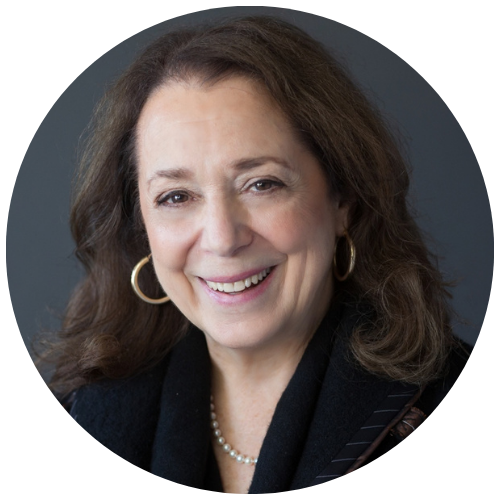
Dr. Seaward received her B.A. in Liberal Arts and earned her elementary teaching credential at California State University, Stanislaus, before becoming an Air Force wife in 1992. She completed her M.A. in Humanities from California State University, Dominguez Hills, and her Ph.D. in Humanities with a concentration in Literature from Faulkner University, where the Great Books program changed how she viewed education. She is blessed to be the wife of her engineer husband and mother of two grown daughters. This is her fifth year teaching at Scholé Academy, and she is enjoying the model of restful learning. She is a long-time admirer of C.S. Lewis, and she enjoys taking long walks with her husband, watching sumo wrestling, and the pleasure of reading.
Dr. Seaward’s blog article on Jane Eyre, “Running Toward Temperance.” https://scholeacademy.com/running-toward-temperance/
Interview with Dr. Seaward in the Fall 2023 edition of the Scholé Chronicle. https://scholeacademy.com/student-enrichment-clubs/the-schole-chronicle/
LinkedIn: www.linkedin.com/in/christi-seaward-ph-d-0042b919a
Student and Parent Testimonies: https://www.youtube.com/watch?v=E4EiNIxQEDQ
First, read the available course descriptions, noting prerequisites, target grades, and course objectives. If you think your student is prepared for the course, go ahead and register. After registration, a placement assessment may be provided to students, depending on the course and the student’s previous enrollment with Scholé Academy. Registration is finalized when the student’s placement assessment has been returned by the course instructor with placement confirmation.
Make sure they don’t conflict with other activities in your schedule or other courses you are purchasing. Our system will not catch double-bookings!
Our Assistant to the Principal will be in touch with you after your enrollment to help you with next steps, including any placement evaluations that may be required for your course selections.
This registration will be finalized when the student’s placement assessment has been returned by the course instructor with placement confirmation.
This course introduces high school students to some of the important historical texts of the 20th century and into the...
A Child’s History of America is a year-long survey course that offers a journey through the history of the Americas...
A Child’s History of the World is a year-long survey course that offers a journey through the entire history of the...