Astronomy is the last of the seven liberal arts and the completion of the quadrivium. As a liberal art, astronomy is the study of magnitude in motion: the sun, moon, planets and stars in their ordered courses. It gathers arithmetic, geometry and music into a single picture of the cosmos, and it begins with one of the oldest acts of human wonder, looking up at the night sky. For Christian students, it has always carried the words of the psalm: “The heavens declare the glory of God” (Psalm 19:1).
Many parents assume astronomy needs a telescope, a planetarium or a science degree. The liberal arts tradition suggests otherwise. For most of history, astronomy was learned with the naked eye, a good teacher and patient attention over many nights. This guide explains why astronomy belonged among the seven arts, how the medieval picture of the heavens shaped Christian imagination, what families can observe together in winter, and what the wise men’s star has to do with it all.
What is astronomy as a liberal art?
Astronomy, as a liberal art, is the study of the heavens through observation, number and geometry. It traces the regular motions of the sun, moon, planets and stars, measures time by them, and seeks the order behind them. It completes the quadrivium because it brings number, shape and harmony together in motion, and it prepares the student for natural philosophy and theology.
The ancient astronomer did not only collect facts about stars. He sought to understand how the heavens move and why their motions are so regular. That search for order gave the West its calendars, its navigation and, eventually, modern physics. It also gave generations of students a daily reminder that the world is larger, older and more beautiful than any one life.
“The heavens declare the glory of God”
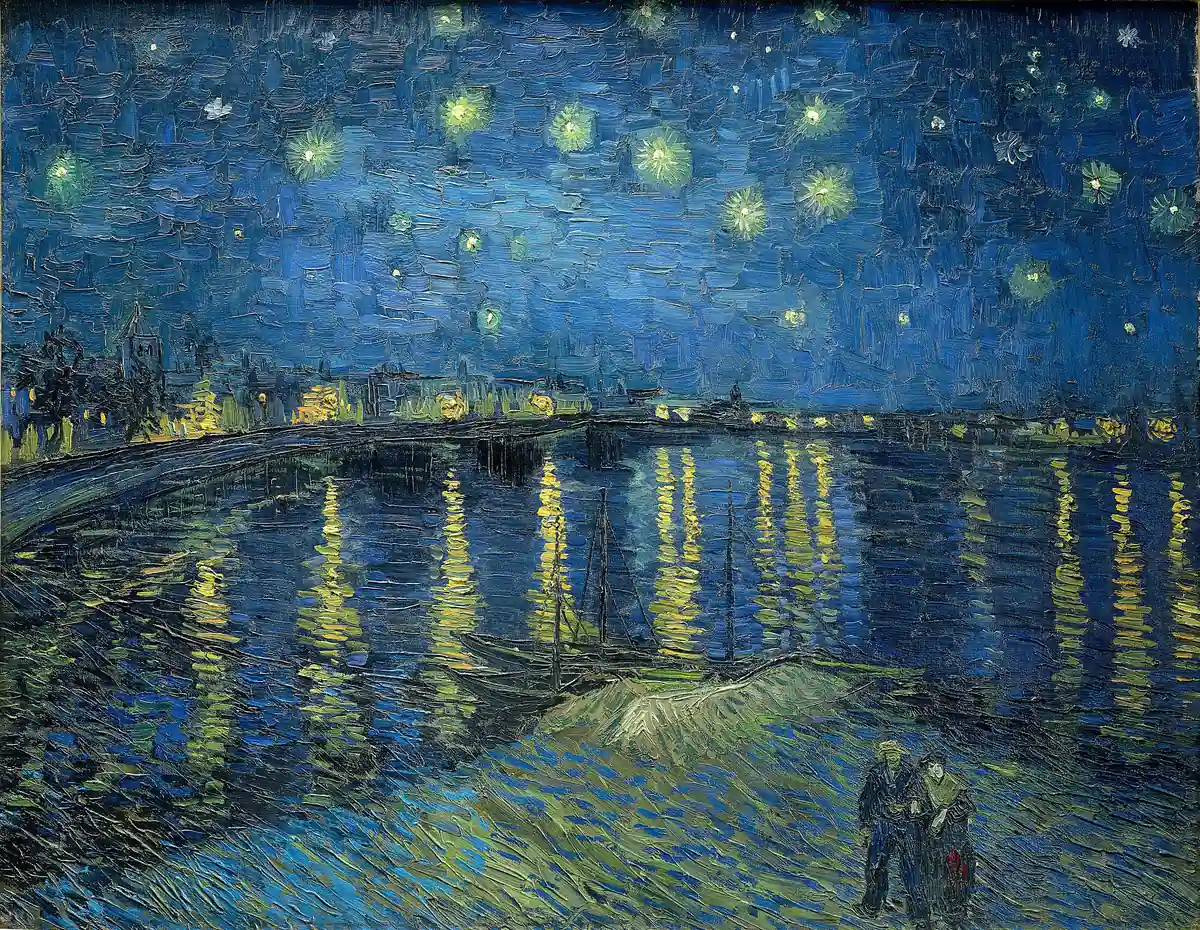
Scripture is full of the sky. On the fourth day of creation, God set lights in the heavens “for signs, and for seasons, and for days, and years” (Genesis 1:14). God asked Job, “Canst thou bind the sweet influences of Pleiades, or loose the bands of Orion?” (Job 38:31). The psalmist marveled, “When I consider thy heavens, the work of thy fingers, the moon and the stars, which thou hast ordained; what is man, that thou art mindful of him?” (Psalm 8:3-4).
Christian astronomers read the sky as a book written by the same author as Scripture. The heavens speak, Psalm 19 says, though “there is no speech nor language” (Psalm 19:3). To learn astronomy was to learn to read that speech: the faithfulness of the seasons, the vastness of the stars, the precision of their motions, all pointing to the wisdom and constancy of their maker.
From Ptolemy to Copernicus
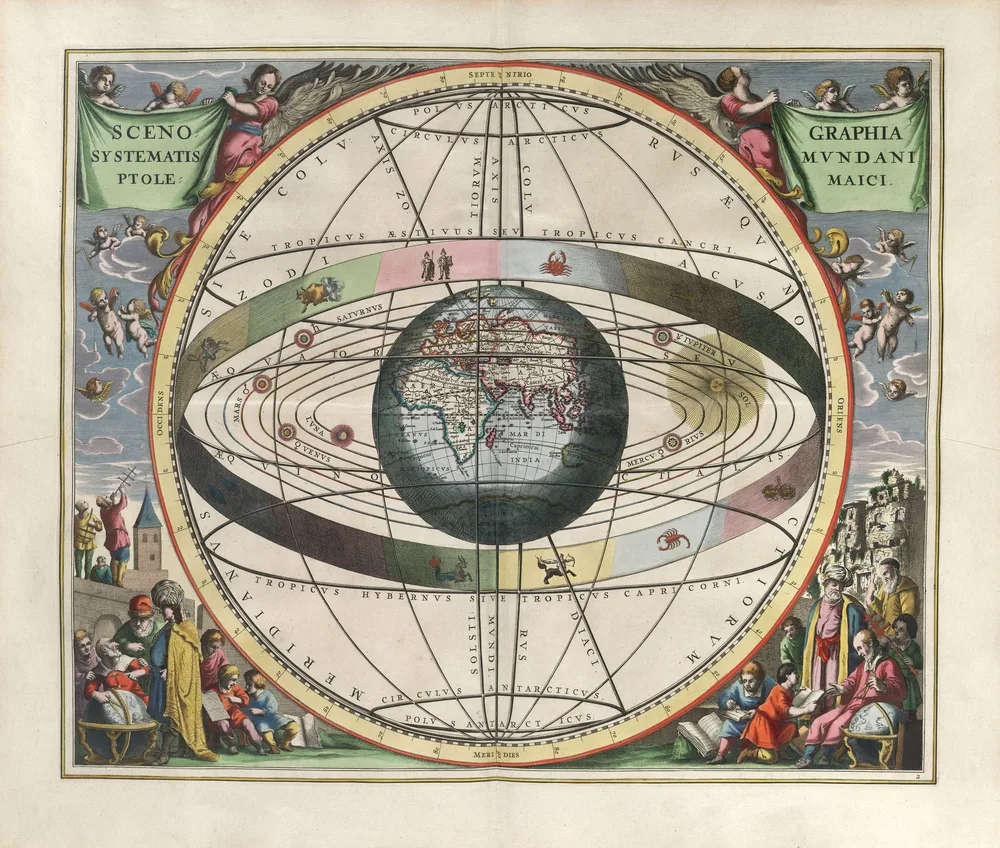
Around A.D. 150, the astronomer Claudius Ptolemy of Alexandria wrote the Almagest, a mathematical model of the heavens with the earth at the center and the planets moving on circles within circles. It predicted the positions of the planets well enough to guide astronomers for more than a thousand years. In the thirteenth century, John of Sacrobosco’s short textbook On the Sphere brought that model into the medieval universities, where generations of students learned it as part of the quadrivium.
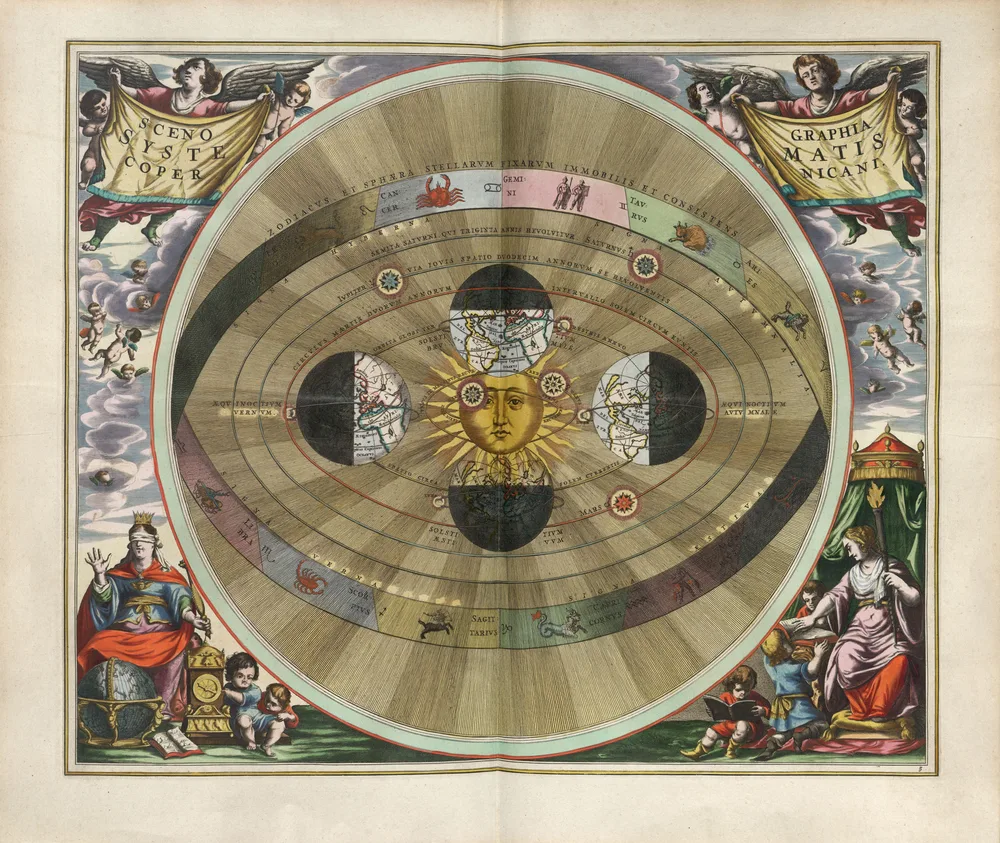
In 1543, Nicolaus Copernicus, a canon of the Church in Poland, proposed that the earth and planets move around the sun. Johannes Kepler, a devout Lutheran, discovered that the planets move in ellipses, and Isaac Newton explained why. Each of these astronomers stood on the work of the ones before, and most of them saw their science as a way of understanding the Creator’s handiwork. The story is a good one to tell students, since it shows how patient observation and honest reasoning correct and improve what earlier generations knew.
The medieval heavens and C.S. Lewis
C.S. Lewis loved the medieval picture of the cosmos and wrote about it in The Discarded Image (1964). He pointed out that medieval people did not imagine the night sky as cold, black emptiness. They pictured an ordered, light-filled, musical universe, with each planet moving in its sphere and the whole moved by love. Dante ended his Divine Comedy with “the love that moves the sun and the other stars.”
Lewis admitted that the old model was scientifically superseded, but he thought modern people had lost something in forgetting how it felt to look up into a cosmos full of meaning. The scholar Michael Ward has argued that Lewis built the seven Chronicles of Narnia around the seven medieval planets, which makes Narnia a quiet introduction to the old astronomy for many children. For more on Lewis and education, see C.S. Lewis on Education: Wonder, Old Books, and Forming Students.
Astronomy for kids: what to watch in winter
The best astronomy lessons for children need no equipment at all. The winter sky, with its long nights, is a good place to begin:
- Keep a moon journal. Sketch the moon every clear night for a month and watch it wax and wane. Note when and where it rises.
- Find the North Star. Follow the two stars at the end of the Big Dipper’s bowl to Polaris, and notice that it barely moves while everything else turns around it.
- Learn Orion. Orion rises in the winter evening sky, with his three-star belt, red Betelgeuse and blue-white Rigel. Then find the Pleiades nearby, the stars named in Job.
- Track the sunset. Mark where the sun sets on the horizon each week through the year. Children discover the solstices and equinoxes for themselves.
- Spot the planets. Planets shine steadily, while stars twinkle, and they wander slowly against the background stars over weeks.
- Read the sky and Scripture together. Read Psalm 19, Psalm 8 or Job 38 aloud outside on a clear night.
A pair of binoculars adds the craters of the moon and the moons of Jupiter, which Galileo first saw in 1610. Simple observations like these are exactly how astronomy was learned for most of its history.
The Star of Bethlehem
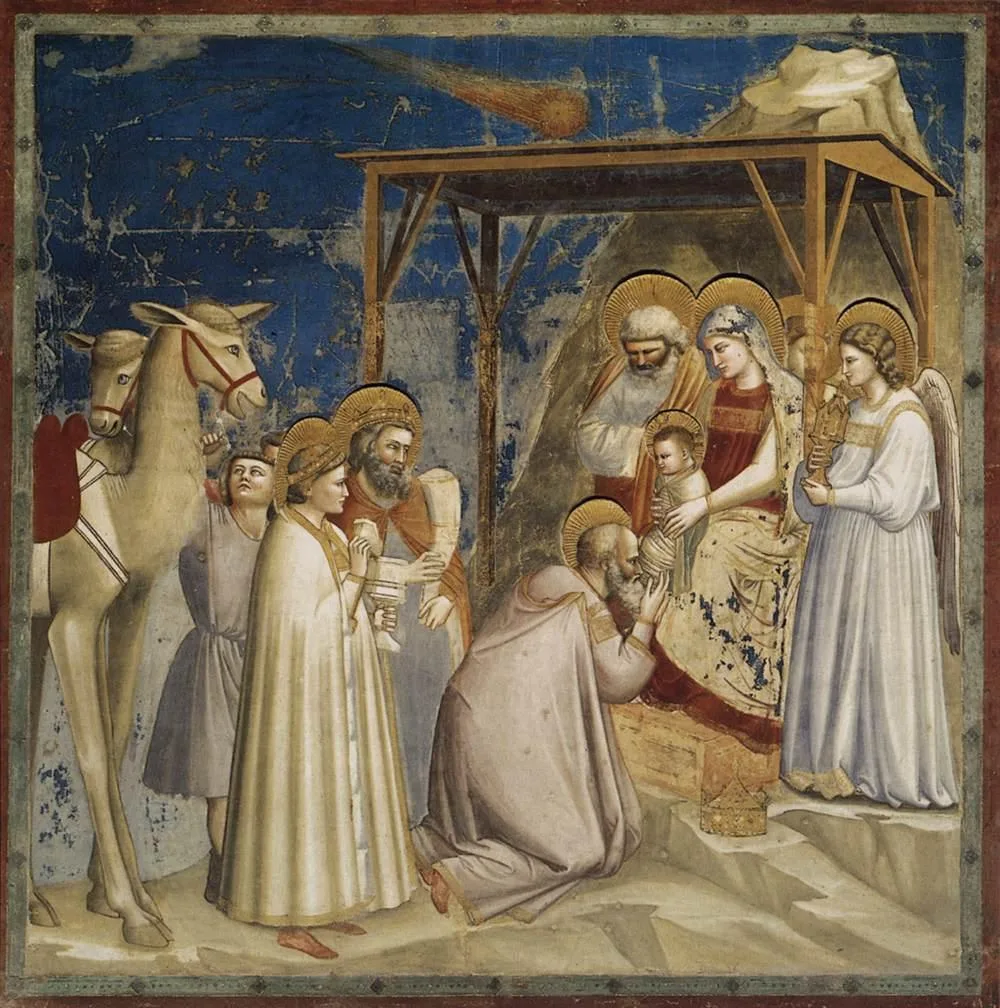
Astronomy also has a part in the Christmas story. Saint Matthew tells of wise men from the east who came to Jerusalem saying, “we have seen his star in the east, and are come to worship him” (Matthew 2:2). They were, in all likelihood, astronomers, men who watched the heavens closely enough to notice a sign.
Christians have long wondered what the star was. Kepler himself suggested that a rare conjunction of Jupiter and Saturn around 7 B.C. might be connected with it. Others have proposed a comet, a new star or a miraculous light. The Gospel does not settle the question, and the meaning does not depend on it. The heavens, made to declare God’s glory, led the wise to the Child who made them. Families looking for ways to keep the season well may enjoy Making Christmas New, the Old-Fashioned Way.
Astronomy and wonder
The classical tradition taught that philosophy begins in wonder, and few things awaken wonder like a dark sky full of stars. Astronomy trains humility, as students begin to grasp the size of creation, and gratitude, as they see its order and beauty. It also requires patience and perseverance, since the sky reveals itself slowly over seasons and years. That kind of courage in learning is explored in Fortitude in Science, and the roots of wonder itself in Wonder and Piety as the Basis of a Liberal Arts Education.
Astronomy at Scholé Academy
Scholé Academy offers Astronomy as a live online course in both the fall and the spring. Families can browse the course catalog for schedules, or return to the guide to the seven liberal arts, where this series began.
Frequently asked questions
Why was astronomy one of the seven liberal arts?
Astronomy studies the ordered motion of the heavens using number and geometry, so it completed the four mathematical arts of the quadrivium. It also prepared students for natural philosophy and theology by showing them the order and beauty of creation.
How can families teach astronomy at home?
Start with the naked eye. Keep a moon journal, find the North Star, learn a few seasonal constellations such as Orion, and track where the sun sets through the year. Binoculars can come later.
What is the difference between astronomy and astrology?
Astronomy studies the motions and nature of the heavenly bodies. Astrology claims that the stars determine human character and events. Christian teachers from St. Augustine onward rejected astrology while honoring astronomy as a liberal art.
What was the Star of Bethlehem?
The Gospel of Matthew describes a star that led the wise men to Christ. Suggestions include a conjunction of Jupiter and Saturn, a comet or a miraculous light. Scripture does not say, but the meaning is clear: the heavens led the wise to worship their Creator.
This guide completes the series on the seven liberal arts. Together, the trivium and the quadrivium form one education aimed at wisdom, a whole that is set out in the guide to the seven liberal arts.